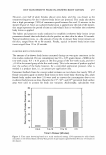
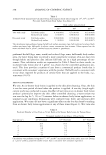
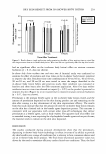
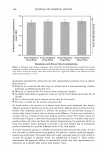
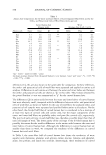
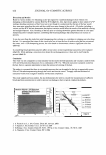
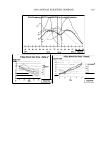
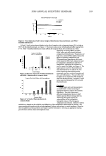
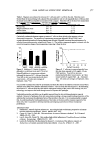
338 JOURNAL OF COSMETIC SCIENCE Can new biodegradable complexing agents replace tetrasodium EDT A to boost preservatives? Wolfgang Siegert Scholke & Mayr GmbH Special Additive International The continuing discussion of cosmetic preservatives has limited the number of accepted actives that can be practically used. As a result, a number of different methods and materials are being used to boost the activity of the remaining acceptable preservative. A cosmetic preservative based on a combination of the active ingredient phenoxyethanol and the skin care additive and deodorant active ethylhexylglycerin can be used in many applications. The additional boosting effect of tetrasodium EDT A on preservatives is well known, although the environmental fate of this material has been debated. To avoid the environmental discussion about complexing agents, readily biodegradable alternatives were tested under reproducible conditions.

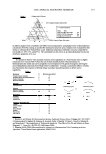
340 JOURNAL OF COSMETIC SCIENCE ORGANIC COSMETIC STANDARDS: FACT OR FICTION? Timothy Kapsner Aveda Corporation This presentation will discuss the current status of organic certification standards in the U.S. and worldwide cosmetic industry. Companies such as Aveda are leading the way by using an increasing number of organic ingredients in their products, but the food industry organic standard does not translate well as a finished product standard for the cosmetic industry. As a result, false and misleading claims abound. European food certifiers, including Soil Association and Ecocert, have developed private cosmetic standards, and products certified to these standards are finding their way into the US market as well. A new U.S. trade group, OASIS (Organic and Sustainable Industry Standards), has created an organic cosmetic standard for the U.S. market. A comparison of the allowed chemistry shows that some of the existing standards may not be too far apart to hope for the possibility of harmonization. If and when an international harmonization takes place between Europe and the U.S., a single standard may emerge so consumers worldwide can expect organic cosmetic product claims to be made on a level playing field. While the organic food industry has not managed to create a single international standard, the cosmetic industry may be able to lead the way in this effort. Outline/Preprint of talk: 1. Organic ingredient usage in finished products a. Essential oils b. Organic oil (coconut, palm) derivatives 2. Use of the USDA food standard for cosmetics a. Aveda b. Erba c. Origins, others 3. Problems with borrowing a food standard a. Natural Products Expo vendor discussions b. Organic shampoo with AOS, deodorant with Steareth-20 c. Soap, glycerin, ethyl cocoate 4. Comparison of major organic cosmetic standards (Ecocert, NSF, OASIS) a. Launch of OASIS i. Type of organization ii. Goals iii. Standard b. Allowed chemistry comparison c. Organic content comparison d. Organic and "made with" vs. organic and "natural" 5. European harmonization a. Ecocert, Soil Association, BDIH, IAIB, Cosmebio i. Relationship between these organizations ii. Announcement of draft standard at IFOAM meeting in June b. NaTrue, IKW c. US involvement in harmonization (OASIS) i. OASIS ii. NOP vs. EC2092/9 l organic content (how to market organic cosmetic products internationally)
Purchased for the exclusive use of nofirst nolast (unknown)
From: SCC Media Library & Resource Center (library.scconline.org)