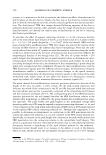
2008 ANNUAL SCIENTIFIC SEMINAR 341 A JOURNEY TO SUSTAINABLE PACKAGING John A. Delfausse Estee Lauder Companies There is a paradigm shift happening in the way we design new products for the environment. The concepts of Cradle to Cradle and Zero Waste have taken us from the familiar green concept of Reduce, Reuse, Recycle to one of Design, Reuse and Recover. William McDonough and Michael Braungart in there book Cradle to Cradle describe a design process that fits well with the design criteria and needs of cosmetic packaging. They argue that if we can design our packaging so that the materials and processes mirror nature, we can use renewable energy for all processes and bio (renewable) materials that at end of life will compost back to the soil as nutrients or technical (man-made) materials that will at the end of life be continuously recycled. The Zero Waste concept tells us that if you can't Reuse, Repair, Recycle or Compost a product at end of life you shouldn't make it. Neither of these concepts talks about reducing the materials or energy we use. And if we follow these guidelines, we should be able to maintain our strong image at the counter without affecting the environment. Our goal should be to design high quality packaging that meets marketing criteria for performance and cost while making our impact on the environment negligible. I call this a Win-Win-Win solution. Following the cradle to cradle vision as defined by the Sustainable Packaging Coalition's definition of sustainable packaging, companies can build a road map that will guide them.

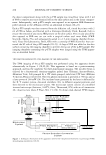
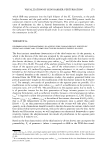
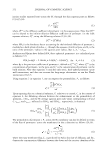
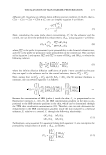
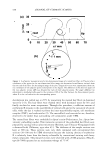
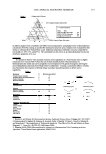
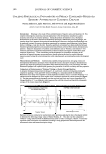
342 JOURNAL OF COSMETIC SCIENCE GREEN CHEMISTRY: THE NATURAL ALLY OF THE COSMETIC INDUSTRY Pierre Chartier de Chily ALDIVIA SAS Introduction: Customers' Aspirations Today, cosmetic markets follow a strong trend: long-term beauty is linked to well being, health and nature. Consumers wish to buy effective, healthy and natural products, which protect their skin as much as their environment. It is for that reason that natural cosmetics exploded in France in 2005, with a 40 % annual growth rate. History: Recent Problems Over the past few years, the cosmetics industry has been destabilized by assertions about the harmfulness of certain ingredients, such as parabens. Regulatory issues around toxicity were handled by many uncoordinated agencies. Also, regulatory efforts were generally focused on residual levels of pollutants in the air and water, but little attention was given to issues such as bioaccumulation. Response From The Cosmetic Industry To Date The cosmetic industry has already made numerous changes to address these issues: Safety testing of products Environmental rules, such as the elimination of CFCs REACH (Registration Evaluation and Authorization of Chemicals), establishing the recording and the control of more than 30,000 substances in Europe Green chemistry gives us a good starting point from which to develop ingredients which are a safe substitute for problematic existing ingredients. The Central Role of Chemistry In Our Evolution Chemistry is omnipresent: in cosmetics, pharmaceuticals, agriculture, food, transportation infrustructure, materials, scientific research ... in all sectors of our society. It is an indispensable tool, and need to play a central role in the evolution of safe and effective cosmetic ingredients in the future. Green Chemistry's Keystone "Prevention is better than cure" is Green Chemistry's motto. It is a fundamental idea, and aims to resolve toxicity and pollution issues at the source of the problem rather than handling them downstream. By reducing effluents and energy consumption By using and by producing non toxic, renewable and biodegradable substances The 12 principles of the green chemistry can be grouped in 2 classes. The first focuses on efficiency: minimizing energy and materials use, maximizing yields, etc. The second focuses on producing safer products and avoiding pollution. EFFICIENCY I. Molecular Economy - Favour rearrangements - And additions - A void substitutions - And eliminations ■ I ■ m:$-- -+•m:?$- -♦·c:::$-+•· .... � ... +•· 2. Energy economy, still too little studied in the chemical industry, could yield substantial improvements 3. The use of alternative catalysts instead ofstoechiometric reactions 4. The use of selected renewable raw materials produced while respecting the environment 5. The suppression of temporary chemical modifications (protection/deprotection) which is inefficient in terms of reagents and energy J Deprotectlon � Reaction
Purchased for the exclusive use of nofirst nolast (unknown)
From: SCC Media Library & Resource Center (library.scconline.org)