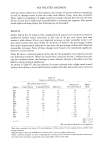
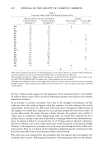
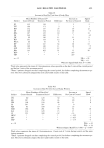
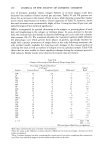
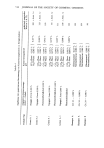
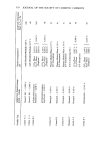
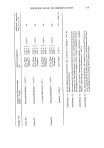
AGE RELATED BALDNESS 495 seemed unlikely that estradiol reached physiologically meaningful concentrations in either sebaceous glands or hair follicles. In order to reach the threshold of suppressant effects on human sebaceous output, previous workers have found it necessary to use a concentration as high as 1 per cent when applying topically the more potent estrogen ethynyl estradiol (31). In experiments on male rats, Clay, however (unpublished observations) found that ap- plication of estradiol - 17fi to the skin surface at 10 times the concentration used in the present study could cause testicular atrophy when certain conditions were observed: (1) animals were treated with the complete regimen first (that is, the epidermis was pre- pared with hydration and detergent before applying the steroid) (2) animals began receiving applications during the early weaning period and continued for 28 days. Rat stratum corneum is far thinner and more permeable to applied compounds than that of man, however, and no data were available to suggest that this degree of absorption oc- curs in humans. For this reason we suspect, but cannot prove, that the estradiol - 17fi incorporated in lotion D did not influence our findings. CONCLUSIONS Unfortunately, the final results of the trial were inconclusive. The data expressed no more than a trend in favor of an improvement following daily removal of sebum or other residues. The groups were small enough to be influenced by the defection of 5 subjects, whose presumed poor results reduced the favorable effect of those who com- pleted the course. Although the data for hairs countable per unit area showed significant improvement in males, the magnitude of the rises was small and may have been biologically trivial. Montagna has explained (32) an increase in countable hairs following the application of testosterone (33) by noting that certain physical and chemical agents can non- specifically stimulate quiescent hair follicles, even those present in apparently bald areas of scalp. Such a nonspecific response may lead to 'the false impression that hair has "regrown" in such areas.' The possibility exists that this interpretation is un- necessarily nihilistic, since the regrowth is not false, but biologically trivial and possibly short lived. In any event, our data would suggest that the sebum-induced causal hypothesis of ARB remains unproven. REFERENCES (1) R. Sabouraud, Les Maladie Seborrheiques, Masson, Paris, 1902. (2) T. Salamon, Genetic factors in male pattern alopecia, Biopathology of Pattern Alopecia, by A. Baccaredda- Boy, G. Moretti, andJ. R. Frey, Eds. Karger, New York, 1968, Pp. 39-49. (3) H. I. Maibach, R. Feldmann, B. Payne, and T. Hutshell, Scalp and forehead sebum production in male- patterned alopecia, Biopathology of Pattern Alopecia, by A. Baccaredda-Boy, G. Moretti, and J. R. Frey, Eds., Karger, New York, 1968, Pp. 171-6. (4) A. Rook, Endocrine influences on hair growth, Brit. Med. J., 1,609-14 (1965). (5) A. Savill and C. Warren, Hair and Scalp.' A clinical study, 5th ed., Williams and Wilkins, Baltimore, 1962, Pp. 104-14. (6) R. H. Barry, Cosmetics, Science and Technology, Wiley-Interscience, New York, 1963, p. 466.

496 JOURNAL OF THE SOCIETY OF COSMETIC CHEMISTS (7) F. A. J. Thiele, Chemical aspects of hair loss and its cosmetological significance, Brit. J. Dermatol., 92, 355-8 (1975). (8) E. Rampini, R. Bertamino, and G. Moretti, Size and shape of sebaceous glands in male pattern alopecia, Biopathology of Pattern Alopecia, by A. Baccaredda-Boy, G. Moretti, and J. R. Frey, Karger, Eds. New York, 1968, Pp. 155-65. (9) P. Flesch, Hair loss from squalene, Proc. Soc. Exp. Biol. Med., 76, 801-3 (1951). (10) P. Flesch and S. B. Goldstone, Local depilatory action of unsaturated compounds: The effects of human sebum on hair growth, J. Invest. Dermatol., 18,267-87 (1952). (11) P. Flesch, Inhibition of keratin formation with unsaturated compounds, J. Invest. Dermatol., 19, 353- 63(1952). (12) P. Flesch, Hair loss from seb .urn, Arch. Dermatol. Syph., 67, 1-9 (1953). (13) P. Puig Muset, J. Martin, N. Fernandez, and J. Valls, Lipoperoxides and the hair follicle, Arzneim. Forsch., 10, 234-9 (1961). (14) G. Henscke and R. Neinas, Uber die depilierende Wirkung des Haarfettes, Hoppe-Seylers Z. Physiol. Chem., 310, 125-36 (1958). (•5) B. Henscke and H. Schiefer, Uber den paraffineholt and die Depilation-swirtung des menslichen Haarfettes, Hoppe-Seylers Z. Physiol. Chem., 324, 58-70 (1961). (16) N. Nicolaides, H. C. Fu, and G. R. Rice, The skin surface lipids in man compared with those of eighteen species of animals, J. Invest. Dermatol. 51, 83-9 (1968). (17) J. A. Cotterill, W. J. Cunliffe, t3. Williamson, and L. 13ulusu, Age and Sex Variation in Skin Surface Lipid Composition and Sebum Excretion Rate, Brit. J. Dermatol., 87, 333-40 (1972). (18) H.T. 13ehrman, The Scalp in Health and Disease, Mosby, St. Louis, 1952, p. 173. (19) H. C. MaGuire and A.M. Kligman, Common baldness in women, Geriatrics, 18, 329-34 (1963). (20) J. Eckert, R. E. Church, F. J. Eblinget al., Hair loss in women, Brit. J. Dermatol., 79, 543-8 (1967). (21) E. Johnson, Quantitative studies of hair growth in the albino rat, II., The effect of sex hormones, J. Endocrinol, 16, 351-9 (1958). (22) Y. L. Lynfield, Effect of pregnancy on the human hair cycle, J. Invest. Dermatol., 35,323-7 (1960). (23) F.E. Cormia, Alopecia from oral contraceptives, J. Amer. Med. Ass., 201,635-7 (1967). (24) W. A.D. Griffiths, Diffuse hair loss and oral contraceptives, Brit. J. Dermatol., 88, 31-6 (1973). (25) H. Zaun and H. Ruffing, Untersuchungen uber den Einfluss antikonzeptiver Zwei-phasen-Hormon- preparate aufdas Wachstum der Kopfhaare, Arch. furKlinisch Exp. Dermato/., 238, 197-206 (1970). (26) E. J. Van Scott, R. P. Reinertson, and R. Steinmiller, The growing hair roots of the human scalp and morphologic changes therein following amethopterin therapy, J. Invest. Dermato/., 29, 197-204 (1975). (27) R. McGinley, R. Marpies, and G. Plewig, A method for visualizing and quantitating the desquamating portion of the human stratum comeurn, J. Invest. Dermato/., 53, 107-12 (1969). (28) H. Uno, F. Allegra, K. Aladin eta/., Studies of common baldness of the stump-tail macaque I distribu- tion of the hair follicles, J. Invest. Dermato/., 49, 228-96 (1967). (29) M. Saitoh, W. Makoto, and M. Sakamoto, The human hair cycle, J. Invest. DermatoL, 54, 65-81 (1970). (30) R. J. Scheuplein, Properties of the skin as a membrane, Pharmacology and the Skin, Advances in the Biology of Skin, Vol. XII, by W. Montagna, R. B. Stoughton and E. J. Van Scott, Eds., Appleton, New York, 1972, Pp. 125-52. (31) J. S. Strauss, A. M. Kligman, and D. Pochi, The effect ofandrogens and estrogens on human sebaceous glands, J. Invest. Dermato/., 39, 139-56 (1962). (32) W. Montagna and P. F. Parakkal, The Structure and Function of Skin, 3rd ed., Academic Press, New York, 1974, p. 247. (33) C. M. Papa and A.M. Kligman, Stimulation of hair growth by topical application ofandrogens, J. Amer. Med. Ass., 191,521-5 (1965).
Purchased for the exclusive use of nofirst nolast (unknown)
From: SCC Media Library & Resource Center (library.scconline.org)