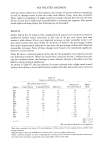
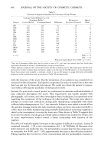
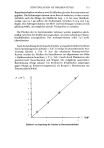
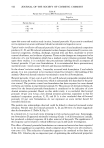
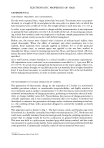
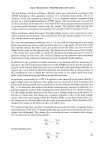
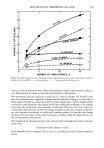
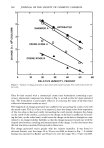
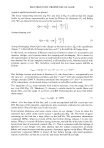
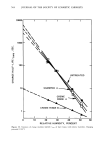
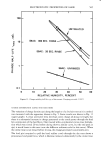
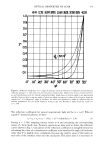
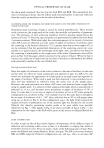
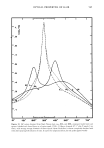
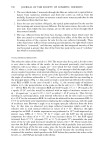
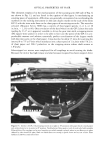
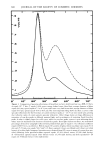
ELECTROSTATIC PROPERTIES OF HAIR 561 i i I I SBAC RINSED UNRINSED 10 20 30 40 50 60 RELATIVE HUMIDITY, PERCENT Figure 8. Variation of charge generated on hair tresses with relative humidity. Two comb strokes, hard rub- ber comb. SBAC: stearyl dimethyl benzyl ammonium chloride We may write the empirical relationship valid over these ranges of humidity Q(RH) = Q(0) - o•. RH (3) where RH is the relative humidity, Q(0) is the charge generated at zero per cent RH, and -o• is the slope of the plot of Q(RH) versus relative humidity. In routine testing, therefore, it was only necessary to make measurements at 2 humidity levels 30 and 50 per cent RH were selected as convenient for this purpose. It is essential to evaluate the effect of relative humidity in order to obtain an accurate measure of antistat performance. Although treatments which reduce the static charge generated on hair generally give results which are superior to untreated controls at all humidity levels, some materials were found to have an antistatic effect on hair at high humidities, but gave results worse than untreated hair at low humidities. An example is the ionerie polymer [N+(CH3)2 ß CH2' CHOH' CH2] n n CI-, as shown in Fig. 8. This material has quaternary ammonium ions in the main chain of the polymer. The amount of antistatic agent on the hair affects the magnitude of charge generated. Hair was treated with stearyl dimethyl benzyl ammonium chloride (SBAC) by immer- sion in a 3 per cent aqueous solution. When allowed to dry without being rinsed, so that a relatively large quantity of material remained on the hair, the charge generated

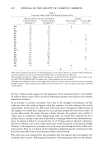
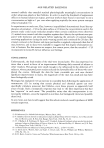
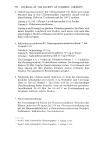
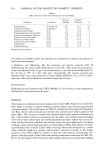
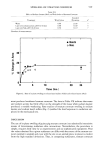
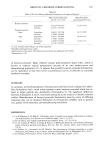
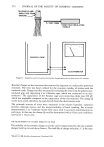
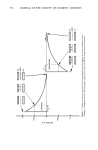
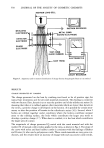
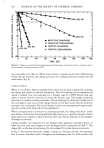
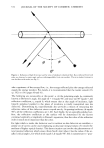
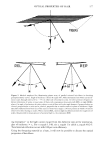
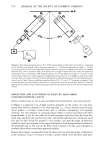
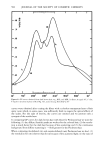
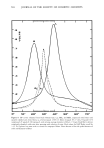
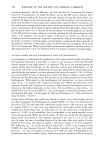
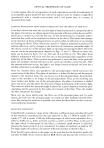
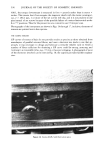
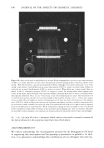
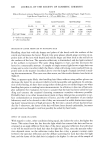
562 JOURNAL OF THE SOCIETY OF COSMETIC CHEMISTS I I I I I I | I I I I 51% RH 43% RH ß NEGATIVE CHARGING O NEGATIVE DISCHARGING ß POSTIVE CHARGING A POSTIVE DISCHARGING 22% RH 29% RH • • • • I I I I I I I I I I I 20 40 60 80 100 120 140 160 TIME, SEC, Figure 9. Charge on untreated hair during charging and discharging, as shown by relative voltage on the de- tector electrode. Charging potential: 2100 V was essentially zero (Fig. 8). When rinsed under a running tap for 20 or 300 seconds before drying, however, the charge generated by combing increased to finite but still small values (Fig. 8). CHARGE MOBILITY When a tress of hair, which is insulated from electrical ground, is charged by combing, the charge will remain on the hair indefinitely. This was confirmed by an experiment in which a combed tress was suspended in a Faraday cage by a PTFE thread, with care taken to ensure that the tress did not touch the Faraday cage. The charge on the hair was found to remain constant with time. (Partial discharge by dielectric breakdown of the atmosphere may occur, if the charge density on the hair is such that the dielectric strength of air is exceeded. The loss of charge would occur instantaneously upon comb- ing, and would not be detected by this experiment.) When a charged tress is connected to electrical ground, the charge will decay. In the case of hair on the head, the scalp and body effectively act as a ground, because of their large capacitance relative to that of the hair. The rate of decay depends on the mobility of charges on the hair. Charge mobility was measured by the Faraday shell apparatus described above, in which the hair tress was charged to and discharged from a potential of 2100 V. The charge Q(t) on the hair was monitored by the voltage V(t) on the detector electrode. In Fig. 9, the detector electrode voltage is shown as a function of time, for untreated hair at various humidity levels. Charging and discharging data, for both positive and
Purchased for the exclusive use of nofirst nolast (unknown)
From: SCC Media Library & Resource Center (library.scconline.org)