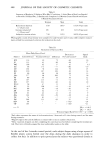
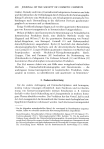
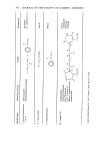
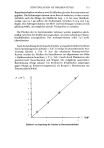
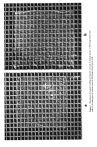
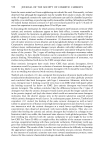
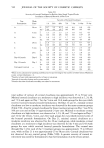
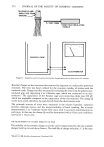
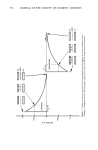
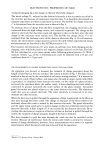
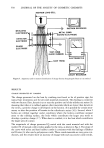
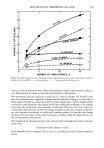
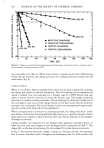
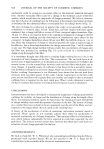
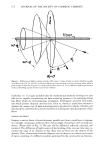
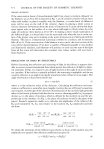
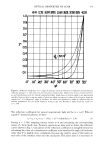
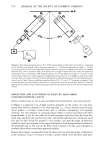
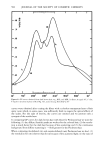
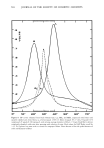
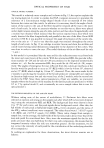
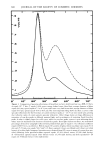
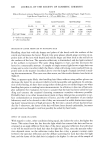
580 JOURNAL OF THE SOCIETY OF COSMETIC CHEMISTS .8 .7 R .6 .5 .4 .3 .2 .1 0 • 10 • 20 ø 30 ø 40 • 50 • 60 • --0 ø Figure 7. GP curves obtained from dark brown hair 6s6•, REL and RER, 21 fibers,(h equals 30 ø, 1 ø slits, T equals 0.5 (transmission of filter F2 in Fig. 5(b), center strung (which means that centermost slots of spacer screws were occupied by fibers which had center to center separation of 1/60 in. • 0.423 mm this provides signal 28 per cent greater than that from "wide strung" arrangement which involves full width of 25.4 mm for 21 fibers however, center-strung arrangement enhances possibility of detecting multiple fiber to fiber scat- tering effects when studying lightcolored fibers or fibers having diameters larger than normal)

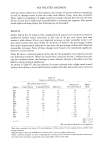
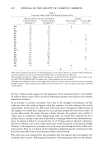
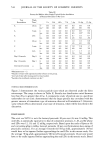
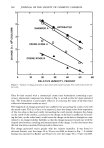
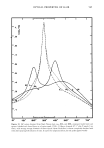
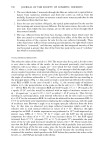
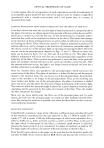
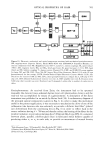
OPTICAL PROPERTIES OF HAIR 581 the sharp peak remaine.d this was true for both REL and RER. This experiment pro- vided convincing evidence that the diffuse peak was attributable to specular reflection from the cuticle-air interfaces at the far sides of the fibers. SCATTERING FROM THE INTERIOR AND FROM THE SURFACE AND THE EFFECT PRODUCED BY COLOR IN THE HAIR Omnidirectional scattering of light is caused by optical imperfections. These include voids, inclusions, the rough ends of the scales, the medulla, and particles of pigmenta- tion. The presence of such scattering manifests itself by genuine signals above the baseline at 0 and 75 ø when the specular peaks are approximately halfway between these 2 extreme positions. With white light, the scattering appears to be devoid of structure when GP curves are obtained at a wide Parity of angles of incidence. In addition, since the scattering in the forward direction (75 ø) is greater than that at lower angles (0ø), it can be estimated that the geometrical dimensions of the scattering centers are com- parable to or greater than )t, the wavelength of the light. Also, one-half to two-thirds of the scattering is attributable to the rough ends of the •cales. Quantitative data will be given in Part II of this paper, which is devoted to the subject of luster. When the hair is colored, the reflection of light from the far sides of the fibers is diminished the diffuse peak essentially vanishes in the case of black hair. THE EQUAL-ANGLE PEAK (EAP) Since the angles of inclination of the scales (relative to the axis of the fiber) on the near and far sides of a fiber are equal numerically and opposite in sign, in a GP curve, one would not anticipate the appearance of a sharp peak at an angle equal and opposite to the angle of incidence. When such a peak was first observed, it was considered an ar- tifact and was attributed to reflection from the under side of the sample plate. However, the peak persisted even when a GP curve was obtained from a single fiber using no sample plate. It is observed when using incident light, which is unpolarized or polarized (•s or %), and becomes more prominent at angles of incidence of 50 ø or more. In some hair it is not seen at angles of incidence as low as 30 ø when using the configuration •s• (as shown in Fig. 7 for example), but for the same hair, it will appear for an angle of incidence of 0 • -50ø. Also, with 0 as low as 30 ø, it will appear when using •s% as shown in Fig. 8. In this configuration (•%), the light which retained the original direction of polarization (•) of the incident light was blocked by the second Polaroid disc thereby permitting weaker peaks to be seen which were partially obliterated in Fig. 7. (The signals in Fig. 8 are about one-fifth of those in Fig. 7.) An explanation for the origin of the EAP will be given in the section on Optical Models for Hair. LIGHT COLOKED HAIR In order to gain an idea of the relative degrees of importance of the different types of reflection and scattering which occur in hair, it is advisable to employ hair which is essentially devoid of color. Thus we made a study of the following types of hair Pied- mont (medullated and nonmedullated), blond, and gray. The GP curves were obtained REL and RER using the Polaroid configurations •s and •%. Also, in all cases, GP
Purchased for the exclusive use of nofirst nolast (unknown)
From: SCC Media Library & Resource Center (library.scconline.org)