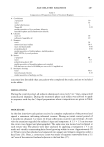
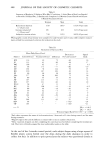
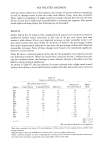
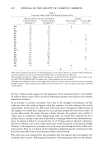
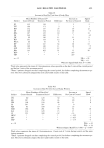
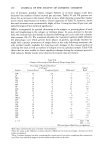
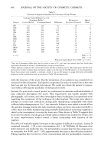
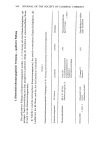
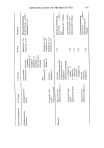
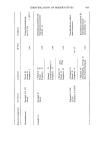
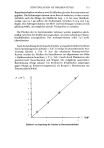
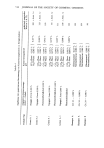
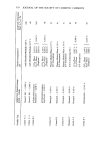
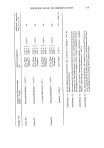
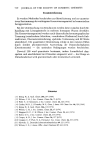
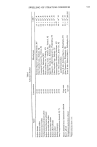
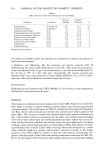
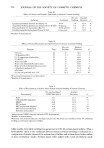
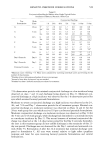
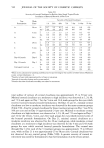
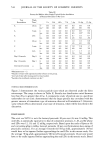
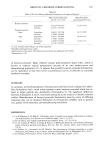
SWELLING OF STRATUM CORNEUM 531 In reviewing the effects of chemicals on skin dimensions we should note the observa- tion of Wildnauer that soaking stratum corneum in formic acid resulted in an increase in length of the tissue which he attributed to denaturation of the protein (13). Not all denaturing media induce this effect as indicated by our results shown in Table IV. Imokawa and coworkers (14, 15) used the change in optical rotation induced by soak- ing bovine serum albumin in several detergents as a means of estimating a detergent's ability to cause protein denaturation they obtained positive correlation between a de- tergent's denaturing ability and its ability to produce "skin roughness" in vivo. Scheuplein and Ross (4) observed that while concentrated urea solution had no effect on skin permeability to water, 1 per cent solutions of laurate and lauryl sulfate enhanced skin permeability. Interestingly, we observed no swelling in 8 M urea (Table IV), but notable swelling in the anionic surfactants. Not only was the swelling induced by laurate reversible ((4) and Table IV), but much of the barrier function was shown to be recoverable after resoaking the stratum corneum in water (4). The observation of the reversibility of laurate-induced swelling and the observation that the birefringence of the stratum corneum, which is greatly diminished by soaking in 5 per cent laurate, is restored after resoaking in water led Scheuplein and Ross (4) to conclude that laurate had induced a reversible • -- fi conversion of the stratum cor- neum protein with an uncoiling of the filaments, which was accompanied by a gross ex- pansion of the tissue and high influx of water. We conclude that denaturation does not cause stratum corneum swelling, but that swelling is due to a reversible conformation change resulting from cooperative binding of the appropriate detergent. The binding is neither type 2 nor type 3 but is probably most like that described above for the apoproteins of serum high density lipoproteins. Our observation on the effect oflaurate, however, indicates irreversible effects as well. Protrey and Ferguson (16) have observed the extraction of proteins and amino acids by anionic detergents. Lauryl monoethoxysulfate can extract protein (16) but causes little swelling suggesting that protein extraction may be responsible for weakening but not for swelling. Our results suggest that stratum corneum swelling could be of value for studying de- tergent-skin interactions and for predicting detergent penetration of skin and possibly subsequent skin irritancy. REFERENCES (1) M. K. Polano, The interaction of detergents and the human skin, J. Soc. Cosmet. Chem., 19, 3-20 (1968). (2) B. R. Choman, Determination of the response of skin to chemical agents by an in vitro procedure, J. Invest. Dermatol., 37,263-71 (1961). (3) P. W. A. Tovell, A. C. Weaver, J. Hope, and W. E. Sprott, The action of sodium lauryl sulfate on rat- skin-an ultrastructural study, Brit. J. Dermatol., 90, 501-6 (1974). (4) R. Scheuplein and L. Ross, Effects of surfactants and solvents on the permeability of epidermis, J. Soc. Cosmet. Chem., 21,853-73 (1970). (5) E. K. Von G6tte, Der einfluss von kolloidelectrolyten auf die Quellung isolierta epidermis, Kolloid Z., 117, 42-7 (1950). (6) E.J. Singer, L. J. Vinson, W. R. Koehler, M.D. Lehman, and T. Masurat, The nature of the epidermal barrier and some factors influencing skin permeability, Toxicol. Appl. Pharmacol. Suppl. 2, 7, 7-19 (1965).

532 JOURNAL OF THE SOCIETY OF COSMETIC CHEMISTS (7) S. G. Elfbaum and M. A. Wolfram, Effect of dimethyl sulfoxide and other reagents upon mechanical properties of stratum corneum strips, J. Soc. Cosmet. Chem., 21,129-40 (1970). (8) T. V. Wachneldt, Sodium dodecyl sulfate in protein chemistry, Bio, Systems, 6, 176-87 (1975). (9) C. Tanford in The hydrophobic effect.' formation of micelies and biological membranes, Wiley, New York, 1973, Ch. 15. (10) S. Makino, J. A. Reynolds, and C. Tanford, The binding ofdeoxycholate and Triton X-100 to proteins, J. Biol. Chem., 248, 4926-32 (1973). (11) Y. Nozaki, J. A. Reynolds, and C. Tanford, The interaction of a cationic detergent with bovine serum albumin and other proteins, J. Bio/. Chem., 249, 4452-59 (1974). (12) S. Makino, C. Tanford, and J. A. Reynolds, The interaction ofpolypeptide components of human high density serum lipoprotein with detergents, J. Bio/. Chem., 249, 7379-82 (1974). (13) G. L. Wilkes, I. A. Brown, and R. H. Wildnauer, The biomechanical properties of skin, CRC Critical Rev. in Bioengineering, 453-95 (1973). (14) G. Imokawa, K. Sumura, and M. Katsumi, Study on skin roughness caused by surfactants: correlation between protein denaturation and skin roughness, J. Amer. OilChem. Soc., 52,484-9 (1975). (15) G. Imokawa, K. Sumura, and M. Katsumi, Study on skin roughness caused by surfactants: a new method in vivo for evaluation of skin roughness, J. Amer. OilChem. Soc., 52,479-83 (1975). (16) C. Prottey and T. Ferguson, Factors which determine the skin irritation potential of soaps and de- tergents, J. Soc. Cosmet. Chem., 26, 29-46 (1975). (17) P. Mukerjee and K. Mysels, Critical micelie concentration of aqueous surfactant systems, NSRDS- NBS 36 (1971).
Purchased for the exclusive use of nofirst nolast (unknown)
From: SCC Media Library & Resource Center (library.scconline.org)