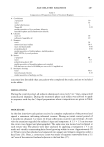
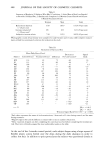
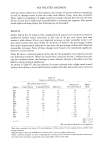
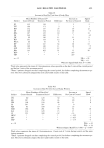
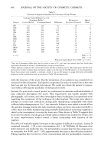
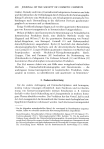
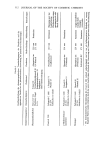
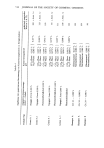
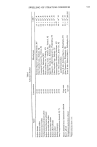
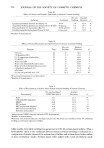
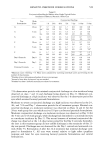
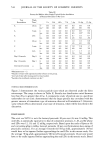
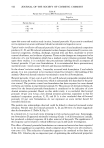
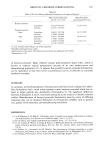
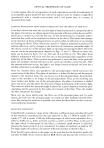
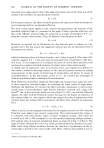
AGE RELATED BALDNESS 489 each visit about adherence to the regimen, the volume of unused solutions remaining, as well as changes noted in hair and scalp. Side effects, if any, were also recorded. Three subjects complained of slight transient burning irritation after the use of lotion D, but did not find it sufficiently uncomfortable to interrupt the regimen. One person noted slight yellowing of gray hair following use of dressing E. RESULTS Nearly half of the 29 subjects who completed both control and treatment periods in satisfactory fashion noted reductions in hair loss of 20 per cent (more men than women), while almost 30 per cent displayed increases in hairs countable in the 1 cm 2 area (more women than men) (Table II). As shown in Table II, the percentage of those who noted improvement subjectively was twice the percentage of those who displayed measurable increases. None of these changes were found to be statistically significant, however, as noted below. Table II! shows a detailed analysis of the data for the possibility of a reduction in hair loss following treatment. When the results were corrected for the 2 subjects lost dur- ing the treatment phase, the findings in male subjects showed a favorable trend but failed to attain statistical significance. As shown in Table IV, the data obtained in women showed only a slight trend toward reduced loss of hair, a trend which became smaller still when the results were corrected Table IV Reduction in Hair Loss: Women Mean Daily Rate of Loss a Decrease as Signed Subject Control Period Treatment Period Difference Per Cent Control •' Rank PH 50 59 -9 -18 -4.5 DH 62 44 22 35 7 ER 54 45 9 17 3 PM 105 47 58 55 12 LS 200 231 -31 -16 -2 KH 74 77 -3 -4 -1 MM 82 120 -38 -46 -8 KA 71 88 -17 -24 -6 CJ 101 30 71 70 13 BY 113 93 20 18 4.5 BEY c 135 c c (-47) •' -9 BS e 79 • • (-48f - 10 EM • 129 • •' (-49) c - 11 ERi+ = 39.5 n = 13 ERi- = 51.5 Wilcoxon Signed Rank Test: not significant aEach value represents the mean of 6 determinations, 3 from each of 2 visits during control, and the same during treatment. bNegative signs in this and the difference column refer to rises in number of hairs lost. •These 3 patients dropped out after completing the control period, but before completing the treatment pe- riod. They were arbitrarily assigned the most unfavorable results on the table.

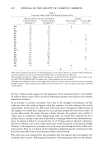
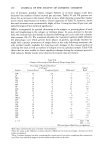
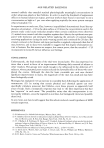
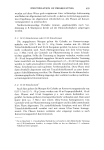
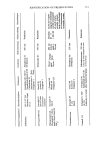
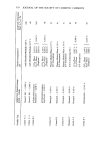
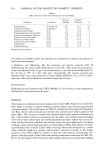
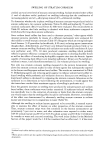
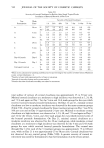
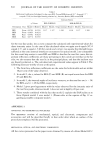
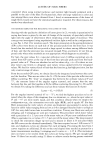
490 JOURNAL OF THE SOCIETY OF COSMETIC CHEMISTS Table V Variations in Rate of Hair Loss During Treatment: Men Hair Loss as Per Cent of Control Period Treatment Period Treatment Period First Half (1) a Last Half (2) •' Changes c Per Cent Rise Per Cent Fall (1) -- (2) (1) --) (2) RW 31 39 8 JP 29 32 3 MG 94 ! ! 4 EG 149 174 GT 45 32 RB 56 52 EF 63 41 JHo 27 27 -- FE 60 55 JW 152 95 RD 92 45 WL-C 90 79 RP 101 124 HG 171 165 JM 110 80 GW 101 54 JHa 115 153 DC 109 107 DG 65 75 10 13 4 22 -- 5 47 11 30 47 X 7 22 aEach value represents the mean of 6 determinations, 3 from each of the first 2 months of the treatment pe- riod, but expressed as a per cent of the mean of that subject's control period collections. •'All comments in footnote a apply, except that values are derived from final 2 treatment visits (except in sub- jects RW, EG, JW, JM and GW), for whom only 1 final treatment visit was available. CChanges were calculated only for those whose loss declined to 80 per cent of control or lower at some time during treatment. Values represent the difference between periods (1)and (2)expressed as a per cent of the control period. for the 3 subjects who stopped in mid-treatment. Even excluding these 3, the number of subjects whose rates of loss increased following treatment was equal to the number whose loss declined. In an attempt to exclude systematic error due to the changed circumstances of hair collection after the subjects began using the regimen, we also analyzed the results sequentially. In the event of a fall in hair collections due to therapeutic effectiveness of the regimen we w6uld have expected to see a gradual, progressive decline in counts. If on the other hand, the losses became smaller because the patients were unable to collect hair as completely when shampooing daily, we would have expected to see a sudden drop in counts at the time of the shift in technique followed by random fluctua- tions. As shown in Table V, we found that 12 of 19 male subjects showed a decline in hair loss to 80 per cent or less of the mean value noted during the control period. Eight of those 12 did experience a decline, not at the onset, but during the body of the treat- ment period. That is, two-thirds of the responders displayed greater reductions in hair loss in the last half of the treatment period than in the first half. The data were next analyzed for the possibility that the regimen had encouraged new or thicker hair to grow. Either greater longevity of existing anagen hairs or the stimula-
Purchased for the exclusive use of nofirst nolast (unknown)
From: SCC Media Library & Resource Center (library.scconline.org)