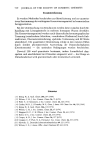
JOURNAL OF THE SOCIETY OF COSMETIC CHEMISTS REFERENCES 611 (1) N. E. Yin, R. H. Kissinger, W. S. Tolgyesi, and E. M. Cottington, The effect of fiber diameter on the cosmetic aspects of hair,J. Soc. Cosmet. Chem., 28, 139-50 (1977). (2) L. Fourt, In Table VI of H. Bogaty, Differences between adult and childtens hair, J. Soc. Cosmet. Chem., 20, 159-71 (1969). (3) R. H. Kissinger, Private communication. (4) H. Bogaty, Torsional properties of hair in relation to permanent waving and setting, J. Soc. Cosmet. Chem., 18, 575-89(1967). Editors Note.' The authors of this article have indicated that they are in general agreement with the findings of Mr. Bogaty. Dr. JohnJ. Sciarra Editor

Book Reviews FOAM CONTROL AGENTS, by Henry T. Kerner, Noyes Data Corporation, Park Ridge, New Jersey, 1976. xii + 372 pages, 10 Figures, 25 Tables. Price $39.00. This is another volume (Number 75) in the series of chemical technology review books published by the Noyes Data Cor- poration on a wide range of technical sub- jects. Like other volumes in this series, this book supplies detailed information based entirely (and exclusively) on the U.S. patent literature. This volume reviews and gives examples in the field of foam control agents from 206 U.S. patents that were issued between 1960 and 1976. The book is well indexed by company, names of the inven- tors, and by patent number. The book is divided into chapters catego- rizing applications where foam control agents are used. These comprise the following fields: detergents and cleansers pulp and paper lubricants, fuels, and or- ganic liquids textiles phosphoric acid processes latex, coating, and photo- graphic application fermentation, phar- maceuticals, and foodstuffs polymeriza- tion and distillation antifreeze, drilling fluids, acid gas separation, and other ap- plications and foam control--general processes. There also is a short introduction and a foreword the latter is written in a some- what promotional style and suggests "fifteen reasons why the U.S. Patent Office literature is important to you," and presumably, why you should buy this book. As the titles of the chapters indicate, few applications are covered that are of concern to cosmetic chemists. Only one example of some relevance is cited, namely, U.S. Patent 3,853,989 which describes a technique for controlling or suppressing internal foaming in aerosol containers. There are only a few pharma- ceutical examples and are limited to the use of simethicone in a well-known ant- acid product and to formulations of cal- cium novobiocin suspensions with lauryl sulfates. This volume will probably be of practical use to workers in many of the fields listed in the chapter headings. For libraries ser- vicing primarily the cosmetic or pharma- ceutical industry, there is little reason to add this volume to their collection.-- ERIC JUNGERMANNmHelene Curtis In- dustries, Inc.
Purchased for the exclusive use of nofirst nolast (unknown)
From: SCC Media Library & Resource Center (library.scconline.org)