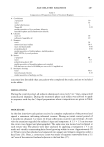
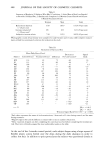
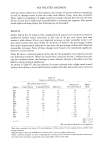
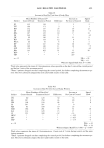
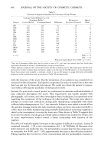
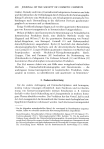
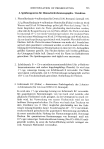
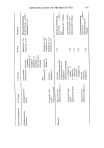
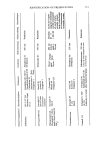
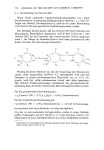
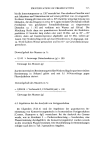
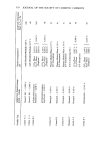
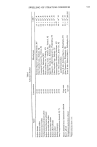
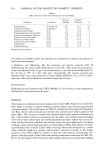
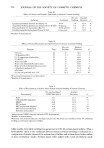
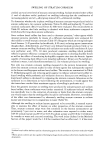
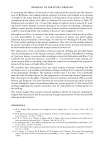
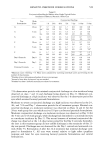
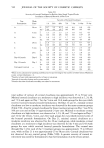
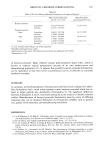
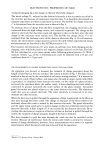
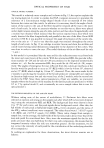
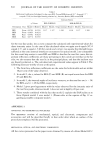
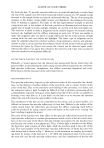
AGE RELATED BALDNESS Table IX Decrease in Superficial Squames Per Unit Area of Scalp: Men 493 Subject Cells Per Cubic Millimeter in 2 ml Detergent Buffer • Decrease as Signed Control Period Treatment Period Difference Per Cent of Control Rank RW MG EG GT RB EF JHo FE jw RD WL-C RP HG JM GW JHa DC DG RD • TB b n=21 587 347 -240 41 8 453 134 319 70 16 477 537 -60 -13 -2 338 359 -21 -6 -1 276 134 142 51 11.5 373 291 82 22 5 186 150 36 19 4 488 250 238 49 10 156 277 -121 -77 -18 239 177 62 26 6 289 126 163 56 14 422 204 218 52 13 349 135 214 61 15 228 112 116 51 11.5 287 326 -39 -14 -3 818 227 591 71 17 537 277 260 48 9 276 194 82 30 7 797 147 650 82 21 383 b b --78 --19 589 b • -79 -20 •R•+ = 168 •Ri- = 63 Wilcoxon Signed Rank Test: 0.029 p 0.036 •Two ml of detergent buffer were used in scrubbing 5.1 cm 2 near the anterior hairline. Each value represents the mean of at least 3 determinations. •These 2 patients dropped out after completing the control period but before completing the treatment pe- riod. They were arbitrarily assigned the most unfavorable results on the table. In contrast to effects on hair growth, the regimen did reduce significantly the cell counts obtainable from a given area of skin located near the hairline (Tables IX and X). The few counts which rose during treatment may have reflected frequent shampooing during the control period, something all subjects were urged to avoid. DISCUSSION Among potential sources of error in this study one must mention the problem of its design. While a double-blind cross-over arrangement might have seemed the best means of controlling bias, we felt it would have been difficult to achieve in this instance. Since the question was whether or not regular, thorough removal of sebum resulted in a reduction in hair fall, placebo therapy in the usual sense could not be used. Instead, the subjects were urged not to change their habits regarding shampooing dur- ing the control period, or if they washed frequently, to moderate their efforts. Nor could we incorporate a phase involving a cross-over to placebo therapy after the treatment period. Such a design might have allowed us to correct for bias associated

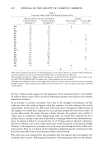
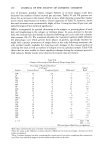
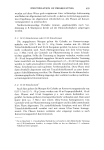
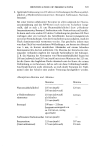
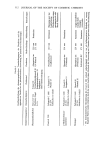
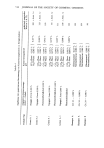
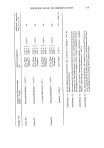
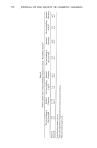
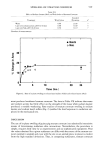
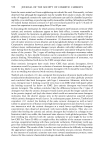
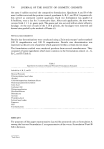
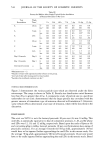
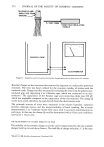
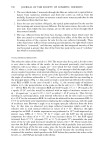
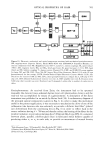
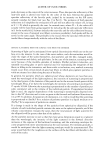
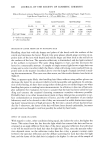
494 JOURNAL OF THE SOCIETY OF COSMETIC CHEMISTS Table X Decrease in Superficial Squames Per Unit Area of Scalp: Women Subject Cells per Cubic Millimeter in 2 ml Detergent-Buffer a Control Period Treatment Period Decrease as Signed Difference Per Cent of Control Rank PH 311 250 61 20 1 DH 281 357 -76 -27 -4 ER 410 258 152 37 7 PM 802 361 441 55 8 LS 463 364 99 21 2 KH 909 194 715 79 13 MM 620 231 389 63 10 KA 526 171 355 67 11 CJ 467 319 148 32 6 BY 163 210 -47 -29 -5 BEY b 770 211 b 559 73 12 BS • 489 188 b 301 62 9 EM • 274 339 • -65 -23 -3 n=13 5•R•+ = 79 5•Ri- = 12 Wilcoxon Signed Rank Test: 0.008 p 0.011 •Two ml of detergent buffer were used to scrub an area of 5.1 cm 2 near the anterior hair line. Each value represents the mean of at least 3 determinations, except as noted below. bThree patients completed the control period, but not the treatment period. The values given for the treat- ment period in their columns thus represent a single (or in the case of the EM column, 2) determination(s). Since these values were available to indicate a trend, it was not felt proper to assign arbitrarily unfavorable responses to the treatment periods, as was done in Table VII and previously. with the duration of the study. But the motivation of our subjects was considered too tenuous for this refinement. Each patient cooperated in order to remedy his or her own hair loss and not for financial inducement. We could not obtain the patient's coopera- tion without offering the possibility of therapeutic benefit. Instead of a post-study control period, we endeavored to maintain uniform methods of data collection throughout the study. This requirement was readily satisfied with photographs, cell counts, and other investigator-based techniques, but questions arose regarding the consistency of the technique of collecting hair. Two steps were taken to attempt to render hair collections during daily shampooing comparable with those collected after shampooing at 2 to 7 day intervals. Subjects were asked to avoid all but the gentlest massage during the daily treatment phase, and were also asked carefully to collect hairs lost while shampooing using multiply-folded plastic screening (supplied to them by the investigator) covering the drain area. Data shown in Table V suggests that in at least two-thirds of a sub-group of male subjects whose loss declined by 20 per cent or more improvement tended toward a linear relationship with duration of the regimen. The effect of topically-applied estrogen in the regimen is difficult to evaluate. Lotion D contained estradiol - 17fi at low concentration (4.0 x 10-SM[Table I]). Because of its polar character and molecular size, the permeability constant (kp) for this compound is an extremely low 0.003 cm h -• (30), approximately the same as that ofhydrocortisone. Taking together the two factors of low concentration and low permeability constant, it
Purchased for the exclusive use of nofirst nolast (unknown)
From: SCC Media Library & Resource Center (library.scconline.org)