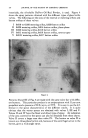
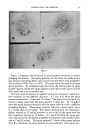
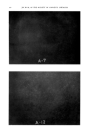
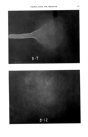
APOCRINE SWEAT IN PRODUCTION OF AXILLARY ODOR 173 It was not until recent studies in our laboratory (5, 6, 7, 8) that apocrine sweat was studied as distinctive secretion. It was found to appear follow- ing the injection of epinephrine or pitocin which caused myoepithelial con- traction. It was generally a whitish turbid liquid which appeared in the hair follicle orifice and rapidly dried to form a glistening glue-like cap. It was discovered that pure apocrine sweat had no odor as it appeared on the skin surface. This was surprising, since the apocrine gland in man has been labeled a scent gland since it was first described over a hundred years ago. However, upon standing in vitro for several hours the specimens of sweat acquired the characteristic spectrum of axillary odors. Further study revealed that bacterial growth was the cause of the odor which de- veloped in apocrine sweat. Apocrine sweat collected and preserved under relatively stemrile conditions never developed any odor. Furthermore, it was possible to demonstrate that pure apocrine sweat as secreted is sterile. Yet once reaching the axillary surface, it is rapidly contaminated with myr- iads of bacteria, which continuously populate this moist intertriginous skin site. The growth and metabolism of these bacteria account for the produc- tion of odoriferous compounds. Nitta and Ikai (9) have recently char- acterized these as unsaturated fatty acids, such as caproic and caprylic acid. Furthermore, Ikai (10) has been successful in eliminating axillary odor by the use of a mixture of anion-cation exchange resin powder. He demonstrated that the fatty acids were adsorbed by the anion exchange resins and ammonia by the cation exchange resins. Following the demonstration that apocrine sweat odor could be corre- lated with bacterial growth, observations were made on the effect of "de- germlug" the skin. It was found that the regular use of a hexachlorophene soap substitute (PHisohex ©) prevented the appearance of axillary odor in most subjects for periods of c•ver eighteen hours. Furthermore hexachloro- phene could be used in vitro to prevent the appearance of odor in apocrine sweat collected from an unsterile field. Later observations showed that the repeated daily application of topical antibiotic creams or lotions completely inhibited the production of odor in the axilla. Neomycin, in a concentration of 3.5 mgm. of base/gm. of ve- hicle proved to be very effective. Similar experiences clinically with various topical antibiotics have been noted by Ferguson (11) and Ikai (12). Baer and Rosenthal (13) found that the use of a soap containing 1 per cent tetramethylthiuram disulfide protected the majority of their test subjects from objectionable axillary odor. No specific micro6rganism can be incriminated since presumably all of the normal skin flora may be expected to act on the organically rich apo- crine sweat substrate. The organisms identified in the normal unsterile axilla included Micrococcus pyogenes' (vat. aureus, vat. albus), Corynebac-

174 JOURNAL OF THE SOCIETY OF COSMETIC CHEMISTS teria, zterobacter aerogenes and Sarcina lutea. It was found, however, that the precise odor noted resulted from an interplay of differences in bacterial flora and variations in the chemical composition of the sweat. Isolated observations indicated, for example, that zterobacter aerogenes could pro- duce a rather pleasant odor when growing in apocrine sweat. The pos- sibilities of large scale bacterial synthesis of perfumes became apparent to US. On the negative side, it was not found possible to influence the axillary odor by systemic antibiotics, chlorophyll or menadione. It was our ex- perience that apocrine anhidrosis, or the suppression of apocrine sweating or secretion could not be achieved by any procedure which could be ex- pected to have clinical acceptance. Auxilliary studies revealed that at least part of the proven deodorant activity of aluminum salts could be attributed to their antibacterial action. The presence of hair in the axilla proved to be an important secondary factor in the production of axillary odor. It was found that simple shaving and an ordinary soap washing of the axilla protected most individuals from objectionable odor for over forty-eight hours. This appeared to result from the removal of a large moist nidus of bacteria, and also a collecting site for malodorous compounds. Clothing plays a similar role so that regular changes of clothing were essential to prevent odor developing and appearing in the garments themselves. Apocrine sweat is felt to be the specific substrate for the production of axillary odor since in its absence there is no distinctive odor apparent. This absence of odor is seen in children, elderly individuals who lack apo- crine glands, and in patients with diseases which cause occlusion of the apocrine pores and consequent apocrine sweat retention (14). Eccrine sweat, sebum and keratin never develop the specific odors we ascribe to the axilla, even when incubated in the presence or absence of bacteria. Eccrine sweat, however, does play a highly significant role in promoting bacterial growth since drying has a definite antimicrobial action. In summary, evidence has been reviewed to demonstrate that human apocrine sweat is completely odorless as it appears on the skin surface. Actually the typical axillary odor results from the action of bacteria on a substrate of this apocrine sweat. Various wide spectrum chemothera- peutic agents and antibiotics have proved to be simple effective topical means in preventing the appearance of any axillary odor. REFERENCES (1) Bourliere, F., "The Natural History of Mammals," New York, Alfred A. Knopf (1954). (2) Schaffer, J., "Die Hautdrfisenorgane der S/iugetiere," Berlin, Urban und Schwarzenberg (1940). (3) Shelley, W. B., Hurley, •[. J., •[r., and Nichols, A. C., "Axillary Odor. Experimental Study of the Role of Bacteria, Apocrine Sweat and Deodorants," •ltch. Dermatol., 68, 43O (1953).
Purchased for the exclusive use of nofirst nolast (unknown)
From: SCC Media Library & Resource Center (library.scconline.org)