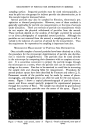
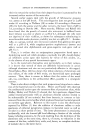
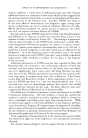
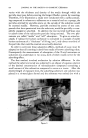
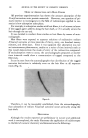
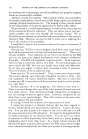
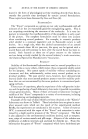
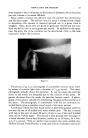
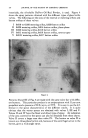
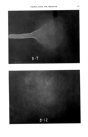
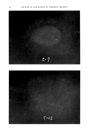
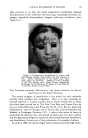
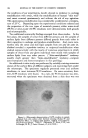
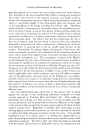
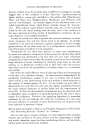
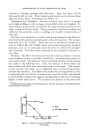
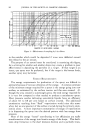
178 JOURNAL OF THE SOCIETY OF COSMETIC CHEMISTS thermostatic mechanisms for dissipating and losing heat, since sweat evaporation does not occur as normally required. For obvious reasons, these defects in cooling become apparent in atmospheres of high tempera- ture and humidity, during exercise, etc. It has been most fascinating to observe that when large areas fail to sweat normally, vicarious means for dissipating heat may be called into play, such as rapid dilatation of the peripheral vascular bed or rapid superficial breathing and panting (1, 3, 13, 4). The consequences of the former mechanisms can include precipi- tate falls of diastolic blood pressure, enormous increases in pulse pressure and consequent harmful effects to the heart and vascular tree. Repeated or continued rapid superficial breathing can lead to such pathologic states as alkalosis by hyperventilation. Among the many other effects of lack or significant reduction of sweat delivery to large areas of the skin's surface, I shall mention only two more which I believe nqay be of special interest to you--the first is that when an individual is called upon to cool by sweating and the normal delivery of sweat cannot take place in certain areas of his skin's surface, sweat glands of other areas will increase the quantity they pour out in an obviously compensatory activity which is based on some type of reflex mechanism* (14, 1, 3, 4, 15). Thus, persons with hard and fast ductal obstruction of the eccrine sweat glands of a good part of their body skin surface (e.g., patients with full blown tropical anhidrotic asthenia or widespread exfoliating eryth- rodermas, or icthyosis) will, when called upon to dissipate heat, pour literal rivers of sweat from the as yet unobstructed sweat glands of for instance, the face, axillae, etc. (Fig. 3). This form of local hyperhidrosis is, I believe, more common than one might suppose. Moreover, it usually represents quite a vain and relatively ineffective attempt to dissipate heat, for this great quantity of sweat which is delivered so quickly that it pours out and runs off, is far inferior as a cooling device to the normally more slowly delivered and consequently more effectively evaporated sweat. Another vital consequence, both of reduced or absent sweat delivery (local hypo- or anhydrosis) and of local excessive sweat delivery (local hyperhidrosis) is a very far-reaching impairment of the ordinarily magnifi- cent self-sterilizing powers of the surface of the healthy human skin (16, 17, 18, 19, 4, 20). For only where skin surface acidity is maintained by the orderly delivery and pari-passu evaporation of sweat will pathogenic and facultatively pathogenic micro6rganisms be killed off effectively by the fatty acids and perhaps other residues left on the skin by the freely evaporating sweat. Wherever sweat delivery is markedly deficient, nqark- * An apparently analogous compensatory hyperhldrosis takes place also around the pe- riphery of and adjacent to small anhidrotic areas (15,4). However, such smaller areas of im- paired or excessive sweating are usually of only local dermatologic significance rather than having general thermoregulatory and other svstemlc ill effects.

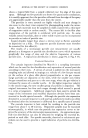
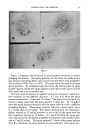
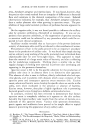
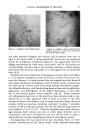
CLINICAL DISTURBANCES IN SWEATING 179 edly excessive or its free and rapid evaporation inordinately delayed, local proneness to skin infections can occur (e.g., to pustules, furuncles, petigos, superficial dermatophytic fungous infections, moniliasis, inter- trigos, etc.). Figure &--Compensatory hyperhidrosis in patient with post-Atabrine atrophy. Starch-iodine test after exposure to heat. Patchy hyperhidrosis in the (dark) areas where sweat organs are preserved. Anhidrosis of the remainder of the skin surface, sweat organs having degenerated. (Sulzberger, M. B., Herrmann, F., Keller, R., and Pisha, B. V., 7- Invest. Dermat., 9, 221 (1947).) THE INTERRELATIONSHIP, RECIPROCAL AND JOINT EFFECTS OF SWEAT AND LIPIDS OF THE SKIN'S SURFACE. The second category of peculiarities is one which has only relatively recently been awarded due recognition. That it is now receiving its merited attention is in great measure due to recent studies such as those that have been carried out at The New York Skin and Cancer Unit by my co-workers Herrmann and Prose (21, 22, 23, 15, 4, 20), by Jones and collaborators--then in Chicago, now in Tucson (24), and by Schneider and Schuleit in Tuebingen, Germany (25). I refer to the action of sweat in promoting the delivery, flow and spread of lipids upon the skin's surface and the apparently obligatory reciprocal relationships between the delivery and distribution of sweat and of fatty substances, for example of sebum. As early as 1904, the dermatologist Linser demonstrated the high hydra-
Purchased for the exclusive use of nofirst nolast (unknown)
From: SCC Media Library & Resource Center (library.scconline.org)