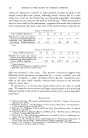
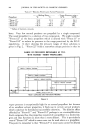
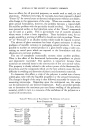
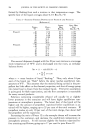
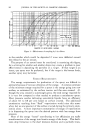
168 JOURNAL OF THE SOCIETY OF COSMETIC CHEMISTS lacquer products which had different amounts of added water, stored at room temperature for three months and at 110øF. for one month. As can be seen from this table there is practically no corrosion with a PVP hair lacquer at either room temperature for three months or at 110øF. for one month with even as much as 7350 ppm. water. With a shellac type hair lacquer product, little corrosion takes place at room temperature even up to 7350 ppm. water. At 110øF., however, enough tin starts going into solution at about 2100 ppm. water, which may possibly affect the perfume in the product. In cosmetic products such as antiperspirants, it is important to have a spray which does not reduce the skin temperature appreciably. The amount of material sprayed on the skin and the percentage as well as the type of propellent affect the amount of reduction in skin temperature. With the use of a thermistor it is possible to measure the amount of reduc- tion in skin temperature with different sprays. If the propellent evaporates in the air rather than on the skin, the amount of reduction of skin tempera- ture is less. Consequently, for warm spray skin temperatures, Freon 12 and Genetron 12 are more desirable than Freon 11 and Genetron 11. For the same reason Freon 114 and Genetron 320 are better than Freon 11 or Genetron 11. Solvents such as alcohol which have higher boiling points than the propellents also reduce the skin temperature because they evape- rate on the skin rather than in the air. Summing up, the skin temperatin e is reduced in accordance with the amount of evaporation of propellent and solvent on the skin. It has been found that with some formulations the reduction in skin temperature can be kept down to about 4øF. with a spray of short duration. Longer spray periods, because of the fact that more of the liquid reaches the skin, will reduce the skin temperature further. The safety of any cosmetic product is always of importance, and one question often raised is what if any hazard is presented by the cosmetic aerosol product. Certainly, all the rigid requirements as to toxicity and irritation for cosmetic products should be applied to aerosol cosmetics in addition, inhalation effects must be carefully considered and tested. Vapor concentrations ordinarily not attained by conventional application are readily obtained by spray application. For this reason cosmetic products must be restricted to the use of solvents with a very low toxicity rating such as the chlorofiuoromethanes and ethanes (propellents), alcohol and water. Other solvents are being considered but not until their safe-•y has been proved by toxicological studies at vapor concentrations attained in aerosols will they be adopted for use in cosmetic products. Much has been said and written about the possible hazards of a flam- mable aerosol. Many products which will not burn at room temperature can be readily ignited when atomized by a propellent. The atomization has the same effect on the vapor concentration as raising the temperature.

FORMULATING FOR PRESSURE 169 Thereby, flash points lose their significance, since this point can be attained at room temperature with all flammable products by means of a propellent. On the other hand, the fact that the propellents are nonflammable causes them to act as a fire extinguisher when a sufficient amount is used. Thus, sprays containing a high ratio of propellent to solvent can be nonflammable even though the solvent may have a very low flash point. It is for this reason that hair lacquer containing anhydrous alcohol can be made non- flammable. Although there has been much publicity given to the possible hazards because of the flammability characteristics of some aerosol products, experience with over one-half billion aerosol containers from 1947 through 1954 has failed to bear out any need for concern. The fact: that it requires a flame such as that from a burning match to ignite a flammable aerosol together with the fact that it is only necessary to remove the finger from the valve to extinguish the flame, makes the hazard slight. The Interstate Commerce Commission defines an aerosol product as flammable if any of the following three conditions occur: 1. Using the Bureau of Explosives Flame Projection Apparatus, the flame projects more than 18 inches beyond the ignition source when the valve on the aerosol container is opened fully 6 inches away from the flame or the flame flashes back and burns at the valve with any degree of valve opening. The Chemical Specialties Manufacturers Association has an additional classification of combustible for pressurized products that produce a full valve opening a flame over 8 inches but under 18 inches. 2. Using the Bureau of Explosives Open Drum Apparatus there is a significant propagation of flame away from the ignition source. 3. Using the Bureau of Explosives Closed Drum Apparatus there is an explosion of the vapor-air mixture in the drum. This test consists of spraying the aerosol product into a standard 55 gallon metal drum covered with a loose fitting lid, in which an ignition source is located. If an explosion occurs with sufficient force to move the drum lid, the product is defined as flammable. This test indicates the hazard, if any, that may result if one were to spray excessive quantities of different formulations in a confined space and there were a flame present. An additional test for checking the flammability of self-pressurized dis- pensers has been adopted by the Chemical Specialties Manufacturers Association, namely the Modified Tagliabue Open Cup Test Method. The contents of the dispenser are poured into a standard Tag Open Cup Tester after the propellent gas has been allowed to escape. The solution is heated at a rate of about 2øF. per minute until the solution flashes com- pletely across the top of the cup or the volume has dropped •/• inch from the initial starting line. Materials which drop •/• inch without flashing are recorded as having no flash under the condition of the test materials
Purchased for the exclusive use of nofirst nolast (unknown)
From: SCC Media Library & Resource Center (library.scconline.org)