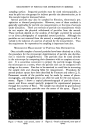
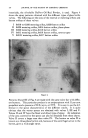
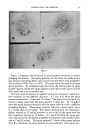
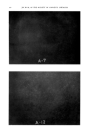
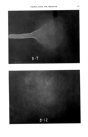
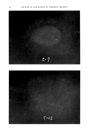
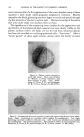
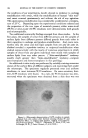
114 JOURNAL OF THE SOCIETY OF COSMETIC CHEMISTS percutaneous absorption routes of thorium chloride have been traced with radioautography by Witten and his associates (12, 13). With minimal rubbing these investigators applied an aqueous solution of thorium chloride in an alcohol, lacquer or ointment vehicle to a 5 mm. square area of normal skin, sealing the sites of application for one to seven days. Autoradiographs prepared from biopsy sections showed significant alpha activity in the Malpighian and basal cell layers of the epidermis as well as in hair follicles and follicular walls, sweat ducts and sweat glands. The depth of pene- tration was considerable as illustrated by one radioautograph showing alpha tracks in a group of sweat glands lying 1.8 mm. below the skin surface. There was little penetration into sebaceous glands and essentially none into the corium except in the immediate vicinity of the basal cell layer and appendages. Several important conclusions can be drawn from this study. As the authors emphasize, ready passage of topically applied thorium X into skin appendages apparently explains the occasional occurrence of thorium induced histologic changes at depths far in excess of those that alpha particles can traverse in tissue. In addition, this work represents the first conclusive demonstration of passage of a cation through the superficial epidermal barrier. That thorium X did not penetrate hair follicle and sweat duct walls to pass into the epidermis from below is evidenced by the virtual absence of alpha tracks in the corium. Lastly, the presence of significant amounts of thorium X in sweat ducts and sweat glands raises the possibility that in certain instances percutaneous absorption through these structures may be of greater importance than previously supposed. Studies in percutaneous absorption of anions were carried out by Selle and Miller (14, 15) working with sodium iodide containing I1% This material was applied in a.queous solution or in ointment form to the clipped normal skin of pregnant rabbits and guinea pigs. Following sacrifice of these animals twelve to twenty-four hours later, examination of the fetuses revealed significant radioactivity in numerous fetal tissues with the highest concentrations of iodide appearing in the gastric contents and thyroid gland. Radioautographs of skin biopsy sections from the parent animal showed some accumulation of iodide in the hair follicles but no conclusions could be reached concerning possible transepidermal absorption. Appli- cation for thirty to sixty minutes of aqueous radioactive sodium iodide to normal human skin was followed forty-eight hours later by persistence of radioactivity at the site of application, but no direct evidence favoring absorption of iodide could be presented. B6ni and co-workers (16), studying cutaneous penetration of anionic radicles, immersed five human subjects for forty-five minutes in a water bath containing S a5 labeled sodium sulfate in a concentration of 0.9 gm. per liter. Radioactivity was measured in the urine following sulfate recovery

RADIOISOTOPE TECHNIQUES IN PERCUTANEOUS ABSORPTION 115 by barium chloride precipitation. It was found that significant activity persisted in this urinary fraction for three to four weeks, ultimately dis- appearing in each case by the fifth to sixth week. Although precise quanti- tative data could not be determined approximate calculations indicated that 2 to 3 per cent of the sulfate applied was absorbed within one hour. Aqueous solutions of radioactive salts have also been used to demon- strate percutaneous absorption of electrolytes induced by iontophoresis. Through this procedure, ions which are not ordinarily absorbed will enter the skin, cations being introduced from the positive pole and anions from the negative pole of a galvanic current. Studying the introduction of electrolytes in rats by iontophoresis, O'Malley and his co-workers (17) found penetration of radioactive iodide, sodium ion, calcium ion and phos- phate radicle as evidenced by significant concentrations of these ions in kidney, thyroid, blood, urine and liver. In addition to the foregoing experiments concerning water and electro- lytes, percutaneous absorption of a number of physically and chemically diverse substances has been investigated with radioisotopic techniques and the findings pertaining to some of these will be described. Relating to the study of gases and vapors McClellan and Comstock (18) immersed two subjects for thirty minutes in water baths containing radon concentrations of 0.107 microcuries per liter. They demonstrated absorp- tion of the gas by showing increased radon concentrations in expired air and found also that radon uptake was further increased 65 to 87 per cent by addition of carbon dioxide to the bath water. This potentiating ef- fect of carbon dioxide results directly from dilatation of superficial capillaries in the skin induced by the gas. It is well to emphasize, however, that such blood vessel effects have so far been observed only to influence percutaneous absorption of substances in the gaseous state. The explana- tion for this lies in the fact that, since absorption of gases occurs by diffusion and obviously depends on concentration differences outside and inside the skin, increased peripheral blood flow facilitating removal of the gas would logically promote inward diffusion. Beamer and his associates (19) exposed monkeys to low vapor concentra- tions of carbon tetrachloride labeled with C TM and demonstrated radio- activity persisting for one to two days in the blood and for two to five days in expired air. These authors concluded that skin exposures up to 1150 ppm. of carbon tetrachloride did not present an industrial hazard. Axelrod and Hamilton (20) studied the effect of human skin exposure to mustard gas labeled with S 35 and lewisite labeled with As TM. These investi- gators found that mustard readily penetrated both the superficial epidermal barrier and the epidermal basement membrane, diffusing widely throughout the epidermis and corium. Exceedingly little material was present in the hair follicles. Lewisite also was found widely distributed throughout all
Purchased for the exclusive use of nofirst nolast (unknown)
From: SCC Media Library & Resource Center (library.scconline.org)