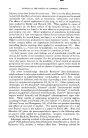
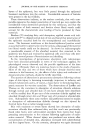
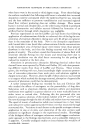
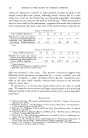
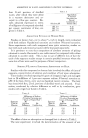
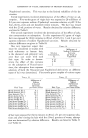
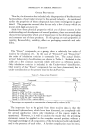
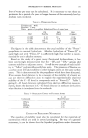
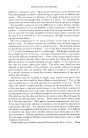
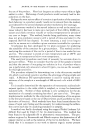
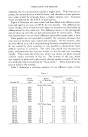
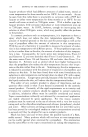
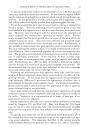
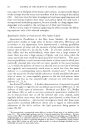
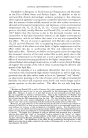
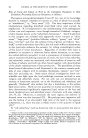
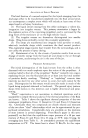
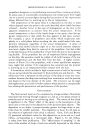
PROPELLENT IN AEROSOL PRODUCTS 145 liter of water per year can be calculated. It is necessary to run these ex- periments for a period of a year or longer because of the extremely low hy- drolysis rates involved. TABLE 6--HYDROLYSIS RATES Temperature: 86øF. Pressure: 1 arm. Units: grams of propellent hydrolyzed/liter of water/year 1% H20 H20 H20 Na2COs (Steel) (Copper) "F-11" 0.005 0.12 19 0.18 "F-12" 0.005 0.04 0.8 (0.005 "F-22" (0,01 220 0.12 0.02 "F-114" 0.005 0.01 1 . 4 0.005 The figures in the table demonstrate the usual stability of the "Freon" propellents to neutral hydrolysis. Alkaline hydrolysis of "Freon-22" is quite high and with "Freon-11" is sufficiently high that neither is recom- mended for use in alkaline systems. Based on the study of a great many fluorinated hydrocarbons, it has been convincingly demonstrated that the --CF3 and --CF,.-- groups add extreme stability to adjacent atoms. A well-known example of such stabil- ity is "Teflon" polytetrafluoroethylene resin. The presence of fluorine on a carbon atom will add stability to other halogen atoms on the same carbon atom. This is demonstrated by the propellents which have been discussed. If we assume bond distance to be a measure of the stability of a bond, we can use electron diffraction data to explain the experimentally observed stability of the C--C1 bond in compounds such as "Freon-12." Table 7, giving C--C1 bond distances calculated from electron diffraction measure- ments, shows the decrease in C--C1 bond distance in methane derivatives when fluorine is introduced into the molecule. TABLE 7--STABILIZING EFFECT OF FLUOP-INE ATOMS C--C1 Compound Bond Distance CH=CI= 1.77•. CC14 1.76 CHC1Fe 1.73 CCI=Fe 1.70 EFFECT ON PACKAGING MATERIALS The question of stability must also be considered for the materials of construction which are used in aerosol packaging. By way of a general statement, it can be shown that the liquefied propellents under discussion

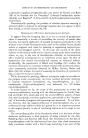
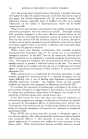
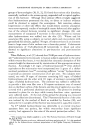
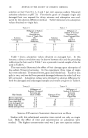
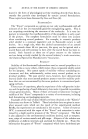
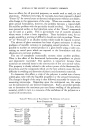
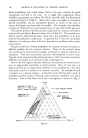
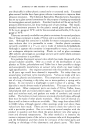
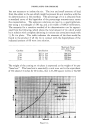
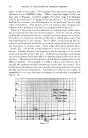
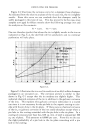
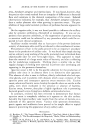
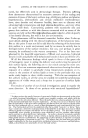
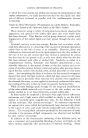
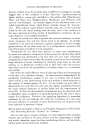
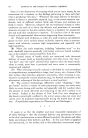
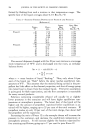
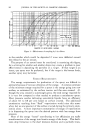
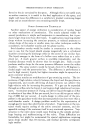
146 JOURNAL OF THE SOCIETY OF COSMETIC CHEMISTS have no effect, for all practical purposes, on metals such as steel, tin and aluminum. Polished steel strips, for example, have been exposed to liquid "Freon-12" for several years at elevated temperatures without any observ- able change in the appearance of the strip. When one considers the com- plete aerosol formulation, however, the problem becomes a typical shelf- life stability problem with the particular metals involved. The data which were presented earlier on the hydrolysis rates of the "Freon" compounds can be used as a guide. This is particularly true of cosmetic products where water is often a basic ingredl'ent. These hydrolysis rates, for ex- ample, would be a warning of difficulty should one wish to package "Freon- 11" or "Freon-22" in an alkaline system which would be exposed to metal. The advent of glass containers has been of great assistance in solving problems of metallic corrosion in packaging aerosol products. It is now possible to market an aerosol product in a glass bottle using a valve con- taining no metal parts which are exposed to the formulation and thus eliminate any corrosion problems. The use of completely nonmetallic systems raises another problem. What is the effect of the fluorinated hydrocarbon propellents on plastic and elastomeric materials? The question is important because these materials are essential items in the construction of low cost aerosol valves. This property is closely related to the solvent power of the fluorinated hy- drocarbons and the compounds which are the best solvents cause the most difficulty in swelling and distortion of plastic and elastomeric materials. To determine this effect, a strip of the polymer is sealed into a heavy walled glass tube with the liquefied propellent or the aerosol formulation. The change in length of the strip is then followed accurately by means of a measuring microscope. Depending upon the anticipated use, the strips can be maintained at any desired temperature. Such a procedure permits one to determine the maximum per cent linear swelling of the polymeric material, which in turn is a measure of the usefulness of the polymer as a material of construction. TABLE 8--SWELLING OF ELASTOMERS--% INCREASE IN LENGTH Room Temperature Neoprene Natural GN Rubber Buna N "Freon-12" CC12F2 0 6 2 "Freon-11" CC13F 17 23 6 CC14 36 44 11 "Freon-22" CHC1F2 2 6 26 "Freon-21" CHC12F 28 34 48 CHCh 43 45 54 "Freon-IT' CCi•F• 0 6 2 "Freon-21" CHCI•F 28 34 48 CH•CI• 37 34 52
Purchased for the exclusive use of nofirst nolast (unknown)
From: SCC Media Library & Resource Center (library.scconline.org)