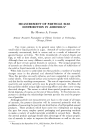
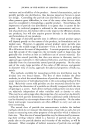
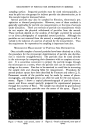
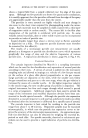
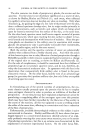
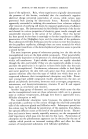
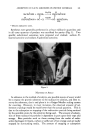
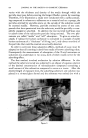
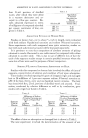
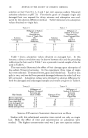
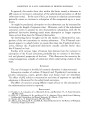
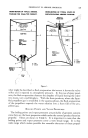
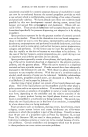
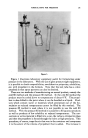
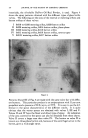
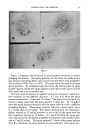
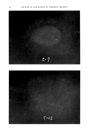
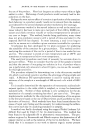
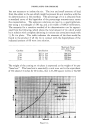
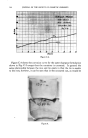
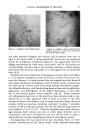
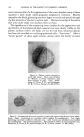
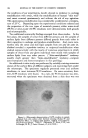
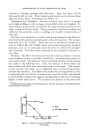
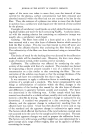
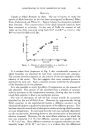
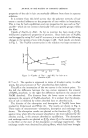
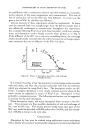
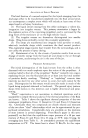
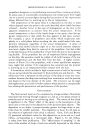
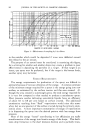
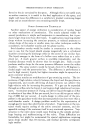
MEASUREMENT OF PARTICLE SIZE DISTRIBUTION IN AEROSOLS 81 sampling surface. Impacted particles may be sized microscopically, or may be split into size groups for indirect particle size determination, as in the cascade impactor discussed below. Aerosol particles may also be sampled by filtration, electrostatic pre- cipitation or thermal precipitation. However, none of these methods is generally applicable for particle size measurements on the type of aerosols under discussion. There are methods of particle size measurement which do not require the physical withdrawal of particles from the aerosol. These methods depend on the analysis of the light scattered by aerosols or on direct photography of suspended aerosol particles. Although the particles are not removed from the aerosol, a sampling process is still in- volved in the isolation of a portion of aerosol for the measurement. Thus the requirement for representative sampling is important here also. MICROSCOPIC MEASUREMENT OF PARTICLE SIZE DISTRIBUTION Once suitable samples of aerosol particles have been obtained on a slide, the procedure for the microscopic determination of particle size distribu- tion is relatively straightforward. The particles may be sized directly in the microscope by comparing their diameters with an eyepiece microm- eter. It is sometimes convenient to project the particle images through the microscope on a screen, where the particle sizes can be compared with rulings on the screen. Care has to be exercised to avoid bias in traversing the sample slide and choosing fields for measurement. Procedures for aerosol product sprays have been described by ¾eomans and others (2, 3). Permanent records of the particles may be made by means of photo- micrographs, and enlarged prints can often be used for th'e size measure- ments. Figure 1 shows a typical photomicrograph of particles from a stearic acid Freon aerosol specially prepared for experimental purposes through the courtesy of Root. The sample was obtained by gravitational settling, and represents particles near the center of the spray. Figure 2 Figure 1.--Stearic acid aerosol, center of spray. Figure 2.--Stearic acid aerosol, outer part of spray.

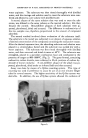
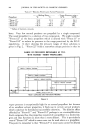
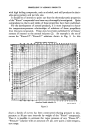
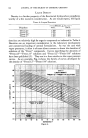
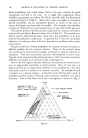
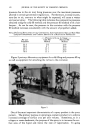
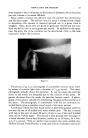
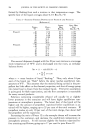
82 JOURNAL OF THE SOCIETY OF COSMETIC CHEMISTS shows a typical field from a sample collected near the edge of the same spray. Although too few particles are shown for quantitative conclusions, it is readily apparent that the particles collected from the edge of the spray are appreciably smaller than the ones from the center. The particles in some aerosols are highly volatile and may change in size even in the short time required for photographing under the micro- scope. Such materials may be sampled on slides coated with a thin layer of magnesium oxide or carbon soot(4). The craters left in the film after evaporation of the particle is correlated with particle size. In some volatile aerosol materials, dyes or other stable tracers can be incorporated to provide an index of particle size. Liquid droplets larger than about a micron tend to flatten somewhat on deposition on a slide. The apparent particle diameter must therefore be corrected for this effect(4). The results of a microscopic particle size measurement are usually plotted as a histogram or particle size distribution curve which represents graphically the range of sizes and the relative frequencies of various particle sizes. A typical size distribution is shown, page 84, in Fig. 4 (9). CASCADE IMPACTOK The cascade impactor described by May(4) is a sampling instrument which can be used for the classification and separation of aerosol particles according to their sizes. A stream of aerosol is pulled into the instrument sampling tube and allowed to impinge at a velocity of a few feet per second on the surface of a glass slide placed perpendicular to the gas stream. Large particleg are deposited on the slide, while the smaller ones follow the gas streamlines and pass on to the next stage, where the gas velocity is increased by means of a smaller nozzle. At the higher impaction velocity in the second stage, the next smaller group of particles is deposited. The original instrument has four such stages through which aerosol is passed in a series arrangement. Additional stages have been used to extend the range of the instrument and modified impaction devices have been con- structed to handle special aerosols. Although the particle size separation obtained in a cascade impactor is only partial, satisfactory results can often be obtained after the instrument is calibrated for a specific type of aerosol. The cascade impactor is best suited for working in the particle size range from about 1 to 30 microns. Deposited samples may be examined microscopically, in which case the particle size separation serves to im- prove the accuracy of the microscopic measurements. An approximate par- ticle size distribution can also be obtained by weighing the material de- posited on each slide. For specific materials, chemical or colorimetric pro- cedures can be used to provide a rapid indication of particle size distribu- tion.
Purchased for the exclusive use of nofirst nolast (unknown)
From: SCC Media Library & Resource Center (library.scconline.org)