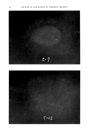
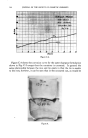
188 JOURNAL OF THE SOCIETY OF COSMETIC CHEMISTS chose the temporal areas and the back) is carefully surrounded by an arti- ficial, closely-fitted annular wall and the enclosed space carefully protected, but without affecting evaporation or temperature, the amount of sebum which can be recovered from that protected area continues to increase with the length of time interval, until amounts are reached which far surpass the casually encountered levels or the quantities which apparently had been generally considered to be a fixed maximum for the area. In other words, in these protected areas, amounts of lipid will often accumulate which are greatly in excess of that quantity at which the presence, back pressure, "freezing," brake effect, etc. of surface sebum was formerly supposed to inhibit further delivery from the sebaceous glands. This finding, as well as others pointing in precisely the same direction impelled us to the concept that it is neither exclusively nor always the self-regulating arrest of delivery of sebum from the glands to the surface which accounts for the constant levels found at a given skin site but rather the fact that unless a site is adequately protected, or the lipid film exceptionally viscous, only a certain amount of lipid can be held in place on a given area and the excess is constantly being spread, carried away and removed by various automatic and fortui- tous devices. In other words, it is our concept that the total lipids of the skin surface are to be divided into two parts--one a much smaller fraction, being in a film which is constantly flowing on and above the outer surface of the horny layer and the other, generally far larger fraction, which is filling a container or subsurface receptacle consisting mainly of the meshes, lacunae and splits in the horny layer, the follicular infundibula, etc. It is our concept that it is the fixed capacity of this subsurface receptacle together with the individually varying capabilities of lipid emulsification which are responsible for the relative constancy of the amount of surface lipids which will be recovered from a given area of a given subject at casual examinations performed at sufficiently long intervals. Once the subsurface receptacle is filled to capacity, further lipid supply automatically leads to spreading of the excess material over the skin surface and thus to its regular removal (unless specially designed artificial means are applied to prevent this, such as, for example, the tightly fitting protective devices mentioned above as being employed by Herrmann and Prose in ascertaining the "protected level" of skin surface lipids). At this point I must digress for a moment to return to one of the findings in the atropinized nonsweating skin sites--as I have stated, the atropiniza- tion and inhibition of sweating in a given skin site distinctly reduced the amount of lipid which appears and spreads on the surface, as evidenced by the diminution of darkening of the surface by osmic acid vapors. How- ever, atropinization did not consistently reduce the amount of ether-soluble substances which was collected from the skin area by the application of ether to the surface. Our theoretical explanation of this is as follows. As

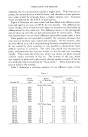
CLINICAL DISTURBANCES IN SWEATING 189 generally applied and as used in our own studies, osmic acid vapors darken only the lipids in the most superficial film which is resting and moving on the surface and external to the stratum comeurn, and hardly reach or darken the much greater quantity of lipids within the subsurface receptacle which is constituted largely of the intracorneal clefts and lacunae, and of the infundibula of the lanugo and other hair follicles (40). Therefore, while inhibition of sweating may materially reduce the emulsification, de- livery and flow of lipids to and on the topmost surface and thus reduce the osmic acid surface darkening, this reduction of the smaller fraction will not necessarily be reflected in a material quantitative reduction of the total of ether-removable lipids. We believe that the best explanation for this is that the far greater lipid fraction which is removed when the subsurface receptacle is extracted with ether is evidently less influenced by the local- ized inhibition of sweating than is the far smaller lipid fraction on the surface. Presumably the ..original degree of hydration of the horny sub- stance is promptly restored in the atropinized site by immediate uptake of sweat and/or water from adjacent areas of stratum comeurn, from the en- vironmental atmosphere, etc. This assumption conforms with Blank's in vitro findings that the state of hydration of removed horny material is maintained in equilibrium by homeostatic mechanisms which do not per- mit the moisture content of the keratin to fall below 10 mgm. per cent (37). it appears to us that while the older theories which explain arrest of further sebum delivery by the mere presence of highly viscous surface sebum may well be applicable under certain conditions and may still suffice to explain some of the phenomena observed, many of the findings are not compre- hensible without the concept of a subsurface receptacle of an individually fixed capacity from which, no matter what the rate of lipid production and the quantity of delivery, any excess of lipid or lipid-sweat emulsion will inevitably overflow and be removed from the site in a variety of constantly effective ways. The only experimental data which may at first glance seem to speak against the concept of the overflowing subsurface receptacle are those recently reported by Enderlin, Brun and Linder (41). After single ex- perimental skin wipings with lipid solvents of various strengths and efFi- ciencies, Jadassohn and his group failed to find any difference in the length of the period of time required for the skin area to replace the lipids to their original (casual) level. Regardless of whether they used soaps, various wetting agents, alcohol-ether-mixtures, etc. the time required for the skin to replace the lipids removed was almost exactly the same. Two possible hypotheses occur to us which, alone or in combination, might help to ex- plain the seeming contradiction between these results and the concept of the subsurface receptacle. The first is that even when the lipids are removed with the weaker lipid solvents of Jadassohn's series, the receptacle is not
Purchased for the exclusive use of nofirst nolast (unknown)
From: SCC Media Library & Resource Center (library.scconline.org)