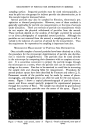
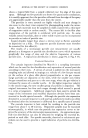
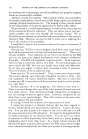
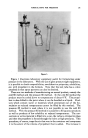
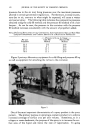
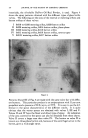
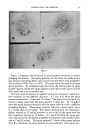
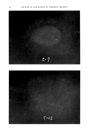
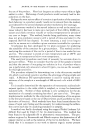
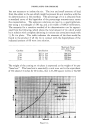
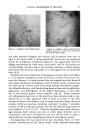
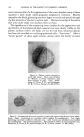
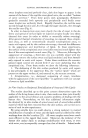
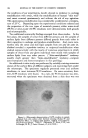
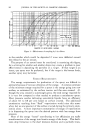
176 JOURNAL OF THE SOCIETY OF COSMETIC CHEMISTS Only two categories of manifestations will be included in my discussion of today. These are: first some of the basic manifestations of the Sweat Retention Syndrome (1-4) and second some of the interrelationships between sweat and oily substances (e.g., sebum) upon the skin's surface and their effects upon the health and function of the skin and its bearer. THE SwE^T RETE•TIO• S¾•,rt)ROVtE When for any reason the normal delivery of the secreted sweat to the skin's surface is seriously impeded or arrested, a series of untoward events may take place. These can include both local and general pathological happenings. For example, whenever the sweat cannot pass outward normally through the sweat duct and make its accustomed exit out of the ductal orifice onto the skin's surface, some types of sweat retention may take place, depending on whether or not the secretory cells of the acini appertaining to that duct continue to elaborate sweat. Under experi- mental conditions, it seems that the obliteration or firm blockage of a sweat duct quite often leads to cessation of function of its particular acini (5). Under clinical conditions this is apparently less common and when the ductal opening and/or passages do not allow the normal free outward movement of the elaborated sweat, the fluid with its contents may force itself through abnormal channels and go out into the epidermal and/or cutaneous tissues surrounding the obstructed sweat duct. As a conse- quence of these abnormal "autogenous intradermal injections" of sweat, a number of important local disease processes can be initiated. These include the sensations of burning or itching at each stimulus to sweat secretion and the production of vesicular or pustular, papular or lichenold lesions. The gross and microscopic form, the clinical and histopathologic •tppearance and course of these sweat retention lesions depend upon such factors as: the depth at which the duct is obstructed (2, 6, 7) the particu- lar path which the secreted sweat finds or makes in order to effect its escape from the ductal lumens the rate and pressure under which it escapes the quantity and quality of the inherent and adventitious materials con- tained in the escaping sweat (8) the presence or invasion and activity of infecting microi3rganisms (9) the nature, quantity, thickness, etc., of the horny layer and other skin structures at the site of the escaping sweat to name but selected examples of the many factors which can determine what sort of skin lesion eventuates. Depending upon factors such as these, in some instances there develops ordinary prickly heat (Fig. 1), in others miliaria profunda, in others per- haps dysidrotic vesicles or urticarial papules (Fig. 2), in others solely tingling or itching, in still others miliaria pustulosa or large follicular or perifollicular abscesses (Fig. 2), etc. Moreover, since certain drugs (e.g., Arabfine, bromides), and some foods

CLINICAL DISTURBANCES IN SWEATING 177 Figure 1.--Millaria rubra (prickly heat). Figure 2.--Millaria rubra (prickly heat) Miliaria pustulcsa and sweat urticaria in one and the same patient. and other potential allergens and irritants may be present from time to time in the sweat which is being periodically forced into the periductal tissues by autogenous intradermal injections, the opportunity both for allergic sensitization by these sweat constituents and for the production of local allergic reactions and/or local irritant reactions is clearly present each time sweat secretion takes place in a sweat gland with an obstructed duct (4, 8). Furthermore, since impairment of the patency of sweat ducts and orifices is a not unusual consequence of the local lesions of some of the most com- mon skin diseases, it is quite obvious that the original local skin lesion of some classic dermatoses, by leading to sweat retention and its consequences, can often set up a vicious circle of increased itching, vesiculation, papula- tion,lichenification,etc.,and thereby bring about an important complication, aggravation and prolongation of the original dermatosis, in turn lead- ing to new and/or greater sweat retention (10, 4). Sweat retention and self-perpetuating cycles of this kind have been demonstrated or pos- tulated by us to play important roles in cases of certain of the most common of chronic skin diseases, such as atopic dermatitis, lichen chronicus simplex, ichthyosis, psoriasis, dysidrosis and hand "eczemas," nummular eczemas as well as some less common ones like the lichenold drug eruptions from Atabrine (1, 4, 8, 11, 12). There are doubtless many other dermato- logic diseases, both common and rare, in which sweat retention and its consequences still await investigation and may still be shown to play a substantial role of either fundamental, causal or contributory nature. Accompanying the local disturbances just described, there are often systemic disturbances of the human body's finely adjusted physiologic
Purchased for the exclusive use of nofirst nolast (unknown)
From: SCC Media Library & Resource Center (library.scconline.org)