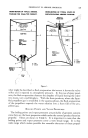
THERMODYNAMICS OF SPRAY FORMATION 205 ANALYSIS OF SPRAY PROCESS The brief fraction of a second required for the liquid emerging from the discharge orifice to be transformed completely into the final aerosol prod- uct encompasses a complex event which will include at least some of four steps found in all spray formations: (1) The liquid stream issuing from the orifice undergoes a violent dis- integration into irregular masses. This primary atomization is begun by the explosive action of the vaporizing propellent, and is continued by the drag forces of the stationary air on the high-velocity liquid. (2) The irregular masses are themselves disintegrated into smaller drops. Drag forces probably control this secondary atomization. (3) The drops are transformed into irregular solid particles or small, relatively involatile drops which constitute the final aerosol product. This evaporation stage requires heat transfer from the surroundings, and is not unlike the process of spray drying. (4) Entrainment of air by the stream of particles results from an ex- change of kinetic energy from the liquid jet and drops to the air through which it passes, accelerating the air in the zone of the jet. PRIMARY ATOMIZATION The initial disintegration of the liquid stream from the orifice is often discussed with too much emphasis upon the action of the propellent. A common belief is that all of the propellent "flashes" instantly into vapor, exploding the jet into the final particles or at least into the total number of particles finally resulting. "Flashing" or "exploding" connote time intervals too short for any other action to occur, but such cannot be the case. Disintegration by this means would certainly result in much of the liquid being projected sideward or backward. The general spray pattern shows little motion in this direction and is highly directional and pene- trating. "Flash" vaporization is not uncommon in chemical operations and is susceptible to simple thermal analysis if the thermal properties of the fluid are known. Table 1 shows the significant thermal properties of the two commonest propellents, Freon 11 (Genetron 11) and Freon 12 (Genetron 12). Chemically these two compounds are closely related and mixtures of the two show "ideal" relationships which can be approximated by pro- portional calculations. Considerable data are available on the mixtures of most interest in aerosol dispensing. From Reed's paper in this sym- posium(9) we find that the equilibrium vapor pressure of a 50 per cent mixture of Freon 11 arid Freon 12 is 33 psig. at 70øF. (also 33 psig. by averaging data from Table 1). At atmospheric pressure the equilibrium temperature is 6øF. The latent heat is about 70 Btu/lb. for the vapor

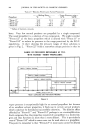
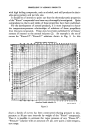
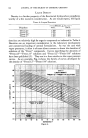
206 JOURNAL OF THE SOCIETY OF COSMETIC CHEMISTS formed by flashing from such a mixture in that temperature range. specific heat of the liquid averages about 0.175 Btu/lb./øF. TABLE 1--SELECTg•) T. ERMa• PgOPERTIES OF F•Eo•-11 aN•) F•EoN-12 (Reference 6) The Latent Spec. Heat Temp., Pre. ss., Heat (liq.) øF. psm. Btu/lb. Btu/lb./øF. Freon-11 Freon- 12 --40 0.74 87.5 0.197 --10 1.92 85.2 0.198 20 4.34 82.8 0.199 50 8.80 80.4 0.204 80 16.3 77.8 0.209 110 28.1 75.1 0.212 130 39.0 73.1 0.214 --40 9.32 73.5 0.145 --20 15.3 71.8 0.145 0 23.9 70.0 0.145 20 35.7 67.9 0.146 40 51.7 65.7 0.148 60 72.4 63.3 0.156 70 84.8 61.9 0.157 If an aerosol dispenser charged with this 50 per cent mixture is at average room temperature of 70øF. and is discharged into the room, an enthalpy balance shows: 70x = (1 -- x)(0.175)(70 -- 6) 11.2 x - • 0.14 81.2 where x = mass fraction of liquid "flashing." Thus, only about 14 per cent of the liquid can "flash" before the spray reaches equilibrium tem- perature of 6øF. This assumes that the material being carried in the pro- pellent has little effect on the thermal properties, and that all energy going into latent heat is drawn from the residual liquid. The latter assumption is quite good for flash vaporization, and the first assumption is reasonable for many aerosol products. Solutions containing considerable ethanol will usually be at slightly lower pressures in the container and will have higher equilibrium tem- peratures at atmospheric pressure. The latent heat of the liquid will be higher and the amount of propellent vaporized before equilibrium is at- tained will be higher, ranging up to 25 per cent of the total contents. If propellent makes up only 50 per cent of the total charge, then about half the propellent will be vaporized. Increasing the ratio of Freon 12 in the example chosen will increase the pressure in the container, and decrease the equilibrium temperature at atmospheric pressure. It will increase slightly the fraction vaporized be- fore attaining equilibrium, going up to 17 per cent for pure Freon 12.
Purchased for the exclusive use of nofirst nolast (unknown)
From: SCC Media Library & Resource Center (library.scconline.org)