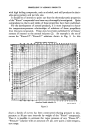
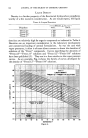
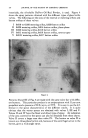
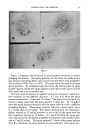
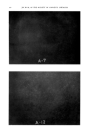
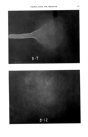
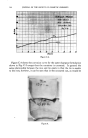
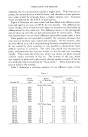
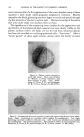
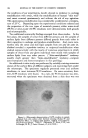
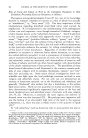
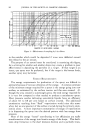
THERMODYNAMICS OF SPRAY FORMATION 207 The effect of this "flashing" on the disintegration of the liquid stream is not well known, and unfortunately no information is available in the litera- ture on this particular system. An adequate experimental program would eliminate much of the conjecture and would fit aerosol formation into the existing knowledge of spray formation. Experimental data and comparison with other spray information is available for sprays of liquid nitrogen (5). This situation is not strictly analogous to aerosol dispensing, for the nitrogen stream is not above its equilibrium temperature and therefore does not truly "flash." The large temperature difference between the surroundings and the liquid, however, plus the high velocity, do promote rapid heat transfer to the stream and subsequent rapid vaporization. Thus the nitrogen data are applicable to disintegration of the liquid remaining after initial flashing is complete. Miesse's data are sketchy because the liquid completely vaporized, and only approximate data can be obtained from flash photographs of the sprays. At low pressures and therefore low flow rates through an orifice 0.0281 inch in diameter the disintegration is quite similar to that for water under similar conditions and can be correlated with other data for water. At pressures above 50 psi. through that orifice and larger orifices the Reynolds numbers for the liquid jets are much higher--above 100,000- and secondary atomization is significant. The low pressures prevailing in aerosol dispensers and the small orifices and high viscosities of many fluids usually keep the Reynolds number of the jet well below the figures for liquid nitrogen given by Miesse. This suggests that most of the atomization occurs in a manner quite similar to that for nonvolatile liquid. Root in this symposium (10) shows large "wet spots" in the core of the spray several inches from the orifice, indi- cating the slower break-up of liquid to be expected with such primary atomization. The available correlations of data for break-up of liquid jets are still imperfect because of the difficulties of relating all the variables, such as the physical properties of the liquid and of the receiving gas, the relative veloc- ity of the two fluids, the velocity gradient within the liquid jet and rough- ness and vibrations at the orifice. In fact, no single correlation has yet been proposed to relate all these, and those proposed relate to the dis- tance within which the jet disintegrates or to the maximum drop size to be found in the resultant spray. No correlation is yet able to predict the analysis of drop sizes in the spray, or more than some average drop size. One major reason why this prediction is lacking is a corresponding lack in knowledge of the drop sizes in any spray at various stages of its develop- ment, including the final spray if a large proportion is smaller than 20 microns in diameter. The earlier theoretical analyses by Rayleigh (8) and Weber (11) gave

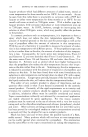
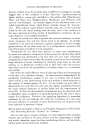
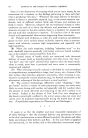
208 JOURNAL OF THE SOCIETY OF COSMETIC CHEMISTS valuable insight into the mechanism of disintegration, but neither in- vestigator was able to include all variables. Rayleigh's predictions are unsatisfactory for high-speed jets, and Weber's give predictions of the right type, although displaced from actual results. The best correlation for maximum drop size appears to be Holroyd's (4), which includes centrifugal force within the jet and surface forces to give a relation of the form: D/2a = 14z-2•'(R) The function of the Reynolds number is best evaluated empirically for each general application, Miesse (5) found that water and liquid nitrogen through orifices with straight lead lines and also orifices with sharp turns in the lead lines just prior to the discharge (cross-feed) could be com- bined by: D/2a = /'F-2/a(23.5 + 0.000395 R) It must be remembered that this equation is valid only where no secondary atomization occurs, for this would give much smaller maximum drops. This relationship says that smaller drops result from increasing the jet velocity and fluid viscosity and decreasing the surface tension. The magnitude of the terms is such that changing the fluid density and orifice size have little effect. Baron (1) developed a relationship for breakup length of the form: L/2a = Wf(R) Miesse (5) was able to combine all his data on water and liquid nitrogen through straight-feed orifices and "cross-feed" orifices with such an equa- tion, evaluating the function to be: L/2a = 1.714ZR-5/8 Miesse contends that this equation also correlates his data on secondary atomization. This equation shows that the break-up length decreases with decreasing fluid viscosity and jet velocity and increasing surface tension. The fluid density and orifice size are of little effect. Note that changes in the fluid tend to give larger drops with shorter breakup and vice versa. These theoretical analyses probably apply to the primary atomization stage after flashing ceases within the margin of error in measurement tech- niques now available. From the standpoint of successful dispensing of a commercial aerosol product, additional factors must be considered, as indicated by Root (10) in this symposium. The most obvious are spray pattern, both in cross section and penetration, and delivery rate. These additional factors can- not be included in a correlation such as discussed above, and should be treated separately for each proposed product.
Purchased for the exclusive use of nofirst nolast (unknown)
From: SCC Media Library & Resource Center (library.scconline.org)