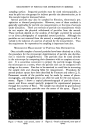
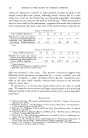
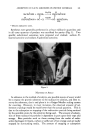
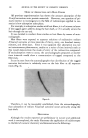
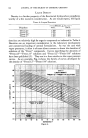
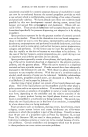
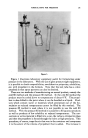
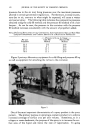
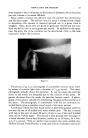
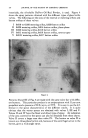
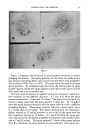
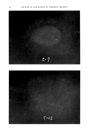
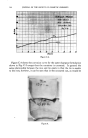
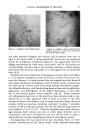
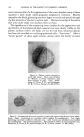
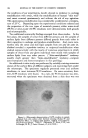
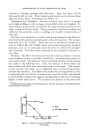
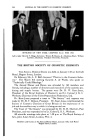
186 JOURNAL OF THE SOCIETY OF COSMETIC CHEMISTS the conditions of our experiments, lanolin showed no tendency to undergo emulsification with sweat, while the emulsification of human "skin wax" and sweat occurred spontaneously and without the aid of any agitation. This spontaneous emulsification was considerably accelerated at a tempera- ture of 33 ø C. Depending upon the experimental conditions selected and the proportion of the two types of materials present, either water-in-oil (W/O) or oil-in-water (O/W) emulsions were demonstrated, both grossly and microscopically. Two additional noteworthy findings emerged from these studies. In the first place, the samples of sweat from different persons and the samples of surface lipids from different persons differed greatly from each other in their capacities to undergo and produce emulsification. And, more note- worthy still, the sweat and skin lipid samples from one and the same in- dividual revealed a superlative tendency to reciprocal emulsification when studied comparatively with the results of numerous experiments in which samples of sweat from any given individual were mixed with samples of surface lipids from any other person. ("Auto-emulsification" tendency usually much greater than "homo-emulsification" tendency--compare auto-transplants and homo-transplants in skin grafting.) An additional in vitro study was performed by suitably staining numerous smears of the surface films of different subjects and examining them under the microscope. The specimens regularly presented even and uniform emulsions--in most instances W/O emulsions. On some occasions, how- ever, O/W emulsions were found. As a rule, the W/O emulsion was dem- onstrated when the specimens were obtained from a skin that was not Figure &--Microscopic demonstration of O/W emulsion in sample obtained from skin surface after thermal sweating (Sudan IV and Methylene Blue in original, lipid droplets, reddish, surrounded by bluish aqueous phase). (20X 5.) (Herrmann, F., Prose, P. H., and Sulzberger, M. B., 5 e. Invest. Dermat., 21, 414 (1953).)

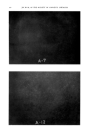
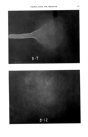
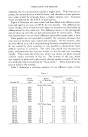
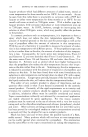
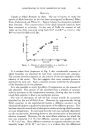
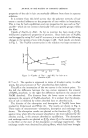
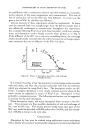
CLINICAL DISTURBANCES IN SWEATING 187 sweating visibly, while the O/W emulsions were generally found when the skin surface was grossly moist and invariably when thermogenic sweating had been produced (Fig. 6). The type of emulsion on the skin surface therefore depends largely on the ratio in which the two phases are present at a given time. 7he Concept of the Subsurface Receptacle, Its Fixed Capacity and dutornatic Overflow drrangements There is one more concept based upon experimental findings which I would like to present before I turn to the possible clinical and cosmetic implications and the practical applications of the results of modern research in this field. This is our concept of something which I think may best be described by the term "Skin Subsurface Receptacle" or "container" or "reservoir." Perhaps the simplest way to explain this concept is to recount some of the experimental evidence which led to its formulation. One of the first and most fundamental findings was that when a given skin area is first cleansed and the lipids then are removed with a suitable solvent after a stated interval (say at the end of twenty hours), a given quantity of lipids is found and this amount is quite constant at each repetition of the same procedure at the same site. But even if the interval between the inaugural cleansing and subsequent removal is doubled, trebled or length- ened indefinitely, and the lipids then removed, the quantity obtained is still about the same after a certain time and after a certain maximum quantity has been reached, there has been no further significant increase of lipids removable from that skin surface. Moreover this maximal quantity, which has been replaced during the time period after the original removal by cleansing, is just about the same as one finds at a removal of the lipids from that area without preceding cleansing and at almost any given time of casual selection (a quantity which Herrmann and I have therefore called the "casual level"). The original interpretation of this failure of increase of removable sur- face lipids beyond a certain maximum at a given site was that the quantity of sebum present in itself inhibited the further delivery and spread from the glands to the surface (38, 29, 39, 33, 32). The ensuing concept is: when a given fixed quantity of surface lipids had accumulated, the surface film with its inertia (a sort of freezing of the lipid stream) restrained fur- ther outflow from the sebaceous glands and that the presence of "frozen" lipids at the follicular opening interfered with further delivery to the sur- face, etc. (29, 32, 33, 34, 36). While we originally accepted these explanations as completely adequate, several years ago the following observations made it seem probable to us that additional factors were at play. In 1951 Herrmann and Prose (21) showed that if an area of the skin's surface (they
Purchased for the exclusive use of nofirst nolast (unknown)
From: SCC Media Library & Resource Center (library.scconline.org)