94 JOURNAL OF THE SOCIETY OF COSMETIC CHEMISTS In an unpublished experiment conducted in our laboratory, it was found that a single application of an antiperspirant cream based upon aluminum sulfate (buffered with aluminum hydroxide) brought about a reduction of the total bacterial count in the axilla of over 95 per cent, the lowest count being reached about sixteen hours after the application after forty hours the count was still less than 50 per cent of the normal. Although aluminum salts are being used most frequently in antiperspi- rant formulations, more recently certain zirconium compounds have entered the picture. Kalish (44) mentions sodium zirconium lactate, a complex salt better designated as sodium hydrogen trilactatozirconylate. As yet, there exists no convincing explanation of this compound's claimed efficacy. Specifically, it gives no evidence of bacteriostatic action in vitro accord- ingly, its deodorant effect must be due to the ability of zirconium to com- bine with the fatty acids, the amines and with other potentially odoriferous substances present in perspiration. The ability of sodium zirconium lactate to precipitate proteins suggests a capacity for antiperspirant action. Pharmacological and toxicological data on zirconium compounds will be found in a recent paper by Blumenthal (45). According to Hopf (9), the following do not check underarm perspira- tion: calcium chloride 11 per cent, hydrochloric acid 0.3 per cent, ammo- nium chloride 20 per cent, formaldehyde 5 per cent, silver nitrate 5 per cent, chromic acid 5 per cent• potassium permanganate 1 per cent, hexachloro- phene 0.5 per cent plus sodium carbonate 2 per cent, lactic acid 5 per cent and tannin 2 per cent however, ferrous sulfate 27 per cent, zinc acetate 20.3 per cent and magnesium sulfate 12 per cent show weak antiper- spirant action. CATIONIC AGENTS It was mentioned at the outset that, whereas most antiperspirants are also deodorants, some deodorants may have an antiperspirant effect. The latter is true of quaternary.ammonium compounds such as benzal- konium chloride and cetyl pyridinium chloride which, therefore, combine a bacteriostatic and, consequently, a deodorant effect with inhibition of eccrine sweat delivery to the skin surface. The latter inhibitory effect is associated with an e]ectrophysiologic potential along the sweat duct, whose existence is postulated by Sulzberger, Herrmann, Keller and Pisha (46). This is presumed to be due to an electropositive charge at the proximal part of the sweat organ, and an electronegative charge at the distal end of the duct since the sweat itself is assumed to be positively charged, this causes its attraction toward the ostium because of the latter's negative charge. The cationic, i.e., electropositive character of a sub- stance like benzalkonium chloride is made responsible, therefore, for the observed inhibition of sweating. Incidentally, similar effects are pro-

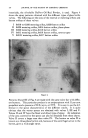
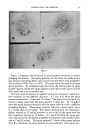
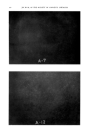
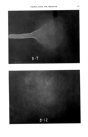
ASPECTS OF ANTIPERSPIRANTS AND DEODORANTS 95 duced by solutions of certain electrolytes from the "positive" portion of the Hofmeister series, such as the "lyotropic" lithium, potassium and sodium iodides, also lithium salicylate and thiocyanate. In some cases, the effect is intensive enough to cause the formation of sweat retention vesicles. An analogous mechanism is being postulated for the anhidrotic effect of Arabfine (Mepacrine hydrochloride) by Miller, Herrmann and Rubir• (47). It appears that the skin plays a significant role in the elimination of orally ingested Arabfine (a drug originally introduced for the treatment of malaria). Moreover, external application of Arabfine in aqueous solu- tion to the skin indicates its attraction to the ostia and the spiral portions of the sweat ducts, as shown by intense fluorescence in ultraviolet light. Since Arabfine is cationic in character, it is presumed to be attracted to the terminal end of the ducts, decreasing their electronegative charge and thus reducing the electrophysiologic potential along the ducts. The result is inhibition of sweat delivery which can be intensive enough to yield a clinical equivalent ofmiliaria. Evidence of drug retention, albeit in traces, by the terminal structures of the ducts in some cases, for as long as six years after its intake (48) supplies the reason for symptoms of the grave sweat retention syndrome observed it militates, of course, against the utilization of Arabfine as a perspiration inhibitor, while, at the same time, suggesting the study of structurally related agents which would be free from its undesirable side effects. In view of the effect of cationic agents referred to above, it 'is not sur- prising that anionic surfactants, such as sodium lauryl sulfate or dioctyl sodium sulfosuccinate promote the flow of eccrine perspiration. Inciden- tally, this should be kept in mind with particular reference to the use of such materials in the formulation of deodorant preparations, either in the form of adjuvant components (such as emulsifiers) or by way of utilizing their deodorant effectiveness per se (49). Electrolytes from the "negative" portion of the Hofmeister series, such as potassium sulfate, also tend to promote eccrine sweating. PH^RMACODYNAMIC ANTIPERS PIRANTS Up to this point, the discussion of the subject of antiperspirants was intended to bear upon their role within the cosmetic picture. For the sake of greater completeness, at least brief reference should be made to certain newer pharmacologic and therapeutic aspects of perspiration control. The sweat glands are controlled by the sympathetic nervous system, but respond to stimulation by parasympathetic agents. Eccrine sweating is a "cholinergic" process. Since attopine is known to antagonize the action of acetylcholine (the chemical mediator between the endings of the sweat nerve fibers and the sweat glands), it is clear why it reduces hyper-
Purchased for the exclusive use of nofirst nolast (unknown)
From: SCC Media Library & Resource Center (library.scconline.org)