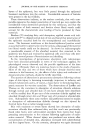
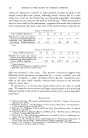
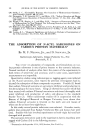
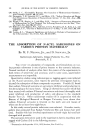
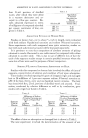
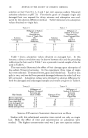
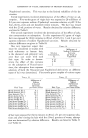
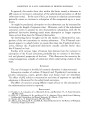
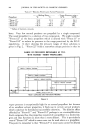
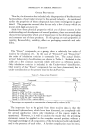
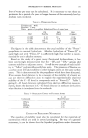
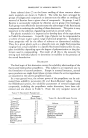
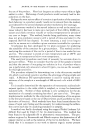
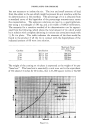
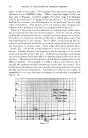
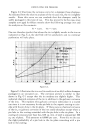
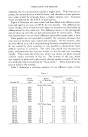
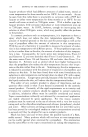
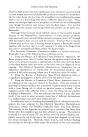
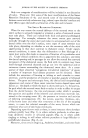
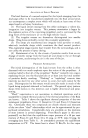
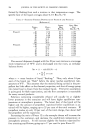
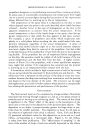
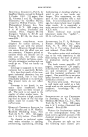
ADSORPTION OF N-ACYL SARCOSINES ON PROTEIN MATERIALS 129 N-palmitoyl sarcosine. This was due to the limited solubility of this de- rivative. Initial experiments involved determination of the effect of time on ad- sorption. Five-tenths gram of virgin hair was exposed to 20 milliliters of 0.5 per cent aqueous sodium N-palmitoyl sarcosine solution at pH 7.0 for four, thirty, sixty and one hundred twenty minutes. The hair was rinsed with five 25-ml. portions of water. Results obtained by solution difference are listed in Table 9. The second experiment involved the determination of the effect of solu- tion concentration on adsorption. In this experiment 0.5 gram of virgin hair was exposed for thirty minutes to 20 ml. of 0.25, 0.5, l•and 2 per cent aqueous solutions of sodium N-palmitoyl sarcosine. Results obtained by solution difference are given in Table 10. One very important aspect that must be considered in studies with such substrates as human hair, is the chemical and physical vari- ance that can occur with each hair type. In order to demon- strate the effect of this variance on the adsorption of N-acyl sarco- sines, the adsorption from aqueous TABL• 10 Milligrams of Sodium N-Palmitoyl Sol u tion Sarcosine Concentration, per Gram of % Virgin Hair 0.25 2.6 0.50 14.6 1 18.0 2 3.4 solutions of both the N-lauroyl and N-palmitoyl derivatives on different types of hair was determined. Five-tenths gram samples of various types TABI.E 11 TABLE 12 Milligrams of Milligrams of Sodium Sodium N-Lauroyl N-Palmitoyl Sarcosine Sarcosine Hair Type per Gram of Hair Hair Type per Gram of Hair Blond domestic No. 1 8 3 Blond domestic No. 1 12.2 Blond domestic No. 2 10.2 Blond domestic No. 2 10.5 Gray domestic No. 1 18.3 Gray domestic No. 1 11.7 Brown domestic No. 1 2.0 Brown domestic No. 1 20.4 Brown foreign No. 1 0.6 Brown foreign No. 1 15.0 Brown foreign No. 2 2.5 Brown foreign No. 2 17.9 Dark brown foreign No. 1 2.0 Dark brown foreign No. 1 13.7 Dark brown foreign No. 2 3.0 Dark brown foreign No. 2 20.7 Dark brown foreign No. 3 2.1 Dark brown foreign No. 3 18.0 Dark brown foreign No. 4 3.4 Dark brown foreign No. 4 11.0 Dark brown domestic No. 1 3.5 Dark br•,vn doreentic No. 1 24.2 of hair were exposed for thirty minutes to 20 ml. of 1 per cent aqueous solu- tions and after rinsing the hair with five 50-ml. portions of water, adsorp- tion was determined by solution difference. Results are listed in Table 11 and Table 12.

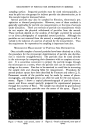
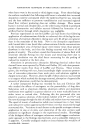
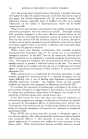
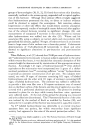
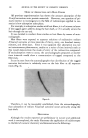
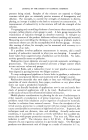
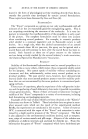
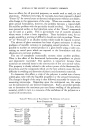
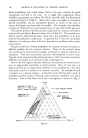
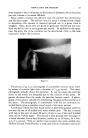
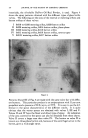
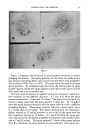
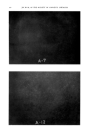
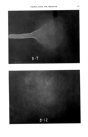
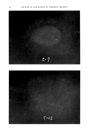
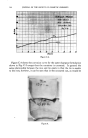
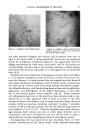
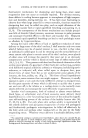
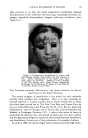
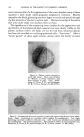
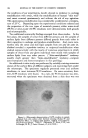
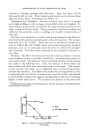
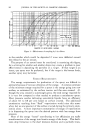
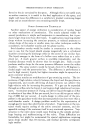
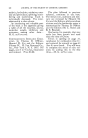
130 JOURNAL OF THE SOCIETY OF COSMETIC CHEMISTS MODE OF ADSORPTION ONTO HAIR FIBERS All previous experimentation has shown the anqount adsorption of the N-acyl sarcosines onto protein materials. However, one question of pri- mary interest to investigators in the field of radioisotopes applied to cos- metics is how adsorption takes place. For example, in adsorption studies with hair fibers, it is of interest to know if the tagged agent adheres along the hair shaft, or if it actually enters the hair through the cut end. It was decided to conduct these studies on hair fibers by means of auto- radiographs. Hair fibers were exposed to aqueous solutions of radioactive sodium )V-lauroyl sarcosine at time intervals of thirty, sixty, one hundred twenty minutes, and three days. Since it was supposed that adsorption was not an instantaneous phenomenon, studies at a series of time intervals such as this would demonstrate the mode of entry of the radioactive compound. If end-adsorption were to occur, the autoradiographs prepared at shorter time intervals would show a concentration of tagged compound at the fiber ends. It can be seen from the autoradiographs that distribution of the tagged sarcosine derivatives is relatively even on the hair fiber at all exposure times (Fig. 4). Figure 4. Therefore, it can be reasonably established, from the autoradiographs, that adsorption of sodium N-lauroyl sarcosine occurs primarily along the hair shaft. DISCUSSION Although the results reported are preliminary in nature and additional work is contemplated, the study illustrates the application of radioisotopes in the field of cosmetic chemistry and demonstrates the following:
Purchased for the exclusive use of nofirst nolast (unknown)
From: SCC Media Library & Resource Center (library.scconline.org)