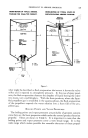
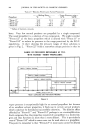
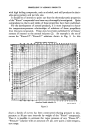
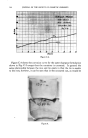
200 JOURNAL OF THE SOCIETY OF COSMETIC CHEMISTS region of the curve was taken to mean that, over the interval of time covered by the plateau, surface contamination had been removed and absorbed material within the fiber had not yet started to be lost by the fiber. Thus, the existence of a plateau was taken to mean that the liquid in question was a satisfactory wash liquid over the interval of time covered by the plateau. Examples of satisfactory wash liquids are ethyl alcohol for,hairs contain- ing alkali halides and water for hairs containing Na2SO4. A solution identi- cal with the treating solution but containing no radioactive isotope was usually also a satisfactory wash liquid. Counting. The fibers were coiled in a loose spiral on a disc that had been smeared with a very thin layer of albumin fixative which served to hold the fiber in place. The disc was then heated to drive off water and denature the albumin fixative thus anchoring the fiber firmly in place. The radioactivity of the fiber was then determined using an internal flow counter. The choice of metal for the backing discs was dictated by the calibration method which will be described next. However, the discs were always made of resistant metals, either stainless steel or tantalum. Calibration. The calibration was effected by correlating the radio- activity of the sample with that of a standard. The standard was formed by evaporating a known amount (usually 1 ml.) of a solution of known concentration on a disc similar to that containing the fiber. The con- centration of the solution was chosen so that the average thickness of the resulting salt layer was considerably less than 1 mg./cm. 2. It was necessary to apply a calibration factor in correlating the radio- activities of a sample and a standard. This factor compensated for such things as self-absorption of radiation within the fiber, changes in the characteristics of the backing disc caused by the thin layer of albumin and differences in geometry between sample and standard. The factor was determined in the following way. A fiber sample which had been counted was dissolved in a volatile solvent, usually nitric acid and reprecip- itated in a thin film by drying. The apparent change in radioactivity was determined. A standard was prepared on a disc containing a layer of albumin, and the apparent change in radioactivity resulting from the albumin layer was noted. A hair was then dissolved in nitric acid on top j of the standard and the apparent change in radioactivity again noted. The factors which affected the fraction of the total radiation counted were now assumed to be the same for the sample and for the standard. The sum of the three apparent changes was used to prepare the calibration factor. The factors vary with isotope and fiber weight but, once determined for a given isotope and a range of fiber weights, they can be applied to all fibers containing the isotope.

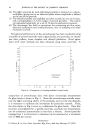
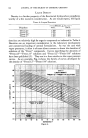
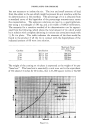
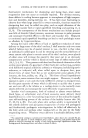
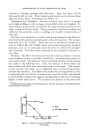
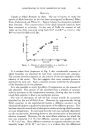
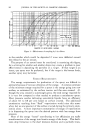
RADIOTRACERS TO STUDY ABSORPTION BY HAIR :201 RESULTS Uptake of/tlkali Bromides by Hair. The use of tracers to study the uptake of alkali bromides by hair has been investigated by Barnard, Palm, Stam, Underwood and White (1). Figure 2 shows the absorption isotherm they obtained. The concentrations of the alkali bromide solutions have been converted to activities. In the case of NaBr the amount of salt taken up has been measured using both Na • and Br s• as tracers only Br 8• was used for KBr and LiBr. o•cl o 0 LIBr Q NaBr •l KBr r• I I I I i .01 ol 1 10 100 1000 Activity Figure 2.--Uptake of alkali bromides as a function of thermodynamic activity. It is evident from inspection of Fig. 2 that considerable amounts of alkali bromides are absorbed by hair from concentrated salt solutions. The amount absorbed depends on the activity of the salt regardless of the identity of the cation. This fact suggests that some common process is dominant for each salt. Such a common process would be the absorption of the bromide ion by the polymer. It is also possible to study the effect of temperature on the amount of salt absorbed. The amount of'salt absorbed from a solution of constant activity decreases as the temperature increases, showing that the transfer of salt from solution to fiber is an exothermic process. The rate of absorption of salt by hair cannot usually be accurately described by the use of Fick's Law. However, by approximately fitting Fick's equation to the experimental results, a diffusion constant can be obtained which gives a qualitative description of the diffusion process. This has been done for several sets of absorption results involving alkali bromides at room temperature. It was found that the rate was markedly dependent on salt concentration, becoming slower as the concentration of the external solution increased. However, for the most dilute solutions for which the rate was measured (,-•1 N.) the diffusion constant was smaller than D = 10 -9 cm.2/sec. Since diffusion constants in aqueous solutions are con- siderably larger (D • 10 -5 cm.2/sec.), it is evident that the diffusional
Purchased for the exclusive use of nofirst nolast (unknown)
From: SCC Media Library & Resource Center (library.scconline.org)