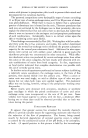
106 JOURNAL OF THE SOCIETY OF COSMETIC CHEMISTS (16) Bien, R. R., "The Action of Antiperspirant Cream on Fabrics," Proc. Sci. Sec. Toilet Goods/lssoc., 4, 8 (1945). "Antiperspirants," J. Soc. CosMExm C•EM., 1, 2 (1947). (17) Tate, L. H., U.S. Patent 1,371,822 (1921). (18) Teller, W. K., U.S. Patents 2,210,013 and 2,210,014 (1940). (19) Montenier, J., U.S. Patents 2,230,082, 2,230,083 and 2,230,084 (1941). (20) Wallace, J. H., and Hand, W. C., U.S. Patent 2,236,047 (1941). (21) Klarmann, E.G., and Gates, L. W., U.S. Patent 2,350,047 (1944). (22) Richardson, E. L.. and Russell, K. L., U.S. Patent 2,412,535 (1946). (23) Anderson, C. N., f,J. S. Patent 3,494,085 (1949). (24) Grote, I. W., U.S. Patent 2,508,787 (1950). (25) Grote, I. W., Holbert, J. M., and Gross, P. W., "Dichloro Aluminum Amino Acetate, A New Antiperspirant and Deodorant," y../lm. Pharm../lssoc., Sci. Ed., 38, 593 (1949). (26) Govett, T., and Almquist, M. L., U.S. Patent 2,571,030 (1951). (27) Apperson, L. D., and Richardson, E. L., U.S. Patents 2,586,287 and 2,586,288 (1942). (28) Marchionini, A., and Cerutti, P., "Physikalisch-chemische Untersuchungen zur Pathoo genese der Bromhidrosis pedum," ./lrch. Dermatol. Syphilis I4/ien, 166, 354 (1932). (29) Marchionini, A., Schmidt, R., Kiefer, J., and Hausknecht, W., "S/iuremantel der Haut und Bakterienabwehr, .... Klin. I4/ochschr., 7, 663, 736, 773, 1831 (1928), 18, 461 (1929). (30) Cornbleet, T., "Self Sterilizing Powers of the Skin (Are They Endowed by the Surfa•:e Areas ?)," ./lrch. Dermatol. and Syphilol., 28, 526 (1934). (31) Pillsbury, O. M., and Shaffer, B., "Cutaneous Reaction with Reference to the Surface pH, the Reaction to Ointments, and Solutions of Different pH and the Effect in Modify- ing the pH of Applied Solutions," Ibid., :39, 253 (1939). (32) Anderson, D. S., "The Acid-Base Balance of the Skin," Brit. y. Derrnatol., 63, 283 (1951). (33) Stuart-Harris, C. H., "Bacteriology, in R. M. B. McKenna's Modern Trends in Derma- tology," New York, P. B. Hoeber (1948), p. 136. (34) Burtenshaw, J. M. L., "The Autogenous Disinfection of the Skin, in R. M. B. McKenna's Modern Trends in Dermatology," New York, P. B. Hoeber (1948), p. 158. (35) Goldsmith, N., and Hellier, F. F., "Recent Advances in Dermatology," London, J. and A. Churchill, Ltd. (1954). (36) Evans, J. A., Smith, W. M., Johnston, E. A., and Giblett, S. R., "Bacteriology of the Normal Human Skin," •7. Investigative Dermatol., 15, 305 (1950). (37) Lowell, D. L., "Skin Bacteria, Their Location with Reference to Their Sterilization," Surg. Gynecol. Obstet., 80, 174 (1945). (38) Walbum, L. E., "Studien fiber die Bildung bakterieller Toxine, I. Mitteilg. Staphyloly- sin," Biochem. Z., 129, 367 (1922). (39) Bonacorsi, L., "Ober den Einfluss der Reaktion des Nahrbodens auf die entwicklungs- hemmende Wirkung chemischer Substanzen," Hyg. u. Infkrankh., 99, 284 (1923). (40) Dernby, K. G., "La concentration optimale en ions hydrog[nes favorisante le developpe- ment de certains microfrganismes," ztnn. inst. Pasteur, 35, 277 (1921). (41) Pillsbury, D. M., and Rebell, T., "The Bacterial Flora of the Skin," y. Investigative Dermatol., 18, 173 (1952). (42) Hocs, S., "Oligodynamics of Metallic Salt Solutions," Helv. Chim../lcta, 13, 153 (1930). (43) Meyer, E., and Vischer, E. S., "Germicidal Activity of Alcohol, Hydrochloric Acid and Aluminum Potassium Sulfate: Their Effect on Cutaneous Flora," ./lrch. Sur., 47, 468 (1943). (44) Kalish, J., "Zirconium Deodorants," Drug & Cosmetic Ind., 76, 762 (1955). (45) Blumenthal, W. V., "Some Properties of Zirconlure Compounds Significant to the Cos- metic Technologist," J. Soc. COSMETro CUEM., 4, 69 (1953). (46) Sulzberger, M. B., Herrmann, F., Keller, R., and Pisha, B. V., "Studies on Sweating. III. Experimental Factors Influencing the Function of the Sweat Ducts," •'. Investiga- tive Dermatol., 14, 91 (1950). (47) Miller, O. B., Herrmann, F., and Rubin, J., "Effects of MeFacrine Hydrochloride (Ata- brine) on Human Skin," Ibid., 15, 445 (1950). (48) Hermann, F., and Miller, O. B., "Pharmacological and Pathogenic Effects of Mepacrine Hydrochloride (Atabrine) on Human Skin," ./lcta Dermatol.-lZenerlol., 32, 304 (1952). (49) Flett, L., "Deodorant Properties of Nacconol," J. Soc. COSME. TIn CUEM., 1, 304 (1949). (50) Shelley, W. B., and Horvath, P. N., "Comparative Study on Effect of Anticholinergic Compounds on Sweating," y. Investigative DermatoL, 16, 267 (1951). (51) Shelley, W. B., Laskas, J. J., and Satanove, A., "Effect of Topical Agents on Plantar Sweating," ./lrch. Dermatol. and Syphilc. l., 69, 713 (1954). (52) Nelson, L. M., "Prantal in Treatment of Hyperhidrosis," •7. Investigative DermatoL, 17, 207 (1951).

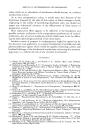
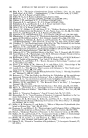
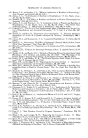
PROPELLENT IN AEROSOL PRODUCTS 107 (53) Brown, C. S., and Sandler, I. L., "Effective Application of Banthine in Dermatology," drch. Dermatol. and SyphiloL, 64,431 (1951). (54) Zupko, A. G., "An Evaluation of Banthine in Hyperhidrosis," y. din. Pharm. dssoc., Sci. Ed., 41,212 (1952). (55) Rodman, M. J., "The Effect of Banthine and Prantal on Human Thermoregulatory Sweating," Ibid., 42, 551 (1953). (56) Zupko, A. G., and Prokop, L. D, "A Comparative Study of Prantal and Banthine in Hyperhidrosis," y. Arm. Pharm. /issoc., Sci. Ed., 41, 651 (1952). "The Newer Anti- cholinergic Agents. I. Effectiveness as Anhidrotics," Ibid., 43, 35 (1954). (57) Lubowe, I. L., "The Use of a New Anticholinergic Agent, Piperphenamine, for the Con- trol of Hyperhidrosis and Associated Dermatoses," N.Y. State y. of Med., $$, 2847 (1953). (58) Kernen, R., and Brun, R., "Experiences sur la transpiration. V. Examens pharmaco- dynamiques au niveau de la glande sudoripare de ['hornroe," Dermatologica, 106, 1 (1953). (59) Carson, M. J., and Montgomery, T. A., "Congenital Hyperhidrosis," y. Pedlar., 43, 274 (1953). (60) Parish, F. A., "Dermatoses The Effect of Diphemanil (Prantal) Methyl Sulfate Cream 2% in Their Treatment," Med. Times, 83, 72 (1955). (61) Brun, R., and Hunziker, N., "Experiences sur la transpiration VIII., Dermatologica, 110, 245 (1955). (62) Haimovici, H., "Evidence for Adrenergic Sweating in Man," y. dppliedPhysiol., 2, 512 (1950). (63) Shelley, W. B., and Hurley, H. J., "Methods of Exploring Human Apocrine Sweat Gland Physiology," /irch. Dermatol. and Syphilol., 66, 156 (1952). "The Physiology of the Human Axillary Apocrine Sweat Gland," •. Investigative Dermatol., 20, 285 (1953). (64) Hurley, H. J., and Shelley, W. B., "The Human Apocrine Sweat Gland Two Secre- tions?" Brit. •. Dermatol., 66, 43 (1954). (65) Blank, I. H., and Coolidge, M. H., "Degerming the Cutaneous Surface. I. Quaternary Ammonium Compounds," •. Investigative Dermatol., 15, 248 (1950). (66) Miller, B. F., Abrams, R., Huber, D. A., and Klein, M., "Formation of Invisible Non- perceptible Films on Hand by Cationic Soaps," Proc. Soc. Exptl. Biol. Med., 54, 174 (1940). (67) Traub, E. F., Newhall, C. A., and Fuller, J. R., "New Cutaneous Bactericidal Agent Used in Soap,"/irch. Dermatol. and Syphilol., 52,385 (1945). "I. Studies on the Value of a New Compound Used in Soap to Reduce the Bacterial Flora of the Human Skin," Surg. Gynecol. Obstet., 79, 205 (1944). (68) Fahlberg, W. J., Swan. T. C., and Seastone, C. V., "Studies on the Retention of Hexa- chlorophene (G-11) in •uman Skin," •. Bact., 56, 323 (1948). Seastone, C. V., "G-11 in the Surgical Scrub," Surg. Gynecol. Obstet., 84, 355 (1947). (69) Shemano, I., and Nickerson, M., "Cutaneous Accumulation and Retention of Hexa- chlorophene," Fed. Biol. Soc. Proc., 15 (1) March (1954). (70) Klarmann, E.G., Wright, E. S., and Shternov, V. A., "Application of the 'Semi-micro' Method to the Evaluation of Antiseptics,"/im. •. Pharm., 122, 5 (1950). Klarmann, E.G., "The Role of Antagonisms in the Evaluation of Antiseptics,"/Inn. N.Y./Icad. Sci., 53, 123 (1950). (71) Price, P. B., and Bonnett, A., "Antibacterial Effects of G-5, GA1 and A-151," Surgery, 24, 542 (1948). (72) Hunter, M. C., Roman, D. P., and Shumard, R. S., "Cutaneous Antiseptic Activity of 2,2,-thiohis (4,6-dichloro-phenol)," Proc. Sci. Sect. Toilet Goods/Issoc., No. 18, 18 (1952). (73) Gee, A. H., and Seidenberg, I. L., "Evaluation of Germicidal Soaps," Soap & Chem. Spec., $0, 42 (1954). (74) Fuller, J. R., Newhall, C. A., Thorne, F. C., and Traub, E. F., "Effectiveness of Com- pound G-11 in Reducing Pyogenic Skin Infections,"/Ira. y. Pub. Health, :38 (9), 1228 (1948). (75) Hare, P. J., "Skin Disorders Caused by Pyogenic Organisms," Practitioner, 172, 576 (1954). (76) Blank, I. H., and Coolidge, M. H., "Degerming the Cutaneous Surface. II. Hexa- chlorophene (G-11)," •. Investigative Dermatol., 15,257 (1950). (77) Spoor, H. J., and Traub, E. F., "The Efficacy of Hexachlorophene in Toilet Goods Preparations," Proc. Sci. Sec. Toilet Goods/Issoc., No. 16, 16 (1951). (78) Glaser, J., Thompson, M. I. and Benson, T. D., "Prevention of Minor Skin Irritation (Millaria) and Impetigo in New Born,"/Im. •. Diseases Children, 81,329 (1951).
Purchased for the exclusive use of nofirst nolast (unknown)
From: SCC Media Library & Resource Center (library.scconline.org)