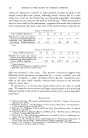
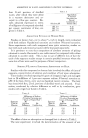
THE PROPELLENT IN AEROSOL PRODUCTSt By FRED T. REED E. oe. du Pont de Nemours & Co., Inc., PFi/mington, Del. INTRODUCTION THE AEROSOL or self-propelled product which has now become a household commodity functions as it does because of the properties of a few very unique organic compounds. Generically, they are the riourinated hydrocarbons, sold under the trademark "Freon" by the "Kinetic" Chemicals Division of E. I. du Pont de Nemours & Co. and under the trade- mark "Genetron" by the General Chemical Division of Allied Chemical & Dye Corp. It is the purpose of this paper to present the properties of the fluorinated hydrocarbons, as they apply to the aerosol industry. Historically, the first "Freon" fiuorinated hydrocarbon was prepared commercially twenty-four years ago. It was designed as a nonflammable, noncorrosive and practically nontoxic refrigerant to replace methyl chlo- ride, sulfur dioxide and ammonia. Since the original development, many new "Freon" compounds have been discovered and have enjoyed great success in the refrigeration field. The wartime application of these com- pounds as propellents for insecticides (1) opened an entirely new field re- sulting in the development of the consumer products which are known as aerosols. TABLE 1--THE FLUORINATED HYDROCARBON PROPELLENTS Dichlorodifluoromethane "Freon-12"* CC12F2 "Genetron-12"** Trichloromonofiuoromethane "Freon-11"* CClaF "Genetron-11"** Dichlorotetrafiuoroethane "Freon-114"* C2C1•F4 "Genetron-320"** Monochlorodifluoromethane "Freon-22"* CHC1Fa "Genetron-141"** * Registered trademark of E. I. du Pont de Nemours & Co. ** Registered trademark of Allied Chemical & Dye Corp. • Presented at the September 15-16, 1955, Seminar, New York City. 137

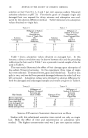
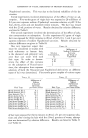
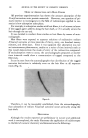
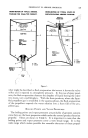
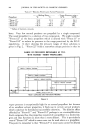
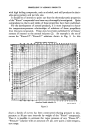
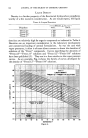
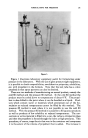
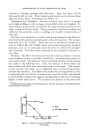
138 JOURNAL OF THE SOCIETY OF COSMETIC CHEMISTS THE FLUORINATED HYDROCARBONS The compounds which are employed as propellents for aerosol products appear in Table 1. They are listed in the relative order of production volume to the aerosol industry. From the chemical formulas, one can see that these compounds result from the replacement of chlorine with fluorine in the well-known compounds, carbon tetrachloride, hexachloroethane (perchlorethylene 4- chlorine) and chloroform. In the chemical manufac- ture of the "Freon" propellents, it is these latter compounds which serve as raw materials The chemical reactions concerned with the manufacture of the "Freon" fiuorinated hydrocarbons are shown in Table 2. The basic chemistry, as these equations indicate, is relatively simple. However, the actual man- ufacture is quite a complicated procedure as one might expect from the physical and chemical properties of the reactants and products. TABLE P.--PREPARATION OF THE "FREON" PROPELLENTS Sb•+ CC14 4- HF • HC1 4- CClaF ("Freon-11") Sb•+ CCI4 4- 2HF ) 2HC1 4- CC12F2 ("Freon-12") Sb • • CC12•CC12 4- CI• 4- 4HF • 4HC1 4- CC1F2--CC1F• ("Freon-114") Sb•+ CHCla 4- 2HF • 2HC1 4- CHC1F= ("Freon-22") THE AEROSOL PRINCIPLE In the application of the "Freon" propellents to the aerosol principle, it is the physical properties of the compounds which are of primary concern. To appreciate the importance of the physical properties one must under- stand the basic principles of the aerosol system. To many readers this is common knowledge, but for those who are not familiar with aerosol prod- ucts the explanation will be of value in the subsequent discussions. Figure 1 is a diagram of two typical aerosol systems consisting of the containers, the valves and the formulations. The majority of aerosol prod- ucts can be represented by one of the following two basic systems: 1. Active ingredient, cosolvent or carrier and propellent. 2. Active ingredient, surface active agent, water and propellent. The first of these systems typifies the spray products, such as colognes, hair lacquers and deodorants while the second encompasses the foam prod- ucts, such as shaving lather, shampoo and hand creams. The basic prin- ciple behind the operation of both aerosol systems is essentially the same. The force to expel the material from the container is supplied by the vapor pressure of the liquefied propellent gas. The liquefied propellent undergoes
Purchased for the exclusive use of nofirst nolast (unknown)
From: SCC Media Library & Resource Center (library.scconline.org)