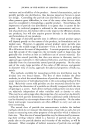
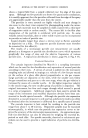
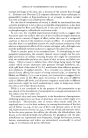
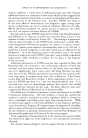
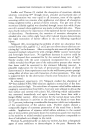
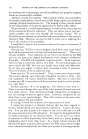
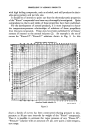
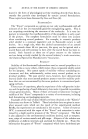
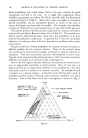
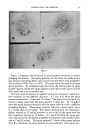
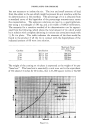
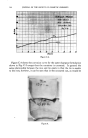
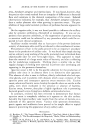
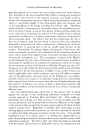
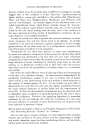
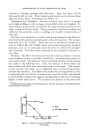
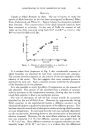
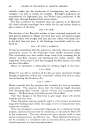
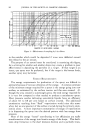
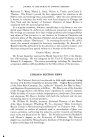
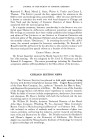
THERMODYNAMICS OF SPRAY FORMATION 211 propellent disappears or crystallization occurs and then warming up slowly. In some cases of considerable crystallization, the temperature level might rise to a second constant figure during the last portion of the vaporization phase, followed then by warming up to the air temperature. The temperature of the spray when it is deposited on the skin or some object depends upon the point in the cycle described above which has been attained. Another factor in the case of impingement on the skin is the apparent temperature as distinct from the actual temperature. If the actual temperature is that of the liquid drops in the spray, then the ap- parent temperature is that which the skin appears to feel upon contact. For example, a spray of propellent and solute which evaporates com- pletely to a solid phase before touching the skin would make little tem- perature impression regardless of the actual temperature. A spray of propellent and alcohol solution might be at the second constant tempera- ture level--higher than that for removal of the propellent--but feel colder to the skin because of the sudden flow of heat from the skin to the evaporat- ing alcohol. If the propellent has not all evaporated before impingement on the skin, the sensation would be coldest of all, both because of the low actual temperature and the heat flow from the skin. A higher concen- tration of Freon 12 in the propellent, with a lower equilibrium tempera- ture, might feel warmer if all evaporation has occurred and the product is warming up to air temperature before contact with the skin. A formulation which included a high concentration of solid to be formed into an aerosol should be examined for final particle size and density. The solids may form a structure on the surface of the drop at some size inter- mediate between the drop size resulting from atomization and the particle size based on the true density of the solid. The structure can be rigid, although porous, and result in hollow spheres whose density is unexpectedly low, altering the penetration and performance of the product. ENTRAINMENT The final aerosol must not be considered as a large number of discretely small particles moving through stagnant air, but as a two-phase stream of particles and air moving as an advancing cloud. The nature of this cloud is significant in the "blast" effect of the spray, in the penetration of the spray into a room and in the deposition of the particles upon objects. The deposition on an object is proportionately greater for large drops or par- ticles than for smaller particles. The deposition is lower for all sizes as the velocity of approach of the cloud is reduced. Geist, York and Brown (3) presented calculated values for this deposition on wires and on 1-inch ribbon, corresponding to a microscope slide. Figure 1, for the ribbon, is taken from their publication. The "effectiveness of sampling" is the ratio of the number of drops of each size actually deposited on the ribbon

212 JOURNAL OF THE SOCIETY OF COSMETIC CHEMISTS 0.8 o.a I • :•::.:i i!:1t?i !•i:•lii•!::E:::•..•-•[/:•l•::i!-::Z: I':1 Y.I I I I/f •.•1 • I I:q I:l•1111i:.• :': :•': I'::: I • I:•i':l :1 !liili•:•it:?½tL!3:•i•!:-•it•Y =l! :: I•:/I I I Yl I I?'ll I :• I • :::::: • •:l I:•l:11 :.:.,1::::•i1•:4• ,'•' r•. •.•:•Z'••'t• -- I•1 III I:'1'1:•:1::1:t I I I' / I::' "•::'--/----I•' '•'::.ri'Fl-".•c..oe1 ?•./I I/ W^T':.•o•'•,..•I..:11.1':1/ 1'4 // I'•:1 It1'::111 / I I/I I i ' T71 I III , , ,,,,, , 1 ,,,,,I II VI II1,1 '/ I • • ' ' DIAMETER OF WATER DROPS - MICRONS Figure 1.--Effectiveness of sampling by 1-in. ribbon. to the number which. would be deposited if none were deflected around the ribbon by the air stream. The purpose of an aerosol must be considered in examining this figure, for a striving for smaller and smaller drops may create a problem in poor effectiveness in depositing the particles on a target. If that target is an insect, qne spray may be preferred but if the target is the human body, another spray may be better. ENERGY REQUIREMENTS The energy requirements for production of the spray are difficult to estimate because of various utilization of the energy. A common estimate of the minimum energy required for a spray is the energy going into new surface, as estimated by the surface tension and the area created. Al- though the area created is surprisingly great, the total energy required for it is very low compared to that needed to produce a satisfactory spray. Most pressure nozzles delivering nonvolatile liquids have an efficiency of about 0.1 to 0.8 per cent based on surface created. The additional atomization resulting from "flash" vaporization would raise this some- what, but we are ignorant of the surface created during the primary atom- ization alone. A more important consumption of energy of vaporization is in dispersing the spray into the desired pattern with less energy from pressure. Most of the energy "losses" contributing to low efficiencies are really transformation of the energy into kinetic energy of the drops. This facili- tates drop formation in the short distance desired, and is partially trans-
Purchased for the exclusive use of nofirst nolast (unknown)
From: SCC Media Library & Resource Center (library.scconline.org)