150 JOURNAL OF THE SOCIETY OF COSMETIC CHEMISTS considered unsuitable for cosmetic purposes because of insolubility in water can now be re-evaluated because the aerosol propellent provides us with a new solvent which is nonflammable, nonirritating, of low order of toxicity and practically odorless. We have already seen three new toiletties made possible by this new development--aerosol shaving cream, aerosol hair lacquer and aerosol film antiperstvirant and deodorant. Others will cer- tainly follow. These products halve.been well accepted because they were formulated specifically for pressure dispensing, not adapted to it by adding propellent. Spray products represent by far the greatest number of cosmetic aerosols now on the market. These divide themselves into two broad categories-- those in which we want a very fine spray, represented by such products as deodorants, antiperspirants and perfumed household deodorants, and those in which we want a coarse spray, such as hair lacquers, suntan preparations, colognes and perfumes. In the former case we want fine particles so that they dry rapidly on the skin or because we want them to be airborne. In the case of the hair lacquers, suntan preparations, etc., quick drying is not so important and airborne particles are not desired. Spray products generally consist of two phases, the liquid phase, consist- ing of the active materials dissolved or dispersed in the solvents and pro- pellents, and the gaseous phase. When the active material is a dispersed material we have a powder aerosol. Powder aerosols have been adequately discussed in the literature (1) and (2). With these two-phase systems it is necessary to use nonpolar solvents. With the use of a co-solvent such as alcohol, small amounts of water can be tolerated. Solubility relationships of the system, propellent-alcohol-water, are discussed in a Kinetic Tech- nical Bulletin (3) and a paper by Johnsen (4). Another type of spray product can consist of two liquid phases and a gas phase. One of the liquid phases can be propellent and the other phase a polar system such as an aqueous solution. If an emulsifying agent is added to such a system, an emulsion of propellent in water or water in propellent may form, depending on the emulsifier and the relative amounts of the phases. A spray product having two liquid phases distinct and in two layers is exemplified in a mothicide now being marketed. The second case, where the two liquid phases are in the form of an emulsion, is exemplified by a lens cleaner also now being marketed. Foam products such as shampoos, shaving cream, hand lotions, cream colognes, cream suntan lotions and cream hairdresses are oil-in-water emulsions in which the propellent is part of the oil phase. Usually no more than 10 per cent of a propellent such as Freon 12, Genetron 12, or/and Freon 114, Genetron 320, are used in these products. Propellents which hydrolyze in alkaline systems or water are to be avoided because of corro- sion problems. Certain emulsifiers and detergents which may be present in these products can cause serious corrosion problems.

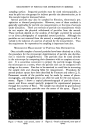
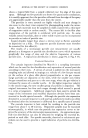
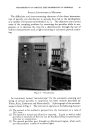
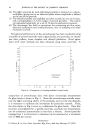
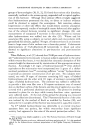
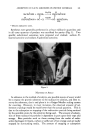
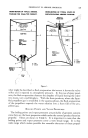
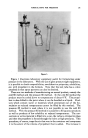
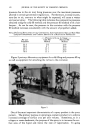
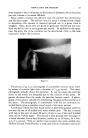
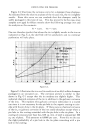
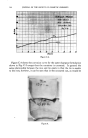
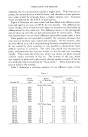
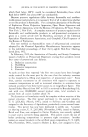
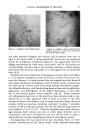
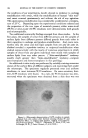
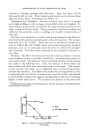
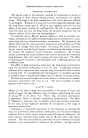
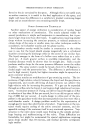
FORMULATING FOR PRESSURE 151 Figure 1. Figure 1 illustrates laboratory equipment useful for formulating under pressure in the laboratory. With the use of glass pressure tight equipment, it is possible to check compatibilities, emulsification properties, solubilities, etc. with propellent in the formula. Note that the test tube has a valve attached so that spray patterns can also be checked. There are two methods of manufacturing an aerosol product, namely the cold fill method and the pressure fill method. In the cold fill method the product must be cooled down to temperatures of about 0øF. The propel- lent is also chilled to the point where it can be handled as a liquid. Prod- ucts which contain water or materials which precipitate out of the for- mulation at reduced temperatures cannot be filled by this method. The pressure fill method is used where it is not possible to use the cold fill method. With the pressure fill method it is possible to fill aqueous products as well as products of low solubility at reduced temperatures. The con- centrate or active material is filled into a can, the valve is crimped in place and then the propellent is forced through the valve at high pressures. This procedure, of course, traps the air that was in the container and compresses it to the extent of the volume of propellent that is added. The increase in
Purchased for the exclusive use of nofirst nolast (unknown)
From: SCC Media Library & Resource Center (library.scconline.org)