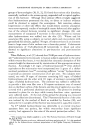
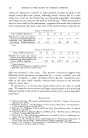
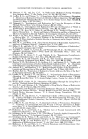
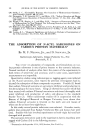
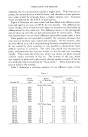
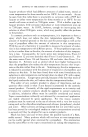
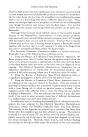
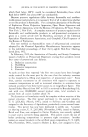
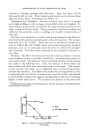
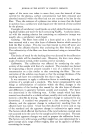
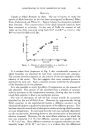
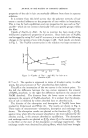
204 JOURNAL OF THE SOCIETY OF COSMETIC CHEMISTS methods. This holds for equilibrium measurements and particularly for kinetic measurements where simple boundary conditions are readily attained and where measurements involving only the transfer of radio- active ions can be used in addition to conventional measurements involving a net 6hange in composition'of the system. The results obtained show that both the equilibrium and rate properties of ions absorbed by hair are strongly influenced by the structure of the hair. This influence results from the restrictive nature of the polymer network of the hair and from the ionic groups attached to it. ACKNOWLEDGMENT This work was done as part of the Dyeing Research Project of Textile Research Institute. The authors appreciate the guidance of the Project's Advisory Committee representing the textile and chemical manufacturing firms who sponsored this work. One of us (D. L. Underwood) wishes to thank Textile Research Institute for a fellowship held during the course of this work. BIBLIOGRAPHY (1) Barnard, W. S., Palm, A., StaB, P. B., Underwood, D. L., and White, H. J., Jr., "The Interaction of Hair Fibers with Alkali Bromide Solutions," Textile Research y., 24, 863 (1954). (2) Underwood, D. L., and White, H. J., Jr., "The Absorption of Sodium Sulfate and Sulfuric Acid by Hair," Trans. Faraday Soc. No. 16, 66 (1954). THERMODYNAMICS OF SPRAY FORMATION* By J. Louis YoR}z Department of Chemical and Metallurgical Engineering, University of Michigan, dnn drbor, Mich. THE WORD "aerosols" usually refers to any suspension of small particles in air, but we shall restrict the particles to the drops or residues from drops created by disintegration and transformation of liquid issuing from the discharge orifice of a pressurized container. Further, we shall restrict the pressurization to the vapor pressure of the liquid in the con- tainer, and we shall consider only containers designed to be held and op- erated with one hand. Thus we are reduced to the product delivered by a consumer item such as insect spray, hair lacquer or cologne. This seemingly great narrowing of the definition does not reduce the number of basic factors entering into the formation of the aerosol. It does define more sharply the framework upon which the deductions and ex- perience of workers in the spray field can be built into a rational story for guidance of specialists in the product line. This paper is one attempt to bring together some of the basic knowledge of spray research and aero- sol research with particular emphasis on the cosmetic aerosol product. * Presented at the September 15-16, 1955, Seminar, New York City.

204 JOURNAL OF THE SOCIETY OF COSMETIC CHEMISTS methods. This holds for equilibrium measurements and particularly for kinetic measurements where simple boundary conditions are readily attained and where measurements involving only the transfer of radio- active ions can be used in addition to conventional measurements involving a net 6hange in composition'of the system. The results obtained show that both the equilibrium and rate properties of ions absorbed by hair are strongly influenced by the structure of the hair. This influence results from the restrictive nature of the polymer network of the hair and from the ionic groups attached to it. ACKNOWLEDGMENT This work was done as part of the Dyeing Research Project of Textile Research Institute. The authors appreciate the guidance of the Project's Advisory Committee representing the textile and chemical manufacturing firms who sponsored this work. One of us (D. L. Underwood) wishes to thank Textile Research Institute for a fellowship held during the course of this work. BIBLIOGRAPHY (1) Barnard, W. S., Palm, A., StaB, P. B., Underwood, D. L., and White, H. J., Jr., "The Interaction of Hair Fibers with Alkali Bromide Solutions," Textile Research y., 24, 863 (1954). (2) Underwood, D. L., and White, H. J., Jr., "The Absorption of Sodium Sulfate and Sulfuric Acid by Hair," Trans. Faraday Soc. No. 16, 66 (1954). THERMODYNAMICS OF SPRAY FORMATION* By J. Louis YoR}z Department of Chemical and Metallurgical Engineering, University of Michigan, dnn drbor, Mich. THE WORD "aerosols" usually refers to any suspension of small particles in air, but we shall restrict the particles to the drops or residues from drops created by disintegration and transformation of liquid issuing from the discharge orifice of a pressurized container. Further, we shall restrict the pressurization to the vapor pressure of the liquid in the con- tainer, and we shall consider only containers designed to be held and op- erated with one hand. Thus we are reduced to the product delivered by a consumer item such as insect spray, hair lacquer or cologne. This seemingly great narrowing of the definition does not reduce the number of basic factors entering into the formation of the aerosol. It does define more sharply the framework upon which the deductions and ex- perience of workers in the spray field can be built into a rational story for guidance of specialists in the product line. This paper is one attempt to bring together some of the basic knowledge of spray research and aero- sol research with particular emphasis on the cosmetic aerosol product. * Presented at the September 15-16, 1955, Seminar, New York City.
Purchased for the exclusive use of nofirst nolast (unknown)
From: SCC Media Library & Resource Center (library.scconline.org)