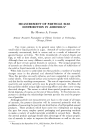
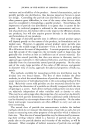
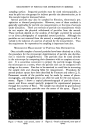
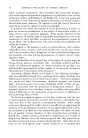
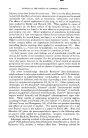
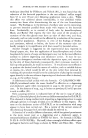
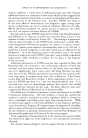
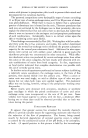
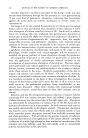
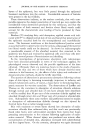
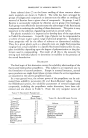
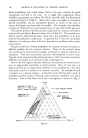
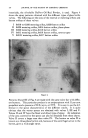
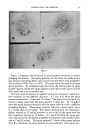
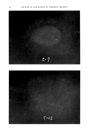
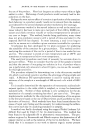
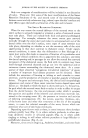
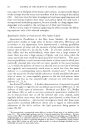
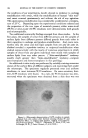
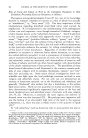
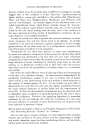
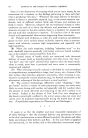
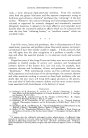
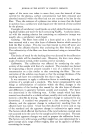
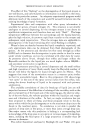
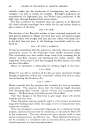
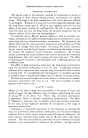
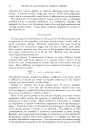
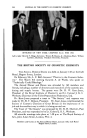
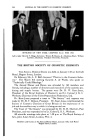
218 JOURNAL OF THE SOCIETY OF COSMETIC CHEMISTS • •:1 _ OFFICERS OF NEW YORK CHAPTER S.C.C. FOR 1956 Left to right: Beverly V. Meigs, Secretary Warren B. Dennis, Jr., Chairman-Elect William Lambert, Chairman Theodore O.qtrowski, Treasurer. THE BRITISH SOCIETY OF COSMETIC CHEMISTS THE ANNUAL DINNER DANCE was held on January 13th at the Cafe Royal, Regent Street, London. On February 9th, L. F. Bull discussed "Plastics in the Cosmetic Indus- try." The March 8th meeting featured A. de Waele, who spoke on "Technically Useful Rheology." The Annual Dinner and Dance was attended by 162 members and friends, including a number of directors and executives of the cosmetic pro- ducing and supply houses. The guests were Dr. D. W. Kent-Jones, President of the Royal Institute of Chemistry and Lt. Colonel J. K. L. Wenham, Chairman of the Toilet Preparations Federation, Ltd. Dr. Kent-Jones proposed a toast to "The Society" and response was made by Mr. R. T. Dobson, President. Dr. Kent-Jones complimented the Society of Cosmetic Chemists of Great Britain on the importance of its job and the excellent way in which it is being carried out. The Toast of "Our Guests" was proposed by Dr. R. H. Marriott, Past President, and was responded to by Lt. Colonel J. K. L. Wenham. All scientific meetings take place at 7:30 p.m. at The Royal Society of Arts, John Adam Street, London, W.C. 2. Members and Guests at the Annual Dinner Dance, January 13th, Cafe Royal Regent Street, London.

BOOK REVIEWS T•E QUANTITATIVE ANALYSIS OF DRuos, by D.C. Garratt. Phil- osophical Library, Inc., New York 16, N.Y. 1955. 670 pages, size 5•/• X 9 inches, indexed. Price $17.50. Methods described are selected "from experience...likely to prove most serviceable." Material from the "British Pharmacopoeia" and the 1954 "Codex" are included. This reviewer has found the author's previo.us publication useful on many occasmns. It deserved a new edition after it became unobtainable with the war. The book is essentially British in character, mainly considering official British drugs. This does not make it useless outside the British Commonwealth of nations, for a good method of analysis recognizes no national boundaries in its application. Some confusion does exist in listings of methods. One does not always know the compendium in which the method is official. In addition, the author's own sugges- tions are so often included, yet this is not indicated in the text. This valuable contribution deserves bet- ter recognition. The methods are quite up to date but some of the author's own more recent methods are not included. The book will be just as valuable if not more so than the earlier edition.--M. G. DENAVAR•E. NOMOGRAPHY AND EMPIRICAL EQUATIONS, by Dale S. Davis. Reinhold Publishing Corp., New York, N.Y. 1955. 91/4 X 61/4 inches, indexed, Price $6.75. While this book is of primary interest to chemical engineers, its study reveals numerous possibilities of application of empirical equations ' and of nomography to other disci- plines. In contrast to "rational" equa- tions which are derived from theoret- ical considerations, the "empirical" equations are constructed from the correlation of experimental data in those cases where the relationship between variables can be expressed in this fashion. The book teaches a number of procedures for the development of such devices. The part dealing with nomography covers the theory and construction of alignment and line coordinate charts including addition, logarith- mic, nonlogarithmic multiplication, combination charts and others. It gives numerous examples of practi- cal usage of these charts, also several problems at the end of each chapter intended to familiarize the student with their application. The authoritative character of the book i:s vouchsafed by the author's educational background as a mathematician and chemical engi- neer, also by his long experience in several branches of the chemical industry. In regard to its clarity of presentation, it benefits by the author's teaching experience at sev- eral institutions of high learning (lastly at the Virginia Polytechnic Institute).--EMIL G. KLAnMANN, Lehn & Fink Products Corp. 220
Purchased for the exclusive use of nofirst nolast (unknown)
From: SCC Media Library & Resource Center (library.scconline.org)