THE USE OF RADIOTRACERS TO STUDY ABSORPTION BY HAIR*p By HOWARD J. WHITE, JR.,** and DONALD L. UNDERWOOD*** Textile Research Institute, Princeton, N. 5 t. ABSORPTION PROCESSES involving human hair are of considerable importance in the cosmetic industryandare of interest to the textile industry because of the well-known, close chemical relationship between human hair and wool. Absorption from multicomponent baths by fibers is fundamental to dyeing, bleaching, various finishing operations and probably washing. Closely allied absorption processes occur in skin, muscle, nerve and fibrous plants. The study of such processes is thus of importance for several reasons. If a fibrous sample is immersed in a bath and removed for analysis, the separation of the fibrous sample from the solution is a major experimental problem. Because of the physical nature of the fibers, entrainment of large amounts of solution between the fibers occurs when the sample is removed from the solution. It is logical to expect that separation of entrained and absorbed material •vould be easier with single-fiber samples, and such a separation can be made in favorable cases. The use of single-fiber samples of a convenient length imposes micro- analytical problems which are conveniently solved through the use of radioactive tracers. It is the purpose of this paper to discuss the technique of using tracers for such measurements and to present examples of some of the various types of results that have been obtained. DESCRIPTION OF METHOD The experimental method consists of immersing a fiber in a radioactive solution and measuring the amount of radioactivity taken up by the fiber. The process can be conveniently broken into four parts: preparation and * Presented at the September 15-16, 1955, Seminar, New York City. t This article is based in part on a thesis submitted by D. L. Underwood to the Department of Chemistry of Princeton University in partial fulfillment of the requirements for the degree of Doctor of Philosophy. It is also based on an article submitted for the International Con- ference on the Peaceful Uses of Atomic Energy, Geneva, August 8-20, 1955. ** Associate Director of Research, Textile Research Institute. *** The Toni Company, Chicago, Ill. 198

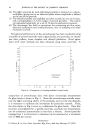
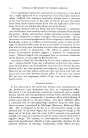
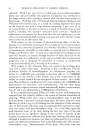
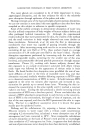
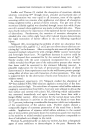
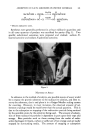
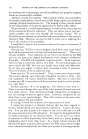
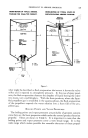
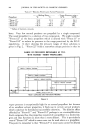
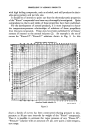
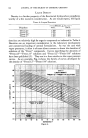
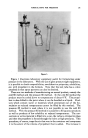
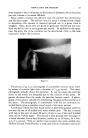
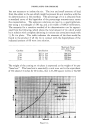
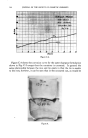
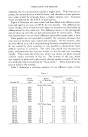
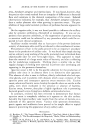
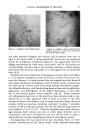
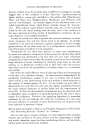
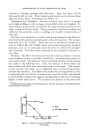
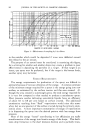
RADIOTRACERS TO STUDY ABSORPTION BY HAIR 199 treatment, washing, counting and calibration. These four parts will be discussed briefly in order. Exact experimental details can be obtained from Barnard, Palm, Stare, Underwood and White (1). Preparation and Treatment. Sections of human hair, 10.cm. in length and weighing 300ug. on the average, were purified, dried and weighed. In some respects, human hairs are ideal for this type of work because they are large, strong and fairly round. These properties facilitate handling and collateral measurements, such as swelling, and simplify interpretation of rate data. The hairs were attached to stainless steel spring clamps for identification and treated with solutions containing the radioactive species. The isotopes used were Na 22, S os and Br s2. They were used in the form of simple salts, such as NaBr, LiBr and NasSO4, which were easily prepared by standard processes, such as ion exchange, from the forms in which the isotopes* were obtained. The fibers were immersed in the radioactive solutions in test tubes. I/Fashing. The fibers were removed from the solution, shaken to remove excess droplets insofar as possible, washed for a predetermined period of time and air dried. The selection of the wash liquid and the time of washing was made in the following way. First, the surfaces of fibers which had been washed and dried were examined using a microscope. The absence of salt crystals was taken as an indication that contaminating surface salt had been removed. Then fibers were washed for varying periods of time to determine the rate of loss of radioactivity, and the results were plotted in terms of fiber radioactivity against the logarithm of the time of washing. Figure 1 shows such curves. The existence of a plateau in the short-time * Obtained from Oak Ridge National Laboratory with the permission of the United States Atomic Energy Commission. 0 •atex. • 95% Eth21 Aloohol Figure 1.--Rate of removal of Na22Br from hair by various wash liquids.
Purchased for the exclusive use of nofirst nolast (unknown)
From: SCC Media Library & Resource Center (library.scconline.org)