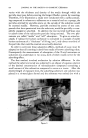
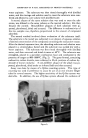
162 JOURNAL OF THE SOCIETY OF COSMETIC CHEMISTS the use of the product. Most hair lacquers are either water white or light amber in color. Darkening of such products would certainly lead to dis- coloration on the hair. Perhaps the most serious effect of corrosion is perforation of the container. Such behavior in a product usually results in its removal from the market, as evidenced by the aerosol shampoo product marketed a few years ago. The customary method in the aerosol industry as well as the metal con- tainer industry has been to make up a test pack of from 100 to 10,000 con- tainers and check corrosion visually at various temperatures for periods of one year or longer. This method, besides being qualitative, many times does not give conclusive answers until a period of time equivalent to the expected shelf life has elapsed. In most instances, a year is too long to wait for an answer as to whether a given container is suitable for a product. A technique has been developed for tin plate containers for predicting the suitability of the container for a given product. This method involves analyzing the contents of the can for a period of four to ten weeks for iron and tin. The container is stored at room temperature and at 130øF. and sometimes at temperatures below room temperature. The analytical procedures used must of necessity be accurate down to parts per million. When we consider that the size of the sample is limited and that the amount of iron going into solution in 4 oz. of product when a can is perforated only amounts to about 16 ppm., we can see the necessity for this high sensitivity. The procedure adopted for determining iron is the thiocyanate method (6), which is extremely sensitive and has the advantage of being simple and rapid. A Beckman DU spectrophotometer is used for reading the trans- mittance of the sample at a wavelength of 480 m• and a slit width of 0.015 mm. Tin is usually determined by the separation of metastannic acid and sub- sequent ignition to the oxide which is weighed, or it may be determined iodometrically. Neither of these methods is very satisfactory for the de- termination of a sample containing less than 1 per cent of tin. Two spec- trophotometric methods for the colorimetric determination of tin are given in the literature based on the use of Diazin Green and Cacotheline (a nitro derivative of brucine). Both methods have been found unsatisfactory be- cause of rapid color fading and the necessity for redetermining the calibra- tion curves each day by analyzing standard tin samples. A method was finally developed using the reagent Dithiol (toluene 3,4- dithiol) first used by Clark (7) for tin determination. This method has been found to be adaptable (8) to photometric measurements. The pro- cedure as given by Farnsworth and Pekola requires the destruction of all organic matter as well as the isolation of the tin by distillation. We have found that it is necessary in our work to destroy organic matter present

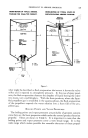
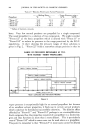
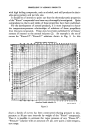
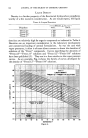
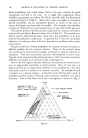
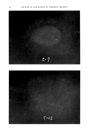
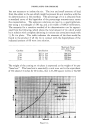
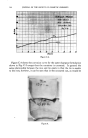
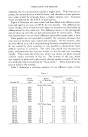
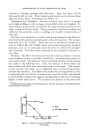
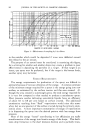
FORMULATING FOR PRESSURE 163 but not necessary to isolate the tin. The iron and small amounts of lead from the solder in the can which might be present do not interfere with the tin determination in this method. The percentage of tin is obtained from a standard curve of the logarithm of the percentage transmittance versus the concentration. The unknown solutions are read in a spectrophotom- eter using a wavelength of $30 mu and a slit width of 0.0125 millimeters. The necessity for a sensitive method of tin determination can be appreci- ated from the following, which shows the total amount of tin which would be in solution with complete detinning in various size containers made with 1/2 lb. tin plate. This table indicates the amounts of tin that would be found in the product if all the tin in contact with the liquid phase of the indicated amount of fill went into solution. Can Size Specification Maximum Tin in ppm. from 1/•-lb. Coating 4 oz. 202 X 214 500 ppm. 6 oz. 202 X 314 450 ppm. 12 oz. 211 X 413 350 ppm. 16 oz. 211 X 510 300 ppm. The weight of the coating on tin plate is expressed as the weight of tin per "base box." The base box is essentially a unit area and is the equivalent of 112 sheets 14 inches by 20 inches, that is 31,360 square inches or 62,720 Figure C-1.
Purchased for the exclusive use of nofirst nolast (unknown)
From: SCC Media Library & Resource Center (library.scconline.org)