92 JOURNAL OF THE SOCIETY OF COSMETIC CHEMISTS enjoy unanimous acceptance thus, Cornbleet (30) showed that perspira- tion would support the growth of staphylococci at pH values as low as those of the skin surface, while Pillsbury and Shaffer (31) at one time questioned its validity, in view of the lack of adequate laboratory and clinical evidence. On the other hand, Anderson (32) regards an acid pH level of the skin as essential for protection against invasion by pathogens. It would not be within the framework of this presentation, however, to give any extensive consideration to the subject of normal skin acidity, its cause and its real or putat/re purposes. With specific reference to the skin's capacity of ridding itself of undesirable micro/Srganisms, and to the mechanism by which this effect is achieved, the comprehensive reviews by Stuart-Harris (33), by Burtenshaw (34) and by Goldsmith and Hellier (35) should be consulted. With regard to the deodorant action of antiperspirants, their ant/bac- terial effect must, of course, reach much farther, viz., into the area of con- trol of those bacteria which, though not of real or potential pathogenicity, are involved in the odor-forming decomposition of organic matter of per- spiratory origin. The microbial flora of the normal skin is the subject of a recent paper by Evans, Smith, Johnston and Giblett (36). According to Kill/an and Pan- zarella (2), Micrococcus pyogenes vat. aureus and a/bus, also possibly a not well-identified gram-positive bacillus appear to be primarily involved in the production of the malodor under discussion. According to Shelley, Hurley and Nichols (1), the following micro6rgan- isms were identified routinely from swabbings of the axillae of healthy men (following inoculation on horse blood infusion agar): Micrococcus pyogenes vat. aureus and a/bus, Corynebacteria, Aterobacter aerogenes and Sarcina lutea. it does not seem to have been established which of these are par- ticularly associated with the production of perspiratory malodor. It is assumed, moreover, that individual variations in axillary odor may reflect chemical differences in the composition of apocrine sweat, or differences in the bacteriologic flora, or both. No clinical investigation appears to have been carried out with the view to ascertaining the participation of either the transient or the resident bac- terial skin flora in the causation of perspiratory malodor. Since simple mechanical cleansing of the axillary fossae is not effective in suppressing the tendency to the development of malodor for any appreciable period of time, the conclusion is justified that the resident flora plays the major role here. It is of possible interest, therefore, in this connection that, according to Lowell (37), resident bacteria, particularly staphylococci, are located so deep in hair follicles and in the sebaceous glands that they cannot be re- moved by mechanical means, without injuring the skin. Since they do not occur in the sweat glands under normal conditions, it is assumed that

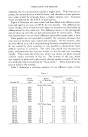
ASPECTS OF ANTIPERSPIRANTS AND DEODORANTS 93 their rise toward the surface from their deeper locations is promoted by the increased surface tension of the moist skin. Several earlier papers deal with the growth of Micrococcus pyogenes vat. aureus at low pH levels. This micro/Srganism does not grow at a pH under 4.5 according to Walbum (38) or under 4.9 according to Bonacorsi (39) for both the aureus and the a/bus variants, the lower limit of pH is $.6, according to Dernby (40). More recently, Pillsbury and Rebell (41) have found that the growth of normal skin micrococci in buffered brain heart infusion was slow or absent at a pH of 4.5, although the cells were not deprived of their viability, as shown by subsequent subculturing in more favorable media however, viability was lost at a pH of 3.7. Inciden- tally, as a group, normal skin micrococci isolated from glabrous skin grew well at a pH of 6, while coagulase-positive staphylococci (aureus and a/bus), normal skin diphtheroids and gram-negative rods grew well at pH $ to 7. Thus, it is evident that an antiperspirant preparation based upon a hydrolyzing metal salt which develops a markedly low pH, should display an inhibitory action upon skin bacteria by virtue of this acidity, i.e., in the absence of any special bacteriostatic agent. As to the metal salts themselves and, particularly, as to their cations, it is known that several of them are definitely bacteriostatic in action although aluminum and zinc are not particularly effective in this regard. Nevertheless, Hocs (42) has shown that dilute solutions of aluminum and zinc sulfate, of the order of 0.01 molar, are bactericidal upon prolonged contact. Thus, there is reason to believe that the cation of the metal salt, too, contributes to the antibacterial effect, possibly in a synergistic manner. There is also direct evidence that such preparations bring about a reduc- tion of the bacterial count on the skin. Meyer and Vischer (43) observed the antibacterial action upon the cutaneous flora of potassium alum, while Shelley, Hurley and Nichols (1) showed. that hair specimens clipped from axillae treated previously with an aluminum chloride solution tended to be substantially (if not entirely) free from bacteria, in contrast to hair removed from the control axillae which produced luxuriant bacterial growth on nutrient agar plates. Relevant to this matter is also the observation reported by Killian (5) that the addition of aluminum sulfate to stale specimens of collected perspiration reduces its bacterial count as well as its odor in a short period of time. The latter phenomenon is associated, incidentally, with the lowered pH level effecting a fixation of the volatile bases, including ammonia, by the acid resulting from the hydrolysis of the aluminum salt at the same time, there is, of course, no reduction in the content of the free, volatile fatty acids, and, hence, no complete abolition of malodor due to the latter factor.
Purchased for the exclusive use of nofirst nolast (unknown)
From: SCC Media Library & Resource Center (library.scconline.org)