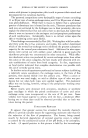
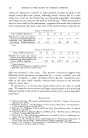
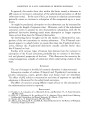
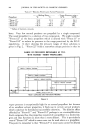
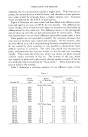
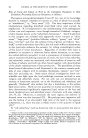
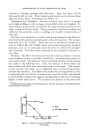
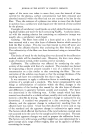
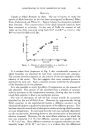
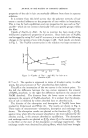
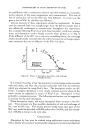
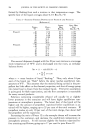
120 JOURNAL OF THE SOCIETY OF COSMETIC CHEMISTS cretion of radioactive materirl in both patients reached its peak in the second twenty-four hour period, following which activity fell to a rela- tively low level by the fourth day and persisted essentially unchanged until observations ceased on the sixth to seventh day. While precise quan- titative data could not be determined, it appears that under the conditions of the experiment less than 1 per cent of the hydrocortisone topically ap- Tas•.• 1--P•,TIENT No. 1 Urine (24-Hour Specimens) #1 #2 #3 #4 #5 Planchet net counts per minute (actual count minus background) 6.5 22.8 * 15.4 11.3 9.8 Calculated total disintegrations per minute. 24-Hour specimen 62 6512 * 286 382 286 * Lost. TxsI. E 2--PATIENT No. 2 Urine (24-Hour Specimens) #l #2 #3 #4 #5 #6 #7 Planchet net counts per minute (actual count minus background) 0.0' 31.0 33.9 21.6'* 5.6 I 5 2 Calculated total disintegrations per minute. 24-Hour specimen * 1089 764 1012'* 303 I 208 * 9-hour specimen. ** Excessive non-radioactive residue in extract. • Specimen used for other analytic tests. plied was excreted in the urine. The pattern of excretion suggests that following initial absorption accompanied by a certain overflow into the systemic circulation a depot of hydrocortisone persists somewhere, pos- sibly in the skin, which steadily releases small amounts of the hormone daily for many days. In conclusion, it is obvious that these observations are only an initial step. We hope that more workers will begin to participate in this promising field particularly in the study of absorption pathways by radioautographic techniques. BIB LIOGRAPH¾ (1) Rothman, Stephen, "Physiology and Biochemistry of the Skin," Chicago, University of Chicago Press (1954). (2) Rothman, Stephen, "The Mechanism of Percutaneous Penetration and Absorption," J. Soo. COSMETIC CHEM., 6, 193 (1955). (3) Buettner, K., "Diffusion of Water and Water Vapor Through Human Skin," 5 t..zIpplied Phystol., 6, 229 (1953). (4) Szczesniak, Alina, S., Sherman, Henry, and Harris, R. S., "The Percutaneous Absorption of Water," Science, 113, 293 (1951). (5) Pinson, E. A., "Water Exchanges and Barriers as Studied by the Use of Hydrogen Iso- topes," Physiol. Rev., 32, 123 (1952). (6) DeLong, C. W., Thompson, R. C., and Kornberg, H. A., "Percutaneous Absorption of Tritium and Tritium Oxide," Hanford Atomic Products Operation, 52 (1953). (7) Smith, G. N., Temple, L. A., Emerson, R. J., and Galbraith, T. W., "The Metabolism of Tritium Gas in the Rat," Ibid., 43 (1953).

RADIOISOTOPE TECHNIQUES IN PERCUTANEOUS ABSORPTION 121 (8) Johnston, G. W., and Lee, C. O., "A Radio-active Method of Testing Absorption from Ointment Bases," 7. •lm. Pharm. •lssoc., $ci. Ed., 32, 278 (1943). (9) Loeffler, R. K., and Thomas, V., "A Quantitative Study of Percutaneous Absorption. I. Absorption of Radioactive Strontium Chloride in Minute Quantities Through Intact and Mechanically Damaged Rat Skin," U.S. Atomic Energy Comm. Rept. AD-225 B, Nuclear $ci. •lbstrs. 5, No. 323 (1951). (10) N•rgaard, O., "Investigations with Radioactive Ag TM into the Resorption of Silver Through Human Skin," •lcta Dermato-l•enereol., 35, 415 (1954). (11) N•rgaard, O., "Investigation with Radioactive Ni 57 into the Resorption of Nickel in Normal and in Nickel Hypersensitive Persons," Ibid., 35, 111 (1955). (12) Witten, V. H., Ross, M. S., Oshry, E., and Hyman, A. B., "Studies of Thorium X Ap- plied to Human Skin. I. Routes and Degree of Penetration and Sites of Deposition of Thorium X Applied in Selected Vehicles," 7. Investigative Dermatol., 17, 311 (1951). (13) Witten, V. H., Ross, M. S., Oshry E., and Holstrom, V., "Studies of Thorium X Applied to Human Skin. II. Comparative Findings of the Penetration and Localization of Thorium X When Applied in Alcoholic Solution, in Ointment, and in Lacquer Vehicles," Ibid., 20, 93 (1953). (14) Selle, W. A., and Miller, O. B., "Fetal Gastric Secretion of Radioiodide Applied Percu- taneously to Pregnant Animals," Federation Proc., 7, 110 (1948). (15) Miller, O. B., and Selle, W. A., "Studies in Percutaneous Absorption of Radioiodine," 7. Investigative Dermatol., 12, 19 (1949). (16) Von B 3ni, A., G•beli, O., Lotmar, R., and Wiesendanger, H. U., "Zur Resorption yon radioaktiv markiertem Sulfat (-S8504) durch die menschliche Haut," Deut. med. 14•ochschr., 79, 1617 (1954). (17) O'Malley, E. P., Oester, Y. T., and Warnick, E.G., "Experimental Iontophoresis: Studies with Radioisotopes," •lrch. Phys. Med., 35, 500 (1954). (18) McClellan, W. S., and Comstock, Carl R., Jr., "The Ct•taneous Absorption of Radon from Naturally Carbonated Water Baths," •lrch. Phys. Med., 30, 29 (1949). (19) Beamer, W. H., McCollister, D. D., Atchison, G. J., and Spencer, H. C., "Studies with Low Vapor Concentrations of Carbon Tetrachloride Labeled with C TM. II. Absorption with Elimination upon Skin Exposure of Monkeys," Federation Proe., 9, 257 (1950). (20) Axelrod, D. J., and Hamilton, J. G., "Radioautographic Studies of the Distribution of Lewisite and Mustard Gas in Skin and Eye Tissues," •lm. 7. Path., 389 (1947). (21) Butcher, Earl O., "Penetration of Radioactive Stearic Acid into the Skin of the Rat," 7. Investigative Dermatol., 21,243 (1953). (22) Loe•er, R. K., Herron, }. W., and Thomas, V., "A Quantitative Study of Percutaneous Absorption. IV. Abs0'•'ption of Minute Quantities of Radiostrontium Chloride Through Burned Rat Skin," U.S. Atomic Energy Comm., Nuclear Sci. •lbstrs., 5, 4995 (1951). (23) Weeks, M. H., Oakley, W. D., "Absorption of Plutonium Through the Living Skin of the Rat," Hanford Atomic Products Operation, 85 (1953). (24) Lux, R. E., and Christian, J. E., "Permeability of Frog Skin by Means of Radioactive Tracers," •lm. 7. Physiol., 162, 193 (1950). (25) General Rules and Procedures Concerning Radioactive Hazards, U.S. Atomic Energy Commission, Isotopes Division. Isotopes Branch Circular B-l, Revised (1947). (26) Health Physics Insurance Seminar. U.S. Atomic Energy Commission, TID 388 (March 12, 1951). (27) Loe•er, K. R., and Thomas, V., "A Quantitative Study of Percutaneous Absorption: II. Toxicity and Effect upon Absorption of Two Decontaminating Solutions," U.S. Naval Radiological Defense Laboratory, San Francisco, Calif., Report AD-254 (B) (October, 1950). (28) Loe•er, K. R., and Thomas, V., "A Quantitative Study of Percutaneous Absorption: V. Treatment of Contaminated Skin and Wounds to Prevent Absorption of Radio- active Salts," U.S. Naval Radiological Defense I,aboratory, San Francisco, Calif., Re- port AD-309 (B) (April, 1951). (29) Hathaway, E. A., and Finkel, A. J., "Medical Care of Wounds Contaminated with Radioactive Materials." To be published. (30) Sulzberger, M. B., and Witten, V. H., "The Effect of Topically Applied Compound F in Selected Dermatoses," 5 e. Investigative Dermatol., 19, 101 (1952). (31) Sulzberger, M. B., Witten, V. H., and Smith, C. C., "Hydrocortisone (Compound F) Acetate Ointment in Dermatological Therapy," 5 e. •lm. Med. •lssoc., 151,468 (1953). (32) Robinson, H. M., Jr., and Robinson, R. C. V., "Treatment of Dermatoses with Local Application of Hydrocortisone Acetate," .% •lm. Med. •lssoc., 155, 1213 (1954). (33) Malkinson, F. D., and Wells, G. C., "Clinical Experience with Hydrocortisone Oint- ment," Brit. 7. Dermatol., 66, 300 (1954).
Purchased for the exclusive use of nofirst nolast (unknown)
From: SCC Media Library & Resource Center (library.scconline.org)