110 JOURNAL OF THE SOCIETY OF COSMETIC CHEMISTS layer of the epidermis. Rein, whose experiments originally demonstrated the presence of this barrier, concluded that the membrane's negative electrical charge prevented penetration of anions, while cations were prevented from passing by electrostatic forces. Recently Szakall(2) apparently succeeded in isolating this membrane from volunteer subjects after removal of overlying cell layers by repeated applications of adhesive cellophane tape. He demonstrated the fine fibrillar network of the barrier and showed its various properties of elasticity, great tensile strength and considerable resistance to the action of fat solvents. Once this barrier has been passed in vivo there is seemingly no further impediment to diffuse penetration of the Malpighian layer and the remainder of the .epidermis. Most substances will then freely pass into the corium to enter the circulation via the papillary capillaries, although there are some materials for which the basement membrane at the dermal-epidermal junction seems to provide a second barrier. The most important group of substances passing into the skin via the transepidermal route are the lipid soluble compounds. Their penetrability is apparently dependent on the presence of a sterol-phosphatide framework within cell membranes. Lipid soluble substances are rapidly absorbed through the skin, particularly if they are also moderately soluble in water, and here the penetration is so rapid as to leave little doubt that the main route is transepidermal. Furthermore, substances soluble in both lipids and water penetrate the skin with such great ease from ointments and aqueous solutions alike that the type of vehicle into which they are in- corporated influences their transepidermal absorption very. little. Promi- nent among lipid soluble compounds readily absorbed into the skin are phenol and phenolic derivatives, hormones such as estrogen, progesterone, testosterone, and desoxycorticosterone, vitamins D and K and organic bases such as strychnine and nicotine. Another large group of elements and compounds which enter the skin via the transepidermal route are those substances which are in a gaseous state at ordinary temperatures, although here there is appreciable trans- follicular absorption as well. The transfollicular absorption route by-passes the epidermal barrier and provides a pathway to the corium through the relatively permeable cells of the sebaceous glands and follicular walls. Subsequent spread into the corium may be followed by penetration of the epidermis from below, but upward diffusion ceases at the level of the epidermal barrier. Electro- lytes and certain heavy metals, especially mercury, are the compounds of chief importance which pass into the skin by this route. Potentiation of absorption via the pilosebaceous apparatus can be obtained by the use of vehicles which provide an increased wetting effect and allow for close contact of incorporated substances with follicular epithelium.

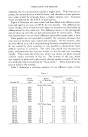
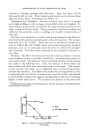
RADIOISOTOPE TECHNIQUES IN PERCUTANEOUS ABSORPTION Ill The sweat glands are considered to be of little importance in trans- appendageal absorption, and the best evidence for this is the relatively poor absorption through epidermis of the palms and soles. Having reviewed some of the basic principles ofpercutaneous absorption, we can now consider in some detail the more significant data that have been compiled on this subject in reference to specific compounds. Some of the earliest attempts to demonstrate absorption of water into the skin utilized comparison of body weights of human subjects before and after prolonged bathtub immersions (3). Although the experimental results indicated that water penetrated the skin, the crudity of the method and the small variations in body weight observed cast some doubts on these conclusions. Szczesniak, el a/'. (4) were the first to demonstrate conclusively that water was capable of passing inwardly through the epidermis. After immersing young male rats for six to seven hours in H20 containing 40 per cent D20 at 35øC., these workers found an average concentration of 1.38 moles per cent D20 in the heart's blood. Further absorption experiments performed by immersing only the animMs' tails yielded comparable results, correcting for the smaller size of the area involved, and presumably obviated possible penetration through mucous membranes. Pinson ($), working with human subjects, showed that skin exposure to an outside environment saturated with dilute tritium oxide vapor was followed by the appearance of tritium oxide in body fluids. He found further that absorption rates paralleled the rate of out- ward diffusion of water in the form of insensible water loss, and that absorption occurred similarly whether following exposure to HTO vapor or to identical concentrations of HTO in water. In both instances HTO appeared in the urine ten minutes after exposure and increased in con- centration for periods up to several hours later. Warming the skin in- creased the concentration in the urine rapidly until it reached a constant value in one hour. Cooling the skin produced a slowly increasing urinary concentration of HTO over a five-hour period. Pinson concluded that the amount of HTO absorbed is proportional to such factors as the concentra- tion of HTO in the environment, the length of time of exposure, and the size of the area exposed, and that the HTO penetrated the skin in vapor form. The last is a significant assumption since it is known that gases readily pass the epidermal barrier. DeLong and his collaborators (6), exposing a human volunteer for fifty-two minutes to water vapor with a tritium oxide concentration averaging 4.2 microcuries/liter, calculated a water absorption rate of 26 micrograms/cm.2/min. corrected to 30øC. Since comparable calculations of water absorption on the basis of PinsoWs work provide an exceedingly close correlation of 27 micrograms/cm.2/min., it appears that both the fact and rate ofpercutaneous water absorption have been decisively established.
Purchased for the exclusive use of nofirst nolast (unknown)
From: SCC Media Library & Resource Center (library.scconline.org)