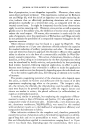
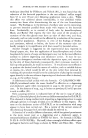
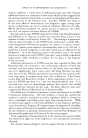
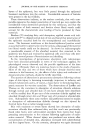
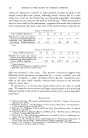
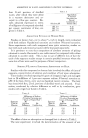
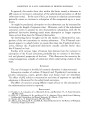
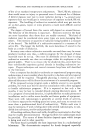
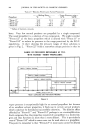
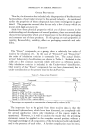
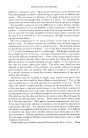
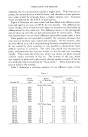
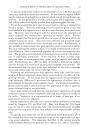
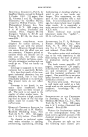
ADSORPTION OF N-ACYL SARCOSINES IN PROTEIN MATERIALS 127 four 25-ml. portions of distilled water, after which they were dried in a vacuum desiccator and as- sayed in a flow gas counter. Re- suits obtained expressed in terms of milligrams of compound adsorbed per square centimeter of disc, are given in Table 3. TABLE 3 Solution pH Mg Sodium N-Lauroyl Safcosine per Square Centimeter of Gelatin Disc pH 5.0 0.21 pH 7.0 0.09 pH 9.0 0.08 ADSORPTION STUDIES ON HUMAN HAiR Studies on human hair, cut to about •/4 inch in length, were conducted with both sodium N-palmitoyl safcosine and sodium N-lauroyl safcosine. Since experiments with each compound were quite extensive, studies on hair with each substituted safcosine will be discussed separately. It is pertinent to note that comparison of absolute amounts of pickup obtained in results illustrated in one table cannot be compared with values obtained in another table. This is due to use of different lots of hair for each of the separate studies except in certain specified instances where the same lots of hair were used for purposes of direct comparison. SODIUM N-LAUROYL SARCOSINE ADSORPTION ON HAIR Studies with this compound on human hair involved the effect of time of exposure, concentration of solution and condition of hair upon adsorption. Time studies involved exposing 0.5 gram of chopped virgin and damaged hair to 20 milliliters of 1 per cent aqueous sodium N-lauroyl sarcosine at pH 7.0 for four, thirty, sixty and one hundred twenty minutes. The hair was rinsed with five, 25-ml. portions of distilled water and assayed. Eval- uation, conducted by solution difference as well as by combustion, gave results with virgin hair listed in Table 4. TABLE 4 Milligrams of Sodium N-Lauroyl Sarcosine per .•Gram of Virgin Hair• Exposure By Exposure Time in Solution By Time in Minutes Difference Combustion Minutes TABLE 5 Milligrams of Sodium N-Lauroyl Sarcosine per Gram of Damaged Hair By Solution By Difference Combustion 4 0.8 1.0 4 0.4 0.4 30 2.3 2.3 30 4.5 4.6 60 2.4 2.2 60 6.4 6.0 120 2.6 2.7 120 9.9 9.6 The effect of time on adsorption on damaged hair is shown in Table 5. The next experiment. involved the determination of the amount of ad-

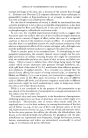
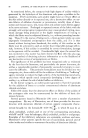
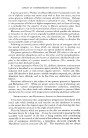
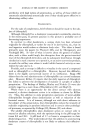
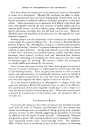
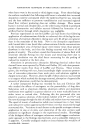
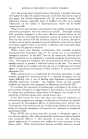
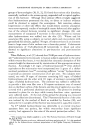
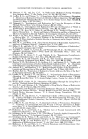
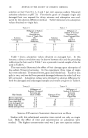
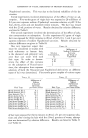
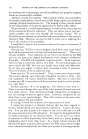
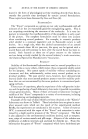
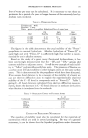
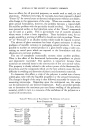
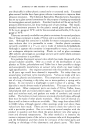
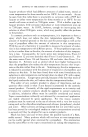
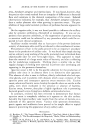
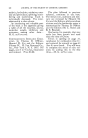
128 JOURNAL OF THE SOCIETY OF COSMETIC CHEMISTS sorption on hair from 0.5, 1, 2 and 5 per cent aqueous sodium N-lauroyl safcosine solutions at pH 7.0. Five-tenths gram of chopped virgin and damaged hair was exposed for thirty minutes and adsorption was eval- uated by the solution difference method. Table 6 demonstrates adsorption values obtained on virgin hair. TABLE 6 TABLE 7 Solution Concentration, % Milligram of Sodium Milligram of N-Lauroyl Sodium N-Lauroyl Safcosine per Safcosine per Gram of Virgin Hair Gram Damaged Hair By Solution By Solution Concentration, Solution Difference % Difference O.5 4.5 O.5 5.2 1 6.6 1 8.6 2 13.2 2 15.6 5 13.0 5 16.0 Table 7 shows adsorption values obtained on damaged hair. In this instance a direct correlation may be drawn between this and the preceding table since the hair used in Table 7 was a peroxide treated sample of the lot used in Table 6. The next study illustrated the effect of hair damage upon adsorption of the sodium N-lauroyl sarcosine. In this experiment three types of virgin hair were selected: Untreated brown, gray and blonde hair. Each lot was split in two, and one-half was peroxide damaged whereas the other half was left untreated. Adsorption values were obtained by solution difference for both the damaged and undamaged samples and results are given in Table 8. TABLE 8 TABLE 9 Milligrams of Sodium N-Lauroyl Sarcosine per Hair Sample Gram of Hair Ex. posure Time •n Minutes Brown virgin hair 6.6 Brown damaged hair 8.6 4 Gray virgin hair 3.4 30 Gray damaged hair 18.52 60 Blond virgin hair 2.8 120 Blond damaged hair 12. :2 Milligrams of Sodium N-Palmitoyl Safcosine per Gram Virgin Hair 6.2 14.6 18.6 :27 .:2 SODIUM N-PALMITOYL SARCOSINE ADSORPTION ON HAIR Studies with this substituted sarcosine were carried out only on virgin hair. Both the effect of time and concentration on adsorption were studied. The highest concentration used was 2 per cent aqueous sodium
Purchased for the exclusive use of nofirst nolast (unknown)
From: SCC Media Library & Resource Center (library.scconline.org)