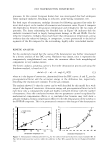
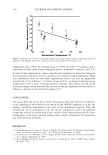
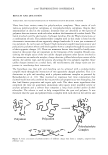
J. Cosmet. Sci., 58, 405-411 CTuly/August 2007) New keratin isolates: Actives for natural hair protection ALISA RODDICK-LANZILOTTA, ROB KELLY, SONYA SCOTT, and SURINDER CHAHAL, Canesis Network Ltd, Private Bag 4749, Christchurch, New Zealand (A.R.-L., S.S.), Keratec Limited, Springs Road, Lincoln, Canterbury, New Zealand (R.K.), and Croda Chemicals Europe, Cowick Hall, Snaith Goole, East Yorkshire DN14 9AA, U.K. (S.C.). Synopsis Hair is primarily composed of keratin proteins and it is well established that peptides and proteins bestow desirable effects on the hair, for example improving moisturization and softness. In the present work we describe how keratin actives with unique properties convey a range of beneficial properties to a variety of hair types. It has been observed that these functional keratins protect hair from damage associated with chemical treatments such as perming and relaxation, help to restore the mechanical strength of damaged fibers and decrease fading of colored hair. INTRODUCTION It is well known that proteins have beneficial effects on hair. For a long time it has been acknowledged that hydrolyzed proteins, convey desirable effects to hair care formula- tions, improving, softness, moisturization and leaving hair feeling and looking healthier. Hair is primarily composed of keratin protein, one of nature's most successful materials. Many of the commercially available keratin ingredients have been manufactured using harsh processes which destroy the natural functionality of the keratin and yield low molecular weight peptides. In order to fully capitalize on the properties of keratins, an approach which allows the natural characteristics of the materials to be maintained is needed. In this paper, we describe how a new range of "Functional Keratins," which have been created by using patented technologies, protect the hair. The origin of this protective effect is attributable to the isolation of intact protein fractions which leads to unique amino acids combina- tions and film-forming properties of the high molecular weight ( ~5 5kD) water soluble portion. In addition, they possess a unique s-sulpho functionality, which conveys anti- oxidant properties and allows them to react with hair to permanently attach. This is particularly relevant when hair is damaged and in the presence of chemicals used during typical chemical treatments, such as perming and relaxation. In previous reported studies, these new actives have been shown to convey anti-aging properties to hair by protecting the fiber cortex and surface from damage arising from sunlight and urban pollution (1-3). Here we describe how these actives convey other 405

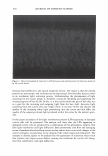
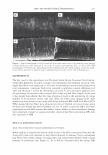
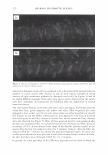
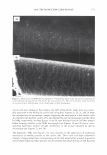
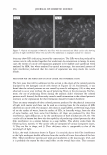
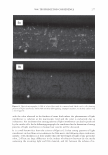
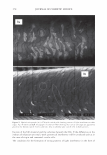
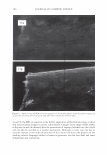
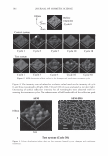
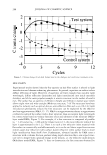
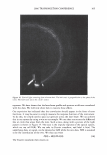
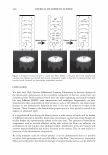
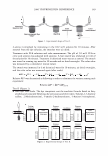
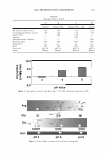
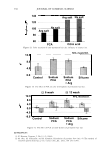
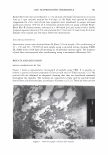
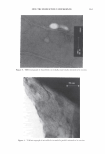
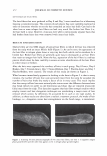
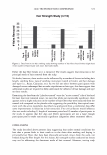
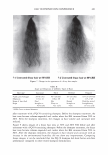
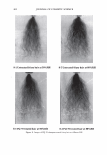
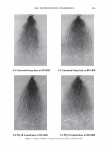
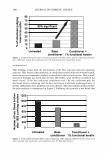
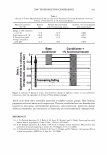
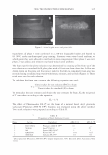
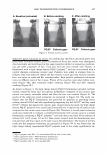
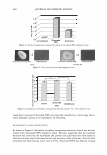
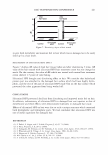
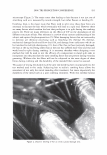
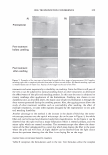
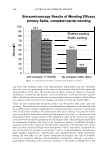
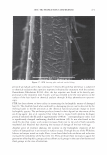
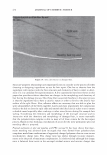
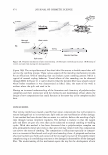
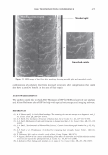
406 JOURNAL OF COSMETIC SCIENCE beneficial properties to a variety of hair types, for example, protecting hair from damage associated with chemical treatments, such as perming and relaxation, helping to restore the mechanical strength of damaged fibers and decreasing fading of colored hair. MATERIALS AND METHODS HAIR SOFTNESS Tresses (-3g) were prepared from Natural Red Hair (20 cm, De Meo Bros.) by weighing -3.3g of hair from the pigtail supplied and fixing with a cable tie approximately 2.5 cm from the butt end. The butt end was then glued using Ados F2 adhesive and once it was dry the unstuck hair was removed carefully by combing. A conditioner formulation (3g) with or without the functional keratin ingredient (1 %), was applied to the hair tresses, worked through and left for two minutes. Hair was rinsed under a steady stream of water at 40°C for two minutes. Each of the tresses was reproducibly combed using 10 strokes using of the tensile tester (Instron 4204) with a combing attachment. Tresses were allowed to air dry prior to panel assessment. A panel testing with 12 judges was used to evaluate the sensorial properties of the treated hair tresses. The tests were performed in a conditioned room (20°C, 60%RH), where all hair tresses (untreated and treated) were compared in pairs and volunteers were asked the question "which hair tress is softer?" All results were then subjected to statistics analysis. A Spearman's Rank Correlation Coefficient was used to investigate the level of agreement between the judges and the Chi-Square Test was used to investigate the uniformity of the distribution of the volunteer's answers. HAIR BREAKAGE 3g hair tresses (Asian, from De Meo Bros.) were prepared and pre-combed wet. Condi- tioner formulation (3g) with or without the ingredient, was applied to the hair tresses and worked through. Hair was rinsed under a steady stream of water at 40°C for two minutes. Tresses were allowed to dry prior to being combed manually for 1600 strokes with a fine toothed plastic comb. Broken fibers were collected and counted after 400 strokes and then after a further 1200 combing strokes. PROTECTION DURING HAIR RELAXATION Volunteers of African decent were recruited for the experiment. A half head test protocol was used. Samples of the hair (approximately 30 mm in length) were taken prior to relaxation and then the whole head of hair was relaxed using a standard hydroxide relaxing system. Following relaxation and physical lengthening, a 4% aqueous solution (as supplied) of functional keratin was applied to one half of the head only. Neutral- ization and washing was then carried as usual. Samples of the hair from each side of the head were taken and sent for SEM analysis. 20 fibers from each sample were mounted on a 20 mm stub and coated for SEM observation. Representative micrographs were recorded and the overall features of the samples were summarized.
Purchased for the exclusive use of nofirst nolast (unknown)
From: SCC Media Library & Resource Center (library.scconline.org)