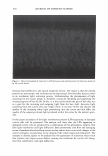
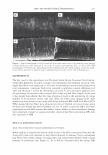
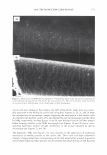
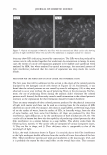
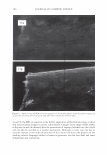
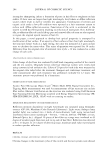
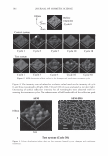
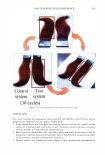
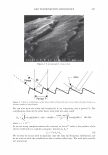
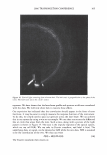
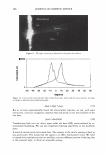
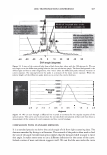
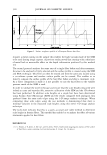
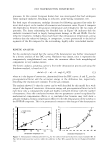
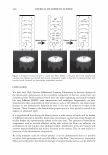
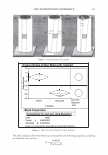
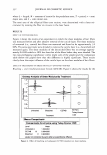
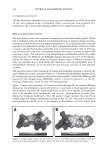
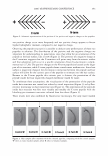
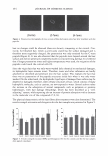
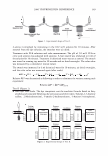
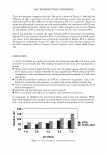
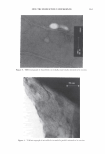
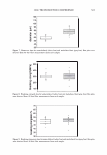
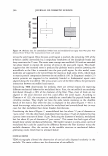
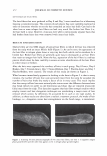
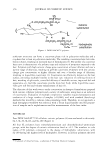
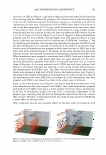
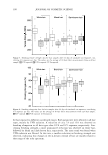
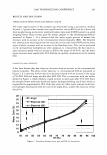
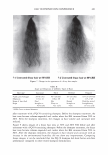
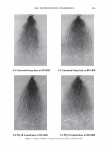
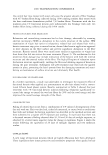
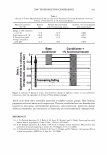
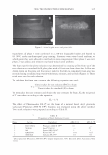
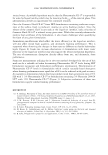
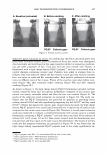
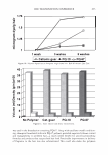
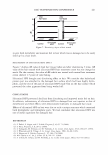
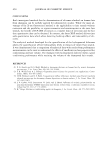
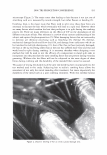
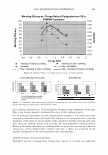
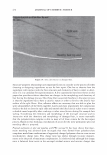
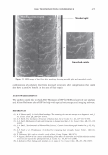
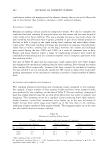
2006 TRI/PRINCETON CONFERENCE 475 Mended split Smoothed cuticle Figure 21. SEM image of hair fiber after mending, showing mended split and smoothed cuticle. combinations of polymers that form microgel structures after complexation that could also have a positive benefit in the area of hair repair. ACKNOWLEDGEMENTS The authors would like to thank Bill Thompson of ISP for SEM and particle size analysis and Alison Robinson also of ISP for help with optical microscopy and imaging software. REFERENCES (1) A. C. Brown and J. A. Swift, Hair breakage: The scanning electron microscope as a diagnostic tool,]. Soc. Cosmet. Chem. 26, 289-297 (1975). (2) J. A. Swift, The mechanics of fracture of human hair, Int.]. Cosmet. Sci., 21, 227-239 (1999). (3) J. A. Swift, Mechanism of split-end formation in human head hair,]. Soc. Cosmet. Chem., 48, 123-126 (1997). (4) J. A. Swift, "Fundamentals of Human Hair Science," Cosmetic Science Monograph Number One, p. 62, Fig. 36. (5) J. A. Swift et al., Flexabrasion: A method for evaluating hair strength, Cosmet. Toiletr., 116 (12), 53-60. (6) V. Robinson, Split ends a scientific study of hair, Cosmet. Per/um., 90 (1975). (7) V. Signori, Review of the current understanding of the effect of ultraviolet and visible radiation on hair structure and options for photoprotection,J. Cosmet. Sci., 55, 95-113 (2004). (8) J. Jachowicz, Hair damage and attempts to its repair,]. Soc. Cosmet. Chem., 38, 263-286 (1987).

476 JOURNAL OF COSMETIC SCIENCE (9) R. McMullen and J. Jachowicz, Thermal degradation of hair. I. Effects of curling irons,]. Cosmet. Sci., 49, 223-244 (1998). (10) D. C. Streuli, L. C. Foltis, and N. Clements, Style savers, Global Cosmet. Ind. Mag., 30-32 Qanuary 2002). (11) S. S. Sandhu and C. R. Robbins, A simple and sensitive technique, based on protein loss measurements, to assess surface damage to human hair,]. Soc. Cosmet. Chem., 44, 163-175 (1993). (12) N. Karibyants et al., Characterization of PSS/PDADMAC-co-AA polyelectrolyte complexes and their stoichiometry using analytical ultracentrifugation, Macromolecules, 30, 7803-7809 (1997). (13) P. Ramachandran et al., WO96/32920, assigned to Colgate, Oct. 24, 1996. (14) E. Tsuchida et al., Die Makromolekulare Chemie, 175, 583-591 (1974). (15) Design Expert 6, Stat-Ease, Inc., 2021 East Hennepin Ave., Minneapolis MN 55413 (2003). (16) C.R. Robbins, Chemical and Physical Behavior of Human Hair, 3rd ed., (Springer-Verlag, New York, 1994). (17) S. E. Kelly and V. N. E. Robinson, The effect of grooming of the hair cuticle,]. Soc. Cosmet. Chem. 33, 203-215 (1982). (18) S. B. Ruetsch and Y. K. Karnath, Change in surface chemistry of the cuticle of human hair by chemical and photochemical oxidation, IFSCC Mag., 7(4), 209-307 (2004). (19) M. Joy and D. M. Lewis, The use of FTIR spectroscopy in the study of the surface chemistry of hair fibres, Int.]. Cosmet. Sci., 13, 249-261 (1991). (20) Y. K. Karnath, C. J. Dansizer, and H. D. Weigmann, Wettability of keratin fiber surfaces, ]. Soc. Cosmet. Chem., 28, 273-284 (1977). (21) H-D Weigmann and Y. K. Karnath, Modification of human hair through fiber surface treatments: Characterization by wettability, Cosmet. Toiletr., 101, (1986).
Purchased for the exclusive use of nofirst nolast (unknown)
From: SCC Media Library & Resource Center (library.scconline.org)