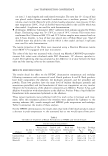
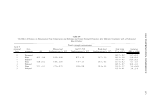
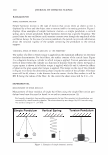
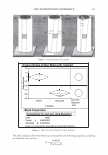
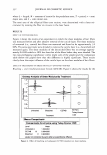
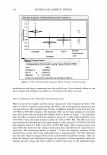
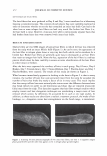
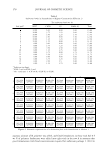
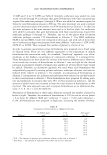
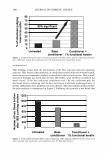
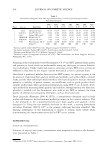
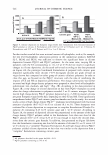
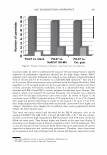
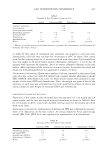
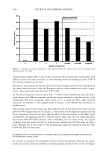
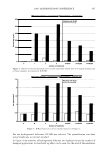
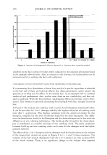
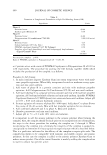
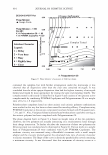
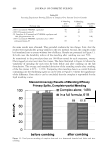
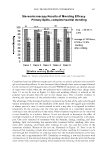
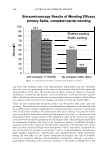
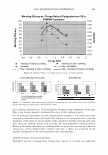
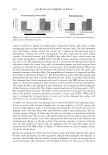
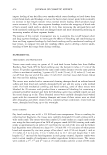
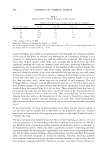
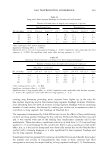
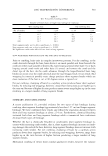
2006 TRI/PRINCETON CONFERENCE Table II Long versus Short Segment Breakage and Number of Comb Strokes* Number of broken hairs at length (cm) (average of 3 replicas) Non-bleached hair Bleached hair No. of strokes 2.54 2.54-6.4 6.4-12.7 12.7 2.54 2.54-6.4 6.4-12.7 12 28 4 50.3 12 5 so 44.3 4.7 1 67.7 11.3 4.7 75 45.7 3.7 1.3 1.3 98.7 22.3 8 100 68.7 5.3 0.3 2 111.3 22.3 3.7 * Dry combing at 60% relative humidity. Significant bleaching effect, p = 0.0001. 481 12.7 3 4.3 3 2.3 Significant short ( 2.54 cm) vs long segment breakage, p = 0.0001. Significant comb stroke effect for short segments, p = 0.0002. No significant comb stroke effect for long segments, p = 0.47. Table III Bleaching Then Conditioner and Long versus Short Fragment Breakage* Number of broken hairs at length (cm) (average of 3 replicas) Bleaching + conditioner No. of strokes 2.54 2.54-6.4 6.4-12.7 25 22.3 3 0.7 so 25 4 0.7 75 26.7 1.3 0.3 100 38.7 4.3 1.3 * Dry combing of hair at 60 ± 2% RH. Significant conditioner effect, p = 0.0001. Bleached hair 12.7 2.54 2.54-6.4 6.4-12.7 1.3 50.3 12 5 0.7 67.7 11.3 4.7 0.7 98.7 22.3 8 1.3 111.3 22 3.7 12.7 3 4.3 3 2.3 Significant short vs long segment effect, p = 0.000 l. Significant comb stroke effect only for short segments, p = 0.0025. No significant comb stroke effect for long segments, p = 0.35. creasing snag formation providing more crossover hairs higher up in the tress for hair-on-hair impacting and in that manner long segment breakage increases. However, since bleaching does not show an increase in long segment breakage with an increasing number of comb strokes, the damage by combing per se does not accentuate nor does it contribute to long segment hair breakage of bleached hair. The experiment summarized by Table III was run to test the effects of hair conditioning on short and long segment breakage by dry combing. Chemically bleached hair was used and it was treated with one of the leading hair conditioners currently sold in the marketplace. These data show a significant reduction in both short ( 2.54 cm) and long segment (2.54 cm) breakage by this conditioner. There is also a significant comb stroke effect, but, as is the case for shampooed non-chemically treated hair and for bleached hair washed with a cleaning shampoo, it is only significant for short segment breakage and not for long segment breakage. Conditioners function primarily by reducing inter-fiber friction and thereby they reduce the number and severity of entanglements that result in those crossover hair fiber arrangements necessary for impact loading in long segment breakage (1,2). Furthermore,

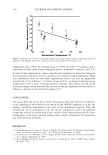
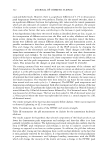
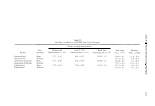
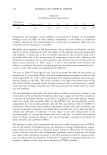
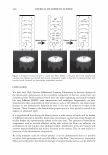
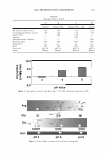
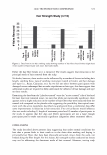
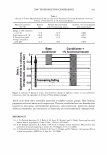
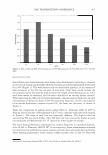
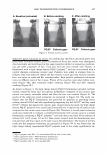
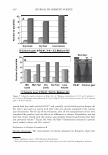
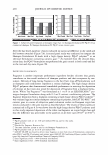
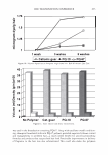
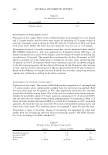
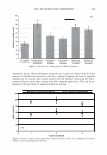
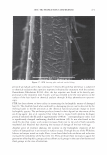
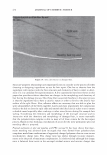
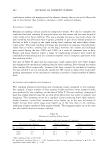
482 JOURNAL OF COSMETIC SCIENCE conditioners reduce end wrapping and the abrasive damage that occurs to the fiber-ends and in that manner they produce a decrease in short segment breakage. MECHANICAL COMBING Mechanical combing of hair produced unexpected results. We tried to simulate the conditions for hand combing by using the same size hair tresses and the same length of comb stroke as for hand combing. This was a mistake, because as the results show, the hand combing was obviously more vigorous, probably in part due to thumb pressure on the hair to hold it snugly in the comb during hand combing and most likely a faster comb stroke. This hand combing technique was developed to maximize reproducibility rather than to mimic combing hair on the head, however, the comber and technique were tested during the late 1980's and 1990's in a series of consumer tests in Asia, Europe and Latin America where a range of conditioning products were tested for combability/conditioning and the consumer response was in complete agreement with the combing results. The data of Table IV show that for many more comb strokes there were fewer broken hair fragments by mechanical combing than by hand combing. Even though the results show similar effects numerically, because of the large variance for mechanical combing the data of Table 4 are not statistically significant. We intend to repeat these results after making adjustments to the mechanical combing to produce a larger number of broken hairs. WET VERSUS DRY COMBING AND BREAKAGE Wet combing produced interesting and contrasting results compared to dry combing. For example, a larger number of long segment breaks and fewer short segment breaks were produced by wet combing, see the data of Table V. For wet combing, clumping of hairs was readily observed and the tip ends of the fibers were not as free to produce end wrapping. This clumping occurs by a capillary action producing fewer short segment breaks however, crossed hair interactions occur higher up in the tress & because of higher friction more severe snags arise higher up in the tress than in dry combing, producing a larger number of long segment breaks. This snagging higher up in the tress was also readily observed during combing. Table IV Mechanical Combing of Hair Tresses* Number of broken hairs at length (cm) (average of 4 replicas) Non-bleaching+shampoo No. of strokes 2.54 2.54 1000 25.3 0 2000 25 0 * Dry combing of hair at 65% RH. Bleach+shampoo 2.54 2.54 43.5 13.3 44.3 6 Bleach+conditioner 2.54 2.54 19.8 2 20 0 No significant treatment effect, p = 0.62. Significant short vs long segment breakage, p 0.001. No significant comb stroke effect, p = 0.66.
Purchased for the exclusive use of nofirst nolast (unknown)
From: SCC Media Library & Resource Center (library.scconline.org)