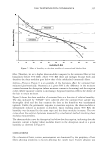
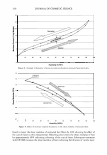
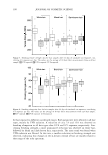
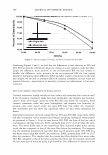
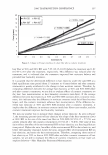
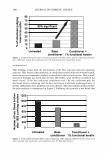
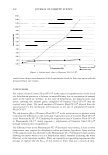
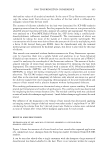
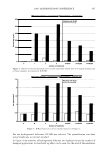
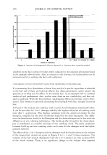
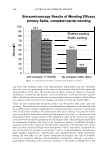
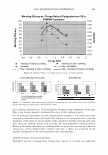
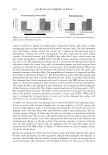
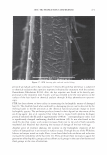
386 JOURNAL OF COSMETIC SCIENCE to hair proteins, especially at lower wavelengths, where both the pigments and the proteins absorb light, by absorbing and filtering the impinging radiation and subse- quently dissipating this energy as heat. Their high absorption capacity can be explained in terms of their extensive system of conjugate carbonyl groups and double bonds. This not only captures a large fraction of the radiation but also immobilizes many of the free radicals formed upon the absorption of the UV radiation by the photo-sensitive amino acids in hair, preventing the transport of these free radicals into the keratin matrix. However, in the process of protecting the hair proteins from light, the pigments are degraded or bleached (9-11). Contradictions are still found in the literature about the effect of specific wavelength ranges of the solar radiation on hair properties and the sensibility of different hair types to photodegradation. Authors generally attribute hair damage to the total ultraviolet range of the solar spectrum and relate the photo-sensibility of light and dark hair to the hair melanin type. The aim of this work was to quantify and compare the effect of different UV wavelength ranges on the mechanical properties and color of hair with different melanin content. In this way, we hope to improve knowledge on the interac- tions of human hair with solar radiation. MATERIALS AND METHODS HAIR SAMPLES Tresses of (blended) virgin dark-brown and blond hair from De Meo Brothers Inc. (New York, USA) and virgin white hair from a volunteer were used. Each tress, weighing 2.0 g and approximately 20-cm in length, was washed two times with 2.0% w/w sodium lauryl sulfate aqueous solution, as follows: (a) hand-washing with 1 ml of the solution for 1 min (b) rinsing with 40°C water for 1 min (c) wet combing four times using a polypropylene comb. Afterwards, they were dried at room temperature, combed and stored. RADIATION EXPOSURE Sun exposure was simulated by irradiation with a mercury vapor lamp (OSRAM HQL 125W, Sao Paulo, Brazil). Full or UVB filtered radiation conditions were used as described in a previous work (12). The tresses were irradiated for 448 and 1792 h at 30 ± 2 °C and 50 ± 2 % RH. The values of radiation intensity obtained for the mercury- vapor lamp were 1.5 ± 0.5 W/m2 (UVB), 26.0 ± 1.0 W/m2 (UV A) and 70.0 ± 1.0 W/m2 (visible plus infrared radiations), summing a total radiation intensity of97.5 ± 1.0 W/m2. This value is around seven times smaller than that measured for the sun (692.0 ± 1.0 W/m2). Considering that lh sun exposure is "equivalent" to 7-h lamp exposure and 4 h of sun exposure per day, in this work we have simulated 16 and 64 sun exposure days. COLOR CHANGES Changes in the hair color were measured by diffuse reflectance spectrophotometry (DRS),

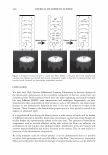
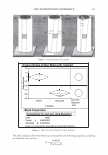
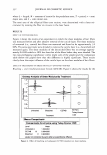
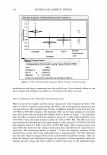
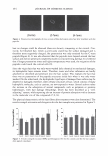
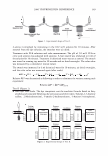
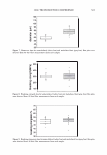
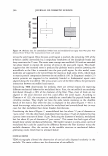
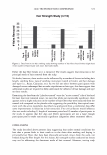
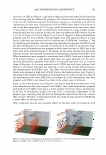
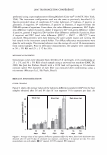
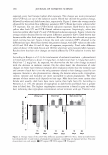
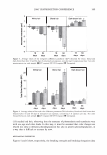
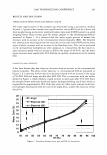
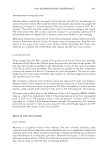
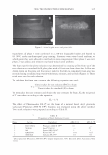
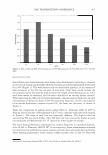
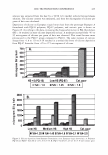
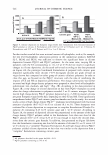
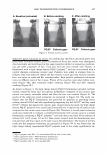
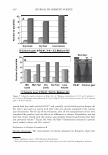
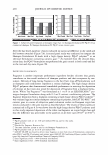
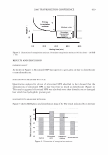
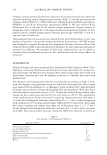
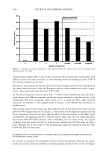
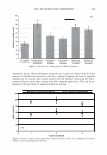
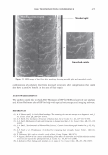
2006 TRI/PRINCETON CONFERENCE 387 performed using a spectrophotometer (GretagMacbeth Color-eye® 2180UV, New York, USA). The instrument configuration used was the same as previously described (12). Spectra provided values of coordinates L* (color lightness), a* (redness, if positive or greenness, if negative), b* (yellowness, if positive or blueness, if negative) from the CIELAB system of equations. From these, the color difference parameters, DL * (light- ness difference: lighter if positive, darker if negative), Da* (red-green difference: redder if positive, greener if negative), Db* (yellow-blue difference: yellowish if positive, bluer if negative) and DE* (total color difference: [(DL *2 + (Da *)2 + (Db*)2J 11 2 ) were calculated. Measurements were done keeping the same sample region and turning the hair sample in the instrument sample holder. Ten diffuse reflectance measurements were done for each sample. The internal reference was the average of a set of 10 measurements from control samples. Prior to reflectance measurements, the samples were conditioned at 50 ± 5% RH and 25 ± 2 °C for 24 h. MECHANICAL PROPERTIES Stress/strain curves were obtained from 40 fibers (5 .0 cm length, 24 h conditioning at 25 ± 2°C and 50 ± 5% RH) of each sample using a universal test machine (EMIC DL 2000, Sao Jose dos Pinhais, Brazil) with a 10 N load cell operating at 10 mm/min constant speed. The diameter of each fiber was measured after conditioning using a micrometer (Mitutoyo Ltd., Sao Paulo, Brazil). RES UL TS AND DISCUSSION COLOR CHANGES Figure 1 shows the average values of the lightness difference parameter (DL *) for the hair samples obtained after 16 and 64 days of 'sun exposure' (4 h exposure per day). As 20 White hair 15 ·c: 10 a, 5 :J -1 16 days 64 days Blond hair 16 days 64 days Dark-brown hair 16 days 64 days Figure 1. Average values of the lightness difference parameter (DL *) for white, blond and dark-brown hair obtained after 16 and 64 days of simulated sun exposure, considering 4 h exposure per day. Ten color measurements on each sample. UV exposed. D UVA exposed. ■ Unexposed.
Purchased for the exclusive use of nofirst nolast (unknown)
From: SCC Media Library & Resource Center (library.scconline.org)