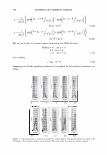
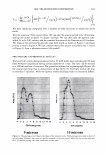
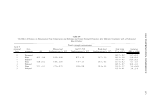
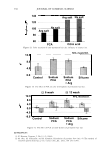
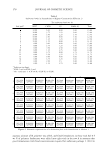
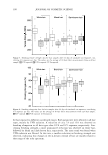
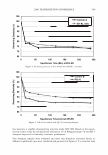
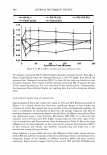
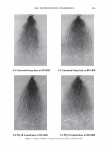
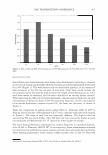
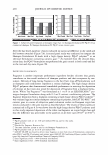
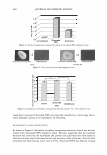
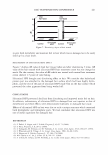
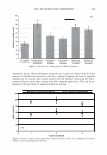
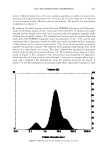
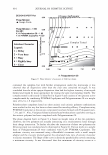
2006 TRI/PRINCETON CONFERENCE 383 index. Higher level of SoftCAT™ SL polymers (0.40 wt%) resulted in higher haze than the lower level (0.20 wt % ), while the level of hydrophobic substitution had only a minor effect on haze. Among the surfactants evaluated, SLES showed major effect on the haze index. SLES-3 mol showed higher haze than SLES-2 mol, and lower levels of SLES (6 wt % and 8 wt %) showed higher haze than 10 wt % SLES. The level of other surfactants also showed effect on the haze index. Formulations with high levels of CAPB (3.75 wt % or 5 wt %) and low level of "surfactant 3" (0 wt % or 1.25 wt %) showed higher haze than the corresponding formulations with low level of CAPB and high level of "surfactant 3". Haze data from this high throughput study showed good correlation with samples that were prepared using a standard (bench-top) method. This study illustrates that high throughput workflow is a valuable tool for study of shampoo systems. REFERENCES (1) R. Y. Lochhead, "Shampoos," in The Chemistry and Manufacture of Cosmetics, 3rd Ed., M. I. Schlossman, Ed. (Allured Publishing Corporation, Carol Stream, IL, 2002), Vol 2, pp. 277-326. (2) E. D. Goddard, "Polymer/Surfactant Interaction in Applied Systems," in Principles of Polymer Science and Technology in Cosmetics and Personal Care, E. D. Goddard and J. V. Grubber, Eds. (Marcel Dekker, New York, 1999), p 181. (3) W. Li and S. I. P. Jordan, Cationic cellulosic polymers with multifunctional and outstanding perfor- mance for personal care, Cosmet. Toilet. Manufact. Worldwide, 1-4 (2003). (4) T. V. Drovetskaya, R. I. Kreeger, J. L. Amos, C. B. Davis, and S. Zhou, Effects of low-level hydro- phobic substitution on conditioning properties of cationic cellulosic polymers in shampoo systems,]. Cosmet. Sci., 55 (Suppl.), S195-S205 (2004).

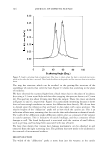
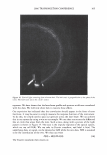
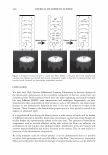
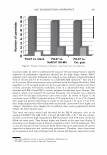
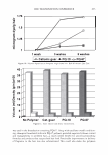
]. Cosmet. Sci., 58, 385-391 CTuly/August 2007) Hair melanin content and photodamage ANA CAROLINA SANTOS NOGUEIRA and INES JOEKES, Chemistry Institute, State University of Campinas-UNICAMP, CP 6154, 13084-971, Campinas, SP, Brazil. Synopsis The aim of this study was to compare the susceptibility of hair with different melanin content (virgin white, bl�nd and dark-brown) to photodegradation, evaluating changes on hair color and mechanical properties. Light exposure was carried out with a mercury-vapor lamp for up to 1800h. It was observed that color changes are different for each hair type and dependent on the wavelength range. Breaking elongation and breaking strength were affected in all hair types, mainly by UVB radiation. Results show that the melanin type and content of each hair is not the only parameter related to hair damages caused by sun exposure. INTRODUCTION The human hair fiber is composed mainly of keratins, a group of insoluble cystine- containing helicoidal protein complexes, which account for 65% to 95% of the hair by weight. The remaining constituents are water, lipids, pigments, and trace elements (1). The greatest mass pf the hair shaft is the cortex, which is responsible for the mechanical properties of the fiber. These properties are dependent on time, temperature and hu- midity (2). Inside the cortex are also located the melanin granules (about 3% by weight). These are the hair pigments, whose type, size and quantity establish hair color. There are two types of melanin, the brown-black pigment (eumelanin) and the less prevalent red pigment (pheomelanin). The chemical structures and molar masses of the melanins are not yet known (3), mainly because they are highly insoluble materials of presumably high molar mass and are therefore difficult to separate from the other cellular compo- nents of the structures in which they occur (4,5 ). Surrounding the cortex is the cuticle, a layer of overlapping, keratinized scales, which can account for 10% of the hair fiber by weight and has the role of protecting the fiber against environmental and chemical damage (6,7). As the cuticle protects the cortex, damage in the cortex generally occurs after extensive damage to hair cuticle. It is well known that solar radiation causes dryness, reduced strength, rough surface texture, loss of color, decreased luster, stiffness, brittleness and an overall dull, unheal appearance of the hair. These damages cause degradation of cystine, but the exact mechanism is not well known (8). Hair melanins provide some photochemical protection Address all correspondence to Ines Joekes. 385
Purchased for the exclusive use of nofirst nolast (unknown)
From: SCC Media Library & Resource Center (library.scconline.org)