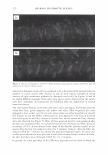
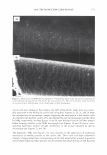
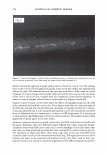
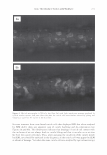
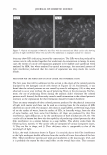
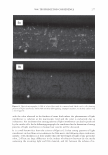
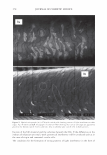
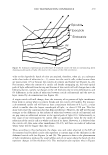
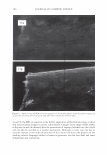
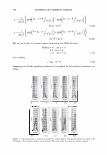
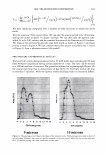
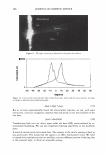
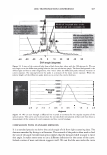
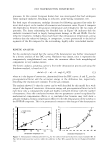
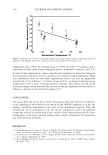
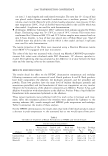
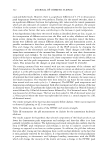
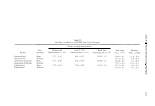
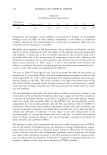
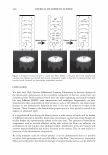
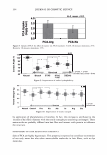
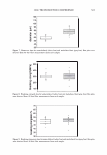
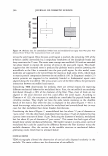
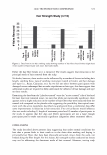
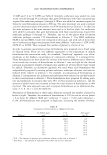
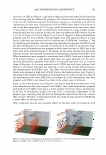
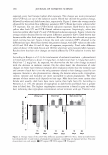
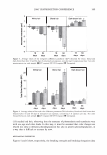
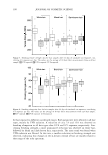
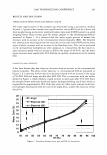
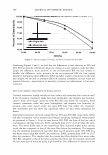
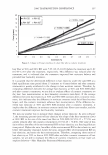
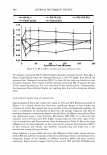
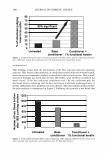
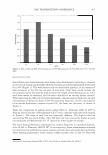
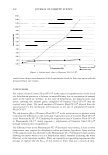
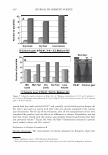
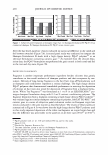
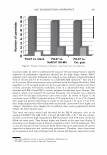
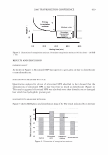
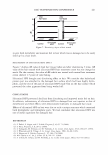
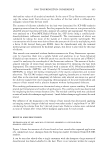
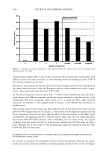
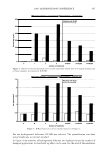
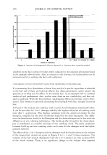
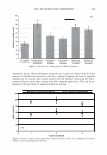
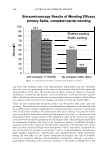
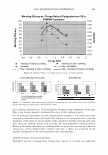
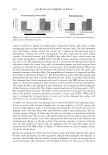
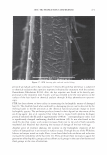
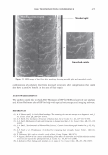
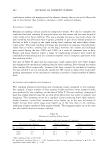
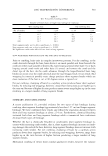
390 JOURNAL OF COSMETIC SCIENCE White hair Blond hair Dark-brown hair )( 800 c? 6 600 )( C: � u5 400 � )( "iii C Q) I- 200 Figure 5. Breaking tensile strength data for hair samples after 64 days of simulated sun exposure, con- sidering 4 h exposure per day. The values are the average of 40 hair fibers measurements from each hair sample.� UV exposed.� UVA exposed. D Unexposed. 100 I White hair i Blond hair Dark-brown hair )( i i 90 $ i $I� )( )( +19 � 80 � C 0 � 0) 70 C: 0 iJj I i i i 0) i i C 60 i i � i )( i (1J i i Q) i i )( .... al i i 50 i i i i i i i i i 40 i i )( Figure 6. Breaking elongation data for hair samples after 64 days of simulated sun exposure, considering 4 h exposure per day. The values are the average of 40 hair fibers measurements from each hair sample. � UV exposed.� UVA exposed. D Unexposed. for hair exposed to different wavelength ranges. Both parameters were affected in all hair types, mainly by UVB radiation. A reduction of circa 7% and 15% was observed on breaking elongation in all hair types after UVA and UV exposure, respectively. Con- cerning breaking strength, a more pronounced reduction was observed on white hair, followed by blond and dark-brown hair, respectively. The same trend was found when UVB radiation was filtered. In this case, a smaller reduction on breaking strength was observed, indicating that changes in the a-keratin crystals of hair are mainly related to that range of the solar spectrum.

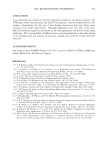
2006 TRI/PRINCETON CONFERENCE 391 CONCLUSIONS It was observed that changes in the hair mechanical properties are mainly related to the UVB range of the solar spectrum and that UV A radiation is the one responsible for color changes, disregarding the hair type. Color changes depend on hair type, being more pronounced for light colored hairs. Although lightening every hair type is the main effect of radiation, significant variations in all color parameters are observed after lamp irradiation. The susceptibility of different hair to photodegradation is not only related to the melanin type and content of each hair, though also with the overall hair fiber structure. ACKNOWLEDGMENTS The authors thank FAPESP (Grants 01/14161-9 and 04/13066-0), CNPq, CAPES and Cognis Brasil Ltda. for financial support. REFERENCES (1) C.R.Robbins and R. J. Crawford, Cuticle damages and the tensile properties of human hair,]. Cosmet. Sci., 42, 59-67 (1991). (2) P. Zuidema, L. E. Govaert, F. P. T. Baaijens, P.A. J. Ackermans, and S. Asvadi, The influence of humidity on the viscoelastic bahaviour of human hair, Biorheol., 40, 431-439 (2003). (3) W. L. Cheun, The chemical structure of melanin, Pigment Cell Res., 17, 422-424 (2004). (4) G. Prota, Melanins and Melanogenesis (Academic Press, London, 1992). (5) P. Z. Margalith, Pigment Microbiology (Chapman and Hall, London, 1992). (6) Z. D. Draelos, The biology of hair care, Dermatol. Clinics, 18, 651-658 (2000). (7) S. B. Ruetsch, Y. Karnath, and H. Weigmann, "Photodegradation of Human Hair: A Microscopy Study," in Sun Protection in Man, P. U. Giacomoni, Ed. (Elsevier, Amsterdam, 2001), pp. 175-205. (8) C.R.Robbins, Chemical and Physical Behavior of Human Hair (Springer-Verlag, New York, 2002). (9) C. M. Pande and J. Jachowicz, Hair photodamage: Measurement and prevention,]. Soc. Cosmet. Chem., 44, 109-122 (1993). (10) E. Tolgyesi, Weathering of hair, Cosmet. Toiletr., 98, 29-33 (1983). (11) S. Ratnapandian, S. B. Warner, and Y. K. Karnath, Photodegradation of human hair,]. Cosmet. Sci., 49, 309-320 (1998). (12) A. C. S. Nogueira and I. Joekes, Hair color changes and protein damage caused by ultraviolet radiation, ]. Photochem. Photobiol. B: Biol., 74(2-3), 109-117 (2004). (13) C.R. Borges, J.C. Roberts, D. G. Wilkins, and D. E. Rollins, Relation of melanin degradation products to actual melanin content: Application to human hair, Anal. Biochem., 290, 116-125 (2001). (14) A. Bertazzo, M. Biasiolo, C. V. L. Costa, E. C. Stefani, and G. Allegri, Tryptophan in human hair: Correlation with pigmentation, Il Farmaco, 55, 521-525 (2000). (15) M. R. Vincensi, M. d'Ischia, A. Napolitano, E. M. Procaccini, G. Riccio, G. Monfrecola, P. Santoianni, and G. Prota, Phaomelanin versus eumelanin as a chemical indicator of ultraviolet sensitivity m fair-skinned subjects at high risk for melanoma: A pilot study, Melanoma Res., 8, 53-58 (1998).
Purchased for the exclusive use of nofirst nolast (unknown)
From: SCC Media Library & Resource Center (library.scconline.org)