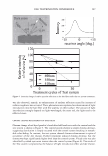
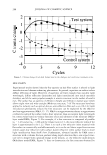
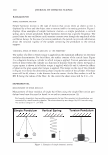
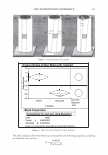
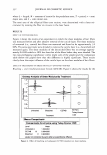
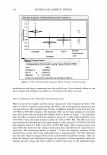
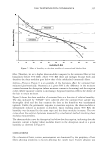
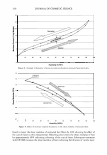
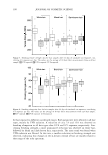
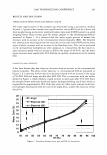
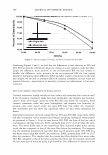
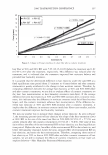
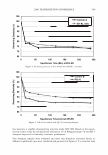
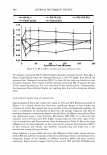
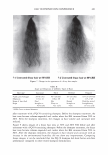
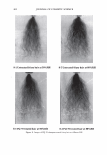
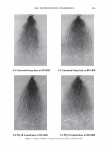
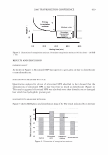
J. Cosmet. Sci., 58, 393-404 Quly/August 2007) Evaluation of hair humidity resistance/moisturization from hair elasticity TIMOTHY GAO, Croda Inc., 300-A Columbus Circule, Edison NJ 0883 7. Synopsis Average water regain and hair elasticity (Young's modulus) of virgin dark brown and bleached hair fibers under different relative humidity (RH) were determined. It is observed that hair water regain increases linearly with an increase in RH in the range of 40-85% and the remaining percent of hair elasticity decreases linearly with an increase in RH in the range of 50-80%. Therefore, measurements of average hair elasticity at 50% and 80% RH, respectively, under various equilibrium times before and after cosmetic treatments can be used to evaluate effects of cosmetic treatments on water adsorption behavior of hair- improvement in hair humidity resistance or enhancement in hair moisture uptake. A Hair Humidity Resistance Factor (H2RF) has been defined. If R2HF 1, the product improves hair humidity resistance-anti-frizz if R2HF 1, the product enhances hair water adsorption when R2HF - 1, the product has no significant effect on hair water adsorption behavior. This method was applied to evaluate anti-frizz performance of several shampoo formulations containing Polyquaternium-10, or Polyquaternium-70, or Polyquaternium-67, or Guar Hydroxypropyltrimonium Chloride. It was found PQ-70 shampoo showed the highest H2RF value and the best anti-frizz performance among these tested shampoos. The results were consistent with those obtained from Image Analysis. INTRODUCTION It is well known that the tensile mechanical properties of hair fibers, with respect to fiber extension under small deformations ( 2%), are related to the moisture level within the hair fiber. Water molecules are capable of penetrating into hair and plasticizing the components of hair fibers, and as such the force required for a given extension length is reduced with an increase in moisture content of hair. The exhibited behavior of hair fibers in low and high humidity environment is markedly different. At low humidity the hair fiber demonstrates low plasticity/flexibility. Me- chanical agitations such as combing, styling etc. can lead to significant fiber damage and hair breakage. Conversely, at high humidity the hair fiber may suffer the alternate extreme, that is the fiber becomes over plasticized and limp leading to poor hold/style retention. Especially, untreated naturally curly hairs are in frizzy condition and become unmanageable-"frizz" at high relative humidity. Therefore, reduction of the differences in mechanical properties of hair fibers at low and high relative humidity, i.e. remaining higher moisture content at low RH environment and reducing moisture uptake at high RH environment should lead to significant improvements in hair strength, texture, style retention and reduction of split ends. 393

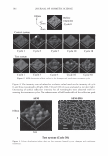
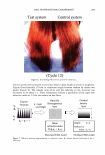
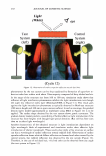
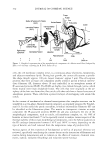
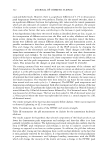
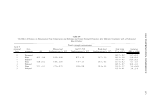
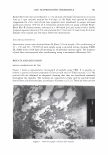
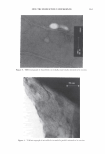
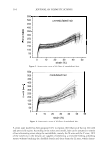
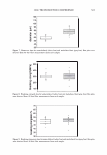
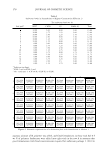
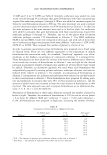
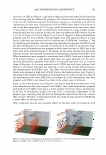
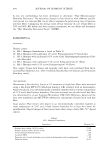
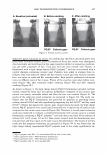
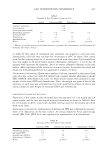
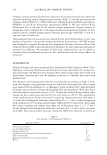
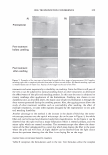
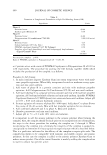
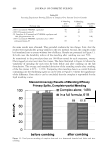
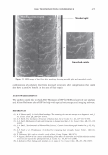
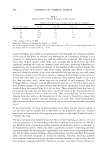
394 JOURNAL OF COSMETIC SCIENCE A new test methodology has been developed to determine "Hair Moisturization/ Humidity Resistance." By measuring changes in hair elasticity with different equilib- rium period at a constant RH, we are able to evaluate the penetrating rates of moisture into hair fibers. Comparing the average ratios of hair elasticity of a set of hair fibers at 50% and 80% RH before and after cosmetic treatments, we can define and determine the "Hair Humidity Resistance Factor" (HHRF). EXPERIMENT AL MATERIALS Shampoo samples la. SH-1 Shampoo (formulation is listed in Table I) 1 b. SH-1 Shampoo with additional 1 % active Polyquaternium-70 (Croda Inc) le. SH-1 Shampoo with additional 0.5% active Guar Hydroxypropyltrimonium Chlo- ride (Hercules) ld. SH-1 Shampoo with additional 0.5% active Polyquaternium-67 (Dow) le. SH-1 Shampoo with 0.2% active Polyquaternium-10 (Dow) Hair samples. Virgin dark brown and naturally curly hairs were purchased from Inter- national Hair Importers, Inc., New York [Lab bleached hair (30 minutes and 60 minutes bleaching time)}. TEST METHODS Measurement of hair elasticity. Forces at 1 % extension of single hair fibers were measured using a Dia-Stron MTT-670 (Dia-Stron Limited, UK) attached with an Autosampler, which was placed in an environmentally controlled chamber with a constant temperature of 23°C and a fixed relative humidity. The cross-sectional area of each tested hair fiber was determined by a Laser Scanning Micrometer LSM-5000 (Mitutoyo, Japan) and the data were transferred into MTTWIN software for calculations of elasticity of each hair fiber. Image analysis. Hair tresses were placed in an environmentally controlled chamber at room temperature of 23°C and a fixed relative humidity for at least four hours for equilibration. Digital images of hair tresses were taken using a Sony DSC-717 digital camera. Table I SH-1 Shampoo Formulation Ingredient Sodium lauryl sulfate (30.0% active) Sodium loureth sulfate (30.0% active) Cocamidopropyl hydroxysultaine Cocamide DEA Propylene glycol (and diazolidinyl urea (and) methylparaben (and) propylparaben Deionized water Weight(%) 23.33 10.00 3.00 2.00 1.00 60.67
Purchased for the exclusive use of nofirst nolast (unknown)
From: SCC Media Library & Resource Center (library.scconline.org)