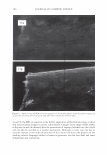
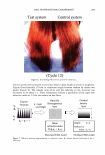
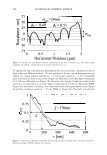
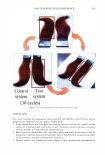
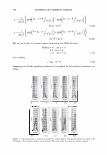
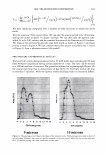
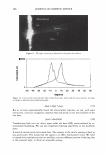
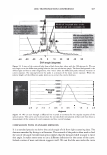
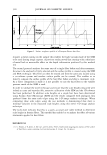
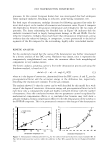
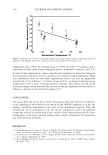
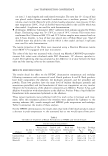
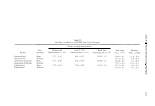
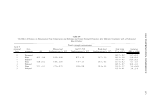
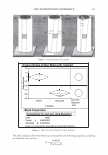
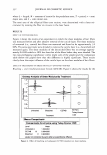
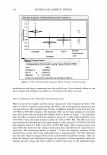
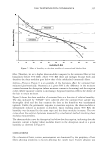
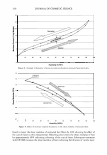
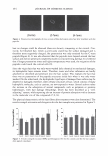
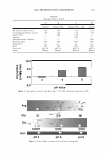
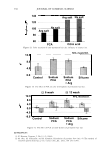
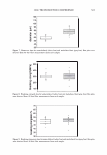
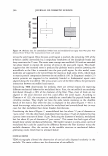
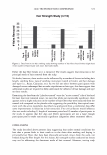
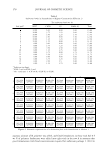
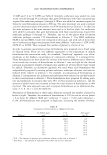
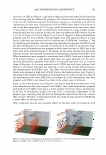
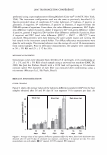
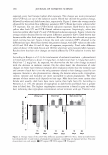
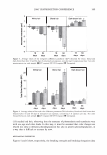
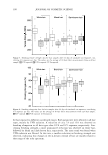
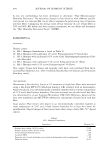
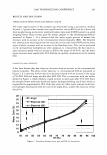
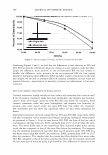
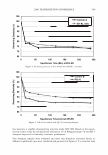
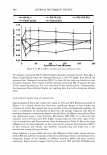
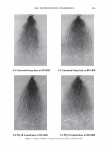
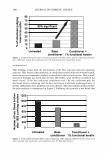
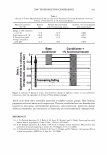
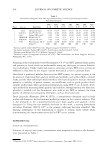
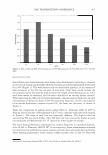
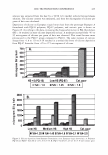
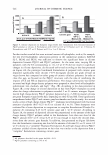
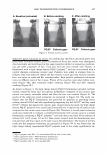
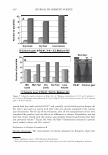
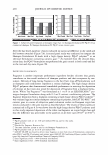
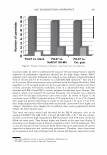
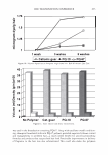
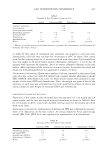
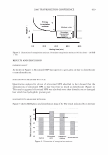
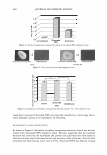
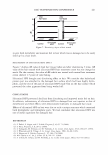
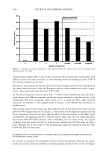
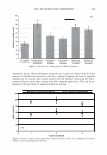
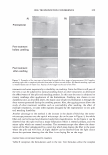
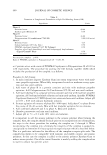
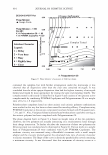
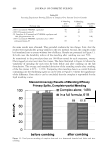
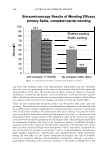
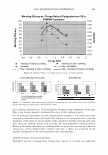
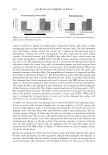
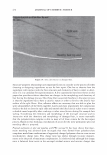
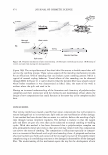
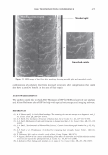
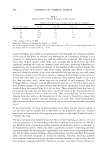
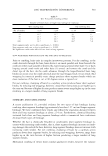
2006 TRI/PRINCETON CONFERENCE 411 Table I Results of Tensile Measurements of African Hair from Volunteers Following Relaxation, with and without a Posttreatment of 1 % Functional Keratin Measured parameter (N=50) Energy at 20% extension (x 10- 5 ]) Total energy (x 10- 5 ]) % Extension at peak Average strength at peak (gF) Relaxed hair Relaxed hair posttreated with 1 % functional keratin Students t-test (p) (compared with relaxed hair) 52.6 126.0 38.6 27.3 62.6 147.0 37.6 Base conditioner 30.0 0.003 0.017 0.349 0.074 Conditioner + 1 % functional keratin "Cl cu .:- 0 -----=---7�1!1!!9!11!f"""----------.33!j,5(5l1----7 ... ·- :::J ca 0 .c o "Cl - 0.2 U CD 0 .c ..J .,. J! j - 0 . 4 1=1t=====================t!!�t=======J �.!!!"g ! � -o.s+-----------------00.9�_2!----�...., ! � r--.r-..::::;:;::��:--i.��::------i��������a------, ,_. � Increasing fading .... .5 -0.BIJt=========J■I===� .c ::::, .21 =- - 1 ------------------------------- Figure 4. Amount of fading of tresses, determined by change in lightness relative to non-conditioner treated hair, after the equivalent of 20 days of New Zealand sunlight. which arise from their reversibly protected (s-sulpho) cystine groups, film forming properties and novel amino acid composition. They are suitable for hair care formulations targeted at anti-aging, environmental protection, color protection, protection during chemical treatments, and restoration of chemically and environmentally damaged hair. REFERENCES (1) A. D. Roddick-Lanzilotta, R. J. Kelly, S. M. Scott, K. Mitchell, and S. Chalal, Protecting hair with natural keratin biopolymers, Cosmet. Toiletr., 121(5) 61-68 (2006). (2) A. D. Roddick-Lanzilotta, R. J. Kelly, S. M. Scott, S. Chahal, and N. Challoner, Measurement and prevention of hair phoroageing,J. Cosmet. Sci., 55 (Suppl), Sl 13-121 (2004). (3) A. D. Roddick-Lanzilotta, R. J. Kelly, S. M. Scott, S. Chahal, and N. Challoner, Anti-ageing efficacy in hair care products, SOFW Int. J. Appl. Sci., 11 (2004).

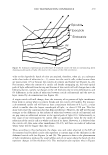
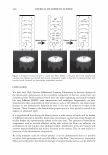
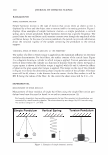
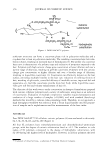
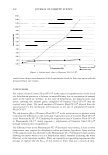
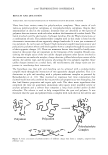
]. Cosmet. Sci., 58, 413-419 CTuly/August 2007) A cosmetic ingredient innovation for the stabilization and delivery of volatile fluoroether with cosmetic applications STEVE COCHRAN and TIM BROCKMAN, Departments of Applications & Claims Support, Phoenix Chemical Inc., 60 Fourth Street, Somerville NJ, 08876. Synopsis Initially this work attempts to support, evaluate and identify the stabilization and release mechanism of volatile fluoroether (Cosmetic Fluid CF-61 ®*) in a self-assembling nanostructure in an external water phase (Phoenomulse CE-1 ®-n through evaporation rate analysis. The release mechanism is hypothesized to be a result of a dehydration process, a decrease in water efficiency due to evaporation of external water at the liquid-air interface, which results in destabilization of the nanostructure. This work further attempts to quantify the release mechanism of the same volatile fluroether (Cosmetic Fluid CF-61 ®) from the nano- structure in cosmetic formulations through a newly developed in vitro test method which measures initial foam generation rate. Finally, this work demonstrates the application of these newly developed test methods as a useful tool for product development, formulation navigation, and performance optimization. INTRODUCTION The more recent marketing trends in the personal care cleansing categories for super- mild, natural-based detergents have left many consumers and marketing professionals with growing disappointment, particularly with the foaming performance of these prod- ucts. Poor foam quality and quantity during usage of natural-based shampoos may be the largest limiting factor and largest technical challenge to the formulating chemist. Con- sumer behavior continues to teach product development professionals that overall prod- uct performance is directly related to the foaming performance of the product (1). "Foam boost technology (FBT)," an active foam boosting technology, may provide a solution to some of these inadequacies through its capabilities of enhancing the foaming performance of products. This powerful technology, via stabilization of volatile fluo- roether, (Cosmetic Fluid, CF-61 ®), allows self-activated foaming products to be pack- aged in non-pressurized standard containers. The foaming action is activated when the product is exposed or open to the air, but remains stable in a closed container. * Cosmetic Fluid CF-61 ® (Methyl pefluoroburyl ether methyl perfluoroisobutyl ether), 3M Company St. Paul MN, 55144. t Phoenomulse CE-1 ® (Polyhydroxystearic Acid (and) isononyl isononanoate (and) ethylhexyl isononanoate (and) sodium cocamidopropyl PG-dimonium chloride phosphate (and) methyl pefluorobutyl ether (and) methylperfluoroisobutyl ether), Phoenix Chemical Inc., Somerville NJ 08876. 413
Purchased for the exclusive use of nofirst nolast (unknown)
From: SCC Media Library & Resource Center (library.scconline.org)