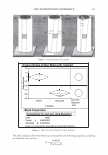
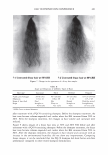
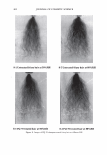
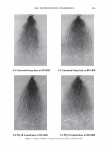
J. Cosmet. Sci.) 58, 283-294 (July/August 2007) Formation of nanostructure on hair surface: Its characteristic optical properties and application to hair care products SHUNSUKE WATANABE, HIRAYUKI SATO, SATOSHI SHIBUICHI, MASAYUKI OKAMOTO, SHIGETO INOUE, and NAOKI SATOH, Tokyo Research Laboratories, Kao Corporation, Sumida, Tokyo, Japan 131-8501 (S. W., S.S., N.S.), Tochigi Research Laboratories, Kao Corporation, Haga, Tochigi, Japan 321-3497 (H.S.), and Wakayama Research Laboratories, Kao Corporation, Minato, Wakayama, japan 640-8580 (M.O., S.I.). Synopsis Uneven structures on hair fiber surface, such as lift up of cuticle or build up of hair spray ingredients, generally cause a diffuse reflection which results in a dull and unhealthy appearance. However, in the case of finer structure than wavelength of visible light, the optical properties change significantly. An application of the phenomenon to hair care products is reported in this paper. Formation of the fine structure on hair surface was achieved by only a shampoo and rinse-off conditioner system including amino-silicone. Chroma enhancement of hair and light introduction into hair fibers were observed simultaneously with formation of the fine structure on the hair surface. The light introduction phenomenon is understood in terms of "Effective Medium Approximation" (EMA). The simulation study based on EMA indicates that a very low refractive index surface is expected to be realized, which well explains the optical experimental results. When the shampoo and conditioner system developed to form the structure on fiber surface was applied to dyed hair, enhancement and long-lasting of vivid appearance was confirmed in spite of dye elution. INTRODUCTION Hair optical factors have been analyzed to understand beautiful and healthy appearance of hair. Especially, shine, color and texture based on optical properties of hair fiber have been focused (1,2). Cuticle has relatively higher refractive index (n = 1.55, 3) as an organic material which may lead to both relatively intense surface reflection. For healthy shine, cuticle smoothness is one of the most important factors to reduce diffuse reflection on hair surface. Furthermore, in the case of lighter hair including less amount of melanin granule, reflection light with colors of fiber from inside also becomes more emphasized. Therefore, the optical transparency of hair fiber is added in important factors in order to obtain beautiful appearance. In general, it is known that chemical treatments, excessive dryer heat, or residue by 283

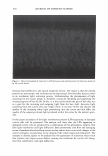
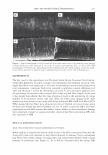
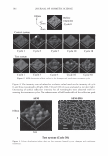
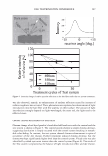
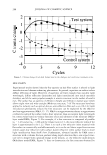
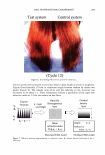
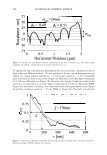
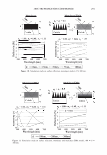
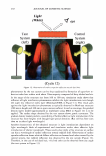
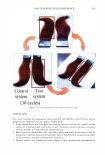
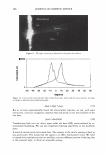
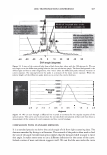
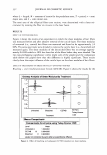
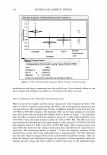
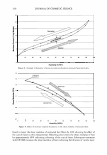
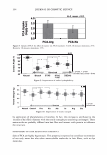
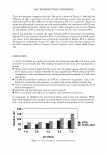
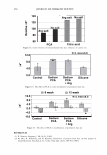
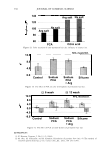
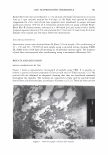
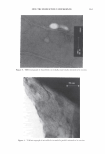
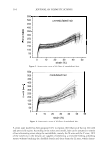
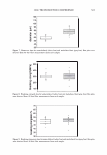
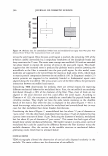
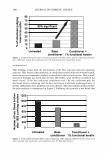
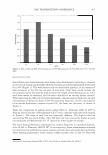
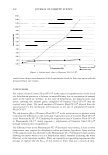
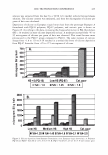
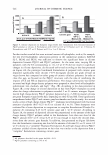
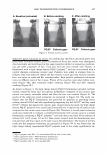
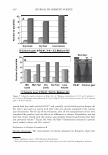
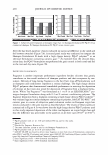
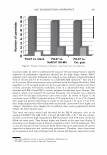
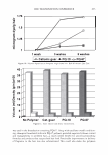
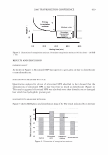
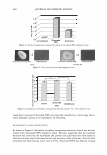
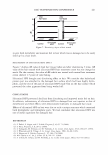
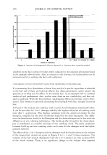
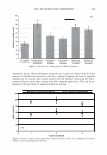
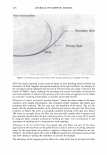
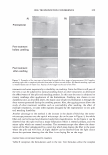
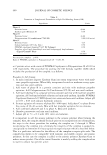
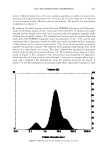
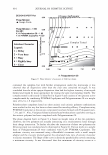
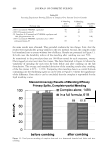
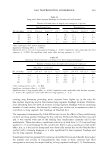
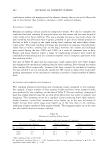
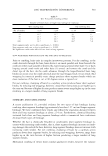
284 JOURNAL OF COSMETIC SCIENCE incomplete shampooing induce a formation of pores in hair fiber or roughness on hair surface. If their sizes are larger than light wavelength, they behave as diffuse reflection sources which result in dull or colorless dry appearance. Combination of solvents and organic acids under a low pH condition were reported as a hair treatment system to reduce such diffuse reflection sources. Penetration of the acids is accelerated in the system to swell hair fiber protein resulting in reduction of inner pores (4,5). Addition- ally, re-adhesion effect of cuticle lift-up part and removal effect of scam are also reported to regain the original optical natures of hair (6). In this paper, a novel approach to develop hair optical properties is attempted by modification of hair surface. If an asperity of hair surface is finer than light wavelength, the structure doesn't work as a light drying, the color was measured as 6 parts on hair tress to calculate the mean value. This series of operation was repeated for 30 cycles. Deference from the original color of untreated tress (cycle = 0) was evaluated as a color change of each cycle. EVALUATION OF DYED HUMAN HEAD Color change of dyed hair was evaluated by half head comparing method of the control and the test systems. Originally brown color hair American women were evenly dyed using commercial red oxidation dye. Colors of 20 parts for both sides were measured as the original color value before the treatment. Shampoo and conditioner treatment, and color measurement after each treatment was performed cyclically for 12 times. The treatment process was performed by a beautician. OBSERVATION OF HAIR FIBER SURFACE Atomic Force Microscopy (Nano Scope □!Multi Mode AFM, Digital Instrument Inc., Tapping Mode measurement) was used for measurement of fine structure size on hair fiber surface. Element distribution on the structure was evaluated using Field Emission Type Scanning Electron Microscopy attached with Energy Dispersive Spectroscopy (FE- SEM-EDS/JSM5200, JEOL, lKeV) with no courting on surface. REFLECTION MEASUREMENT ON HAIR FIBER SURF ACE Reflection intensity dependence on light wavelength was measured using Goniopho- tometer (GP-200, Murakami Color Research Laboratory). Light source (halogen lamp parallel light) was isolated into 3 kinds of monochromatic light using narrow-band interference filter (center wavelength = 410 nm, = 5 50 nm, 690 nm / FWHM = 10 nm, Edmund Optics Inc.). Aligned 10 pieces of hair fiber on a stage were irradiated at 45 degree of incident angle from root side to tip side of hair fiber. Reflection was detected at 45 ± 15 degree. In ± 15 degree of detecting range, maximum peak value was evaluated as surface specular reflection. RESULTS CHROMA CHANGE AND SURFACE OBSERVATION OF HAIR TRESS Chroma changes in the treatment cycles of the control and the test systems were showed
Purchased for the exclusive use of nofirst nolast (unknown)
From: SCC Media Library & Resource Center (library.scconline.org)