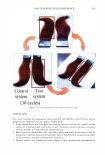
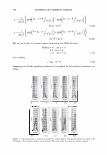
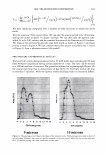
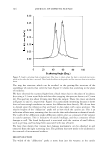
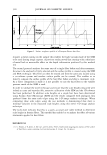
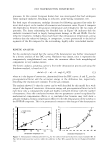
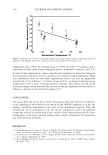
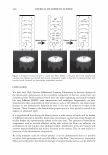
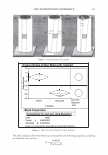
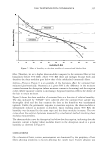
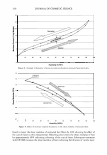
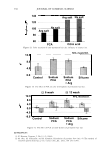
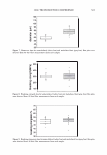
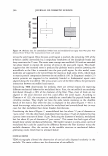
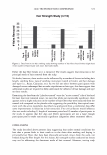
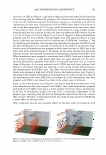
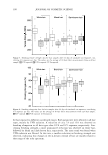
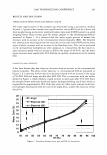
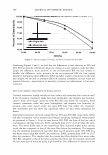
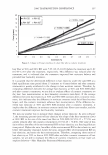
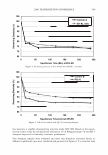
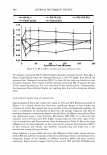
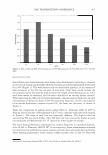
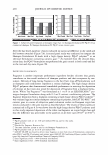
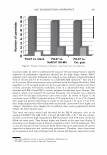
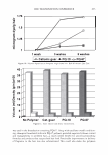
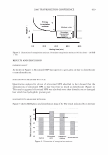
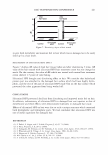
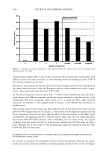
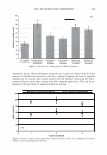
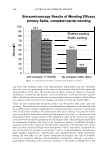
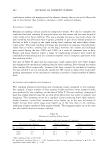
2006 TRI/PRINCETON CONFERENCE 441 After After 2.0 hair-dyed hair-dyed 1.5 1.0 0.5 L==7 � � 0.0 Control Siliconized Control Siliconized HPS HPS Figure 7. Discoloring degree of hair treated. to give both wettability and moisture feel to hair which was so damaged as to be easily dried up by a hair dryer. MEASUREMENT OF ANTI-DISCOLORING EFFECT Figure 7 displays LiE value of dyed hair tresses before and after shampooing 5 times. LiE value of the hair treated with siliconized HPS hair treatment cream was not changed so much. On the contrary, the value of LiE which was treated with control hair treatment cream showed 1. 7 point of color fading. Siliconized HPS brought anti-discoloring effect to hair. We consider that hydrolyzed protein part was adsorbed to the damaged hair surface which had been highly hydro- philic, and the rest of the part of siliconized HPS made film on the hair surface which prevented the color pigments from being washed off. CONCLUSIONS Siliconized HPS prevented dyed hair from discoloring and improved moist feel on hair. In addition, substantivity of siliconized HPS to damaged hair was superior to that of dimethicone and these effects were demonstrated especially in damaged hair study. Effects of siliconized HPS on hair were due to such a unique structure which contained both hydrophobic and hydrophilic parts. We had concluded that siliconized HPS was one of useful ingredient for damaged hair. REFERENCES (1) S. Daikai, S. Nagao, and S. Uchida, Fragrance]., 6, 65-71 (2000). (2) S. Nezu, Fragrance]., 6, 28-32 (2000). (3) S. Tamagawa, H. Shintani, and M. Yoshioka,]. Soc. Cosmet. Chem. Japan., 27(3), 469-473 (1993). (4) S. Watanabe and K. Yahagi,J. Soc. Cosmet. Chem. Japan., 29(1), 64-68 (1995). (5) S. Nagao and S. Uchida, Fragrance]., 17, 169-174 (2000). (6) M. F. Bories et al., Int.]. Cosmet. Sci. 6, 201-211 (1984). (7) S. Uchida, K. Uehara, and M. Yoshioka,]. Soc. Cosmet. Chem. Japan., 36(2), 102-110 (2002).

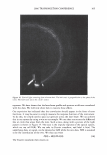
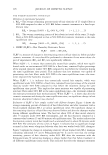
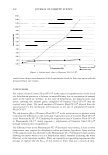
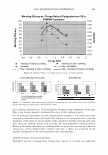
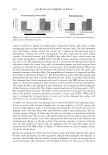
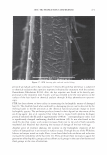
]. Cosmet. Sci., 58, 443-450 (July/August 2007) Determination of the substantivity of emollients to human hair HANS-MAR TIN HAAKE, HELENE LAG RENE, ANGELA BRANDS, WOLF EISFELD, and DAVID MELCHIOR, Cognis Deutsch/and GmbH & Co. KG, Henkelstr. 67, 40 5 51 Diisseldorf, Germany. Synopsis The determination of silicones and hydrogenated didecenes deposited on human hair from shampoo appli- cations is described. For silicones, induced coupled plasma optical emission spectroscopy (ICP-OES) of extracts and X-ray fluorescence analysis (XRF) of hair strands without any further sample preparation have been applied. Three shampoos from the European and Asian markets have been investigated at repeated shampoo applications followed by the determination of the removability with sodium laureth sulfate. Hydrogenated didecenes have been quantified by GC-MS of extracts. A transparent shampoo containing 1.8% of hydrogenated didecenes delivered via a nanoemulsion was examined in the same way as the commercial shampoos. Finally, the substantivity data were compared with performance data from combabil- ity determination and hair volume measurements. Good correlations of analytical data and performance profiles have been obtained. INTRODUCTION In addition to basic ingredients like surfactants, preservatives and fragrances, modern shampoos contain several "care" products such as polymers, emollients and waxes to improve sensorial and conditioning properties and the appearance of both the shampoo and the treated hair. These ingredients must be carefully selected and formulated to ensure that sufficient quantities of the substances adsorb to the hair to provide the desired effect, yet avoiding overloads or build-up effects. Therefore, the determination of the adsorbed amounts of each "care" ingredient can help select the type and concentra- tion of a specific ingredient used and all other ingredients of a formulation. This can be achieved either directly-if an appropriate analytical method for the detection at surfaces is available-or by extraction and analytical determination of the specific substance, whereby both steps must be specifically adapted to the specific ingredient. In this paper, we describe our approaches for the determination of silicones and hydrocarbons applied as conditioning agents via shampoos. For silicones detection methods specifically determining Si can be applied. In the Address all correspondence to Hans-Martin Haake. 443
Purchased for the exclusive use of nofirst nolast (unknown)
From: SCC Media Library & Resource Center (library.scconline.org)