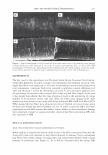
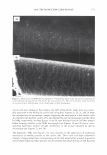
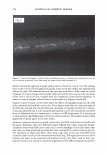
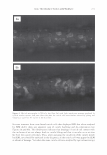
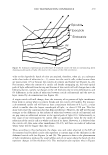
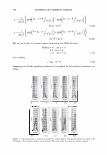
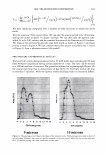
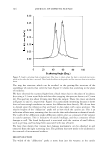
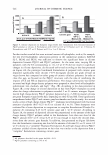
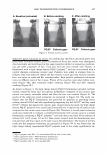
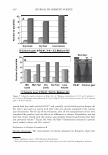
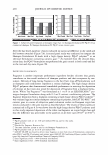
]. Cosmet. Sci.J 58, 269-282 Quly/August 2007) Patterns of light interference produced by damaged cuticle cells in human hair MANUEL GAMEZ-GARCIA and YUAN LU, Ciba Specialty Chemicals, Polymer Effect Research, 540 White Plains Road, Tarrytown, NY 10591-9005. Synopsis Colorful patterns of light interference have been observed to occur in human hair cuticle cells. The light interference phenomenon has been analyzed by optical microscopy. The strong patterns of light interference appeared only in cuticle cells that had been damaged either mechanically or by thermal stresses. Cuticle cells that were not damaged did not produce this phenomenon. The zones of light interference on the hair surface were seen to extend to cuticle sheath areas whose damage was not apparent when analyzed under the Scanning Electron Microscope. The presence of oils and other hydrophobic materials in the hair had a strong effect in the appearance or disappearance of the interference patterns. Furthermore, the gradual absorption and desorption of water by the cuticle cells altered the nominal area of the colorful patterns. This paper will attempt to explain the light interference phenomenon in the cuticle cells by means of the two following mechanisms: 1) Variation in the index of refraction of cuticle cell layers due to the appearance and coalescence of micro-voids which eventually lead to the partial or total separation of cuticle cells and 2) The interaction of white light with the micro-voids and de-cemented cuticle cells either by thin film interference or diffraction. INTRODUCTION The role of the cuticle sheath on the hair optical properties is paramount to its cosmetic appearance (1). For instance, shine in hair is related to the ratio of specular to diffuse light reflected from the epicuticle surface (2,4). The weak iridescence in hair contributes, on the other hand, to its natural and healthy appearance and is produced by weak colored patterns of light interference reflected by the thin film structure of virgin cuticle cells. Incidentally, it is worth mentioning that the bright color possessed by various insects and birds arises not from organic pigments but rather by a similar mechanism involving iridescence (5-8). Many beetles, butterflies, and also the feathers of various birds owe their bright colors to the phenomenon of iridescence. This phenomenon is produced by various coherent light scattering mechanisms involving light interference and diffraction as white light interacts with the ordered micro-structure present in the cell membranes of feathers and also in the skin of insects. Color in hair is not due to a phenomenon of iridescence but rather to the interaction of white light with melanin (1). Melanin acts as a pigment and as it will be discussed later the strong iridescence patterns appearing on damaged cuticle cells may be rather del- 269

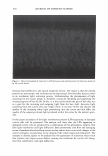
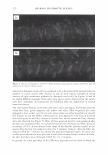
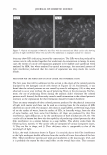
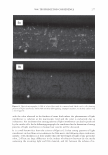
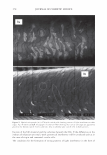
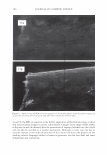
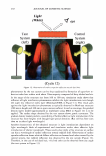
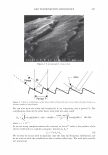
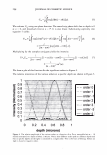
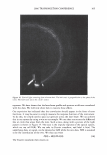
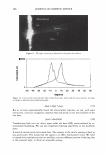
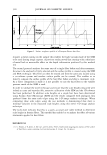
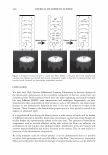
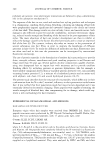
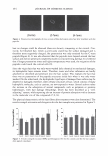
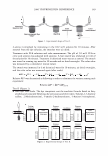
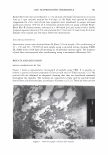
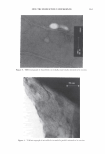
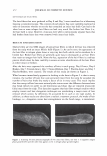
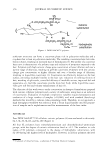
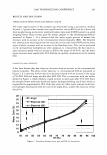
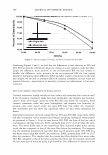
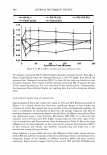
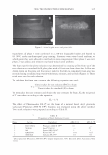
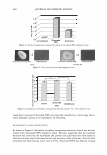
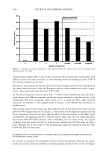
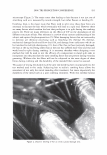
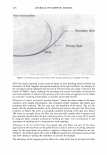
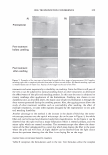
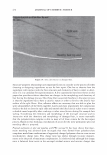
270 JOURNAL OF COSMETIC SCIENCE Figure 1. Optical micrograph of virgin hair ( x4 50) showing weak colored patterns of iridescence produced by the cuticle sheath. eterious than beneficial to the optical properties of hair. The reason is that the colored patterns are microscopic and incoherent at the macroscopic level and they may act rather as an incoherent light scattering process. Understanding the phenomenon of light scattering by the cuticle sheath is, therefore, crucial for modeling and improving the visual perception of hair (9,10). In fact, it is the cuticle sheath the part of hair that acts as a gate for the incoming and outgoing light from the hair shaft. Excessive light scattering from the cuticle cells may impair shine. It can also inhibit the amount and quality of the incoming white light penetrating into the cortex and also affect the quality of the outgoing colored light produced within the cortex by the melanin gran- ules. In this paper an analysis of the light interference patterns (LIPs) appearing in damaged cuticle cells will be presented. The analysis will show that the LIPs appearing in damaged cuticle cells are produced by a combination of two phenomena, namely: thin film light interference and light diffraction. Both phenomena arise from the damaging action of mechanical and swelling stresses as they induce micro-structural changes in the cuticle cell layers, in particular, in the density of the cement layer and endocuticle. The changes in density appear to be produced by the appearance of numerous micro-voids that coalesce into larger porous defects creating the conditions for cuticle cell lifting, thin film interference, and light diffraction.
Purchased for the exclusive use of nofirst nolast (unknown)
From: SCC Media Library & Resource Center (library.scconline.org)