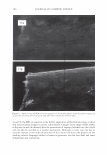
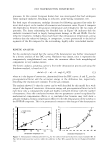
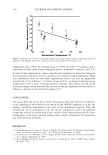
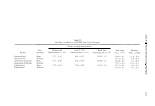
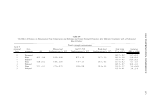
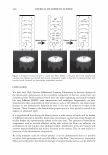
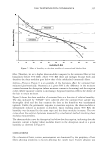
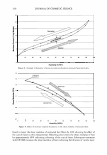
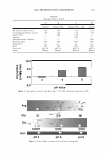
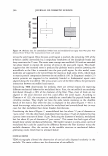
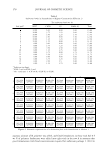
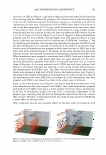
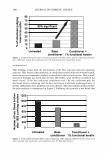
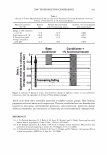
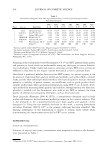
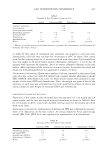
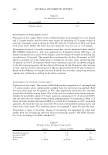
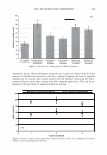
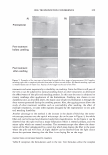
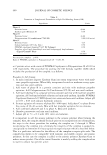
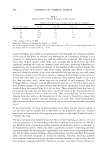
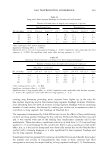
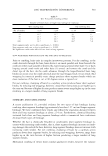
322 JOURNAL OF COSMETIC SCIENCE ously published work. However, there is a significant difference of 5 .1 °C in denaturation peak temperature between the two products. Further, for the treated switches, there is no significant difference between the lightening (dl) values and the tensile parameters which are also indicators of oxidative covalent bond cleavage. In addition, the amount of oxidant in the systems is the same so the proposed explanation for this data was that there were other factors that were contributing to the decrease in peak temperature. It was hypothesized that these two sets of results as described above are due, in part, to the incorporation of different actives into the fibre such as salts, alkalizers and formu- lation actives during the treatment process. For these two products tested, the formu- lations were different and contain different alkalizers, salts and formulation actives. A possible mechanism is that these product components are able to penetrate inside the fibre and change the stability and viscosity of the IFAP proteins by changing the arrangement of the electrostatic and hydrogen bonds. These changes could affect the immediate environment of the intermediate filaments and in turn their denaturation temperature and enthalpy. To test this hypothesis we would predict that either on dialysis of the hair or repeated washing cycle, these components would slowly diffuse out of the hair and the peak temperature would increase back toward the untreated hair values. This means that the changes in peak temperature would be reversible. The starting untreated hair was treated with just one component of the colorant and bleach formulations the alkalizer. All bleach products contain an alkalizer to ensure the product is at the pH required for effective lightening and in the majority of colorant and bleach products this alkalizer is either ammonia, ethanolamine or silicate. Two swatches of untreated hair were soaked in the alkalizer (1.27M) for 30 minutes, the same time as the bleach treatment. The swatches were then rinsed in tap water for one minute and then treated with one wash cycle (i.e. 2 shampoos). The HPDSC peak temperature and denaturation enthalpies were measured both after treatment and after dialysis of the hair in deionised water. To perform the dialysis the hair was first soaked in 50ml of deionised water followed by 100ml of deionised water followed by 11 of deionised water. The pH was measured at all three stages. The hair was then soaked in 201 of deionised water over a 24 hour period where the water was replenished six times (i.e. swatch exposed to 1201 of deionised water). The tensile strength of the hair was also measured before dialysis. There was no expected or observed lightening so dl is not reported. Table II summarises the results of the HPDSC and tensile strength. Table III summarises the pH measurements on dialysis for the ammonium hydroxide alkalizer. The results support the hypothesis that selected components of the bleach products can lower the denaturation peak temperature and enthalpy and that this effect is at least partially reversible on dialysis. The lightening and tensile strength data confirm that the drop in HPDSC peak temperature and enthalpy is not due to oxidative covalent bond cleavage as expected as we have no oxidant present. In addition, the pH data indicates that even after rinsing and two shampoos there is still residual alkalinity in the hair that is only gradually removed by the dialysis. It is hypothesised that the residual alkalinity is participating in electrostatic and hydrogen bonding interactions with the IFAPs which will change the viscosity of the matrix and cause a change in the HPDSC peak

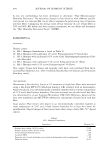
Product Untreated hair Untreated hair Ammonium hydroxide Ammonium hydroxide Ethanolamine Ethanolamine Post- treatment None Dialysed None Dialysed None Dialysed Table II The Effect of Alkalizers on HPDSC and Tensile Strength Plateau load Gmf/sq.micron (x 103) 5.73 ± 0.35 5.17 ± 0.40 5.15 ± 0.38 Tensile strength measurements Load@ 25% Gmf/sq.micron (x 103) 6.81 ± 0.52 6.06 ± 0.39 5.96 ± 0.38 Break load Gmf/sq.micron (x 103) 20.59 ± 1.6 18.86 ± 3.1 18.91 ± 2.6 Peak temp T0±s (°C) 149.0±0.1 147.9 ± 0.2 142.8 ± 0.5 150.7 ± 0.4 147.5 ± 0.1 150.1±0.1 Enthalpy LlH0±s CT/g) 11.0 ± 0.4 8.6 ± 0.9 9.1±0.8 10.1±0.1 8.3 ± 0.2 9.1 ± 0.3 N 0 0 0\ ,.., � � ("') tn ,.., 0 z ("') 0 z tn � tn z ("') tn VJ N VJ
Purchased for the exclusive use of nofirst nolast (unknown)
From: SCC Media Library & Resource Center (library.scconline.org)