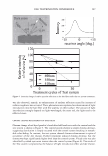
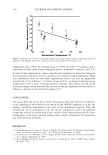
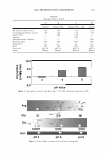
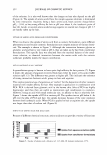
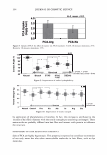
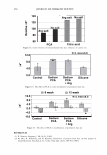
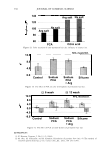
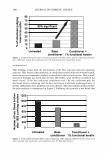
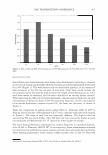
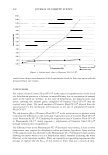
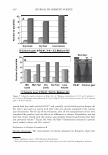
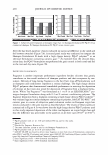
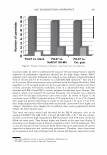
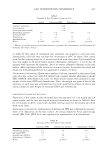
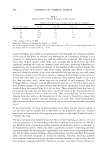
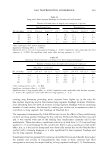
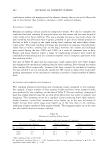
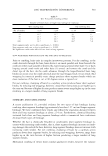
]. Cosmet. Sci.! 58, 329-337 Quly/August 2007) The effect of treatments on the shear modulus of human hair measured by the single fiber torsion pendulum D. L. HARPER and Y. K. KAMATH, TRI/Princeton, P.O. Box 625, Princeton, NJ 18542. Synopsis Previous studies with the single fiber torsion pendulum have alluded to the ability of this device to selectively measure different regions of a fiber, namely, the core and the sheath. This selective ability of the torsion pendulum was explored further as a means of better understanding treatments effects. First, a substantial reduction in shear modulus was caused by simply abrading the hair fiber surface to remove the cuticle layer. In another experiment, bleaching was found to have a softening effect on the cuticle layer since the shear modulus was reduced significantly. Next, the fibers were subsequently treated with either Polyquaternium-10 or cetyl trimethylammonium bromide (CETAB) and measured again. The CETAB treatment resulted in an increase in the shear modulus indicating fortification of the cuticle layer. Polyquaternium-10 treatment increased the shear modulus slightly. These different effects are explained by the molecular sizes of these compounds-CETAB is a small molecule which can penetrate into the cuticle layer while Polyquaternium-10 is too large to do so. Lastly, the effect of moisture was evaluated by varying the humidity inside a chamber surrounding the sample mounted in the torsion pendulum. This showed a substantial inverse relationship between humidity level and shear modulus that was much more pronounced for bleached hair fibers than for untreated. INTRODUCTION In the field of hair damage alleviation, manufacturers of hair care products have often attempted to show improvements on hair strength as a result of application of a specific conditioning formulation. Very often these attempts have failed because the tensile strength measurements are carried out at high rates of deformation which masks the very small effects of these actives on hair strength. However, it was noticed recently that these subtle effects were observable by a shear modulus measurement using a single fiber torsion pendulum (1). The positive effects of a high molecular weight and a low mo- lecular weight cationic conditioner were shown in these studies. Earlier studies of single fiber torsion pendulum were almost entirely dedicated to the study of fiber damage by chemical treatments of hair (2,3). The work done at TRI was the first attempt to show the beneficial effect of conditioners on human hair. In the present work we have expanded these studies to include larger number of hair specimens. An attempt has been made to distinguish between the contribution of the cuticle and the cortex to the overall shear modulus of hair. These studies have been expanded to include the effect of relative humidity on shear modulus. This type of study will be useful in evaluating moisturizing effect of certain hair care products on hair. 329

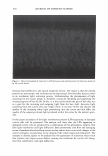
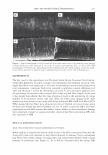
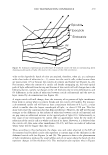
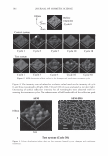
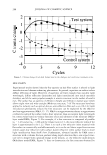
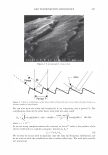
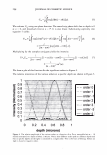
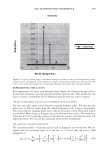
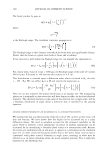
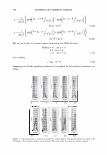
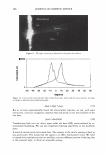
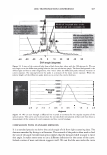
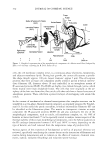
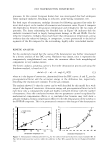
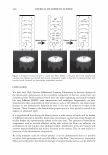
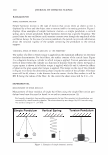
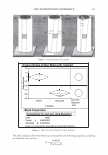
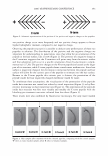
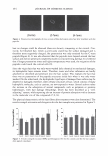
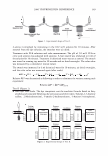
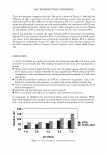
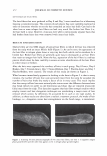
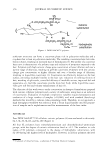
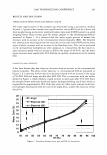
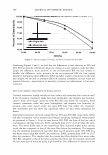
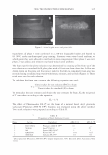
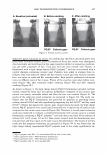
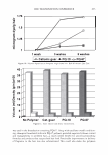
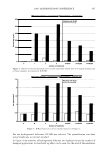
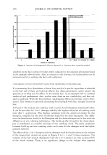
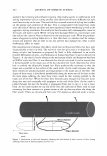
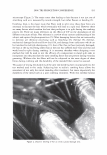
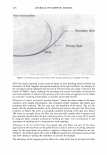
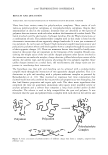
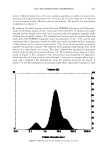
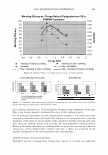
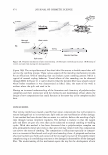
330 JOURNAL OF COSMETIC SCIENCE BACKGROUND SIMPLE HARMONIC MOTION Simple harmonic motion is the type of motion that occurs when an object at rest is displaced by a force and the object tries to restore itself to its resting position. Figure 1 displays three examples of simple harmonic motion-a simple pendulum, a vertical spring, and a torsion pendulum. Simple harmonic motion has a specific frequency. The period (time for one oscillation cycle) remains constant even though the amplitude of the oscillation decays. In the case of a torsion pendulum, the period can provide information about the torsional rigidity of the sample connecting the pendulum to the vertical support. TORSIONAL SHEAR OF FIBERS IS GREATEST AT THE PERIPHERY The surface of a fiber to which torque is applied has the maximum influence on the shear modulus determination. For hair fibers, the surface consists of the cuticle layer. Figure 2 is a diagram showing a cylinder to which torque is applied. Torsion generates varying levels of shear within the cylinder as a function of distance from the center. In Figure 2, a gray square is shown in (a) before torque is applied while (b) and (c) show the effects of shear on the gray square after torque is applied. The wedge on the top of the cylinder in Figure 2 (c) shows the diminishing shear towards the center of the cylinder. The shear stress will be r0, where r is the distance from the center. At the fiber surface it will be R0, R being the radius of the fiber. At the center the shear stress will be 0 (r = 0). EXPERIMENT AL MEASUREMENT OF SHEAR MODULUS Measurement of shear modulus of single hair fibers using the single fiber torsion pen- dulum have been discussed in derail in an earlier communication (1). For humidity dependent shear modulus measurements the hair fiber mounted on the pendulum was surrounded by a small humidity chamber. The relative humidity was changed by 10% intervals using wet and dry nitrogen (±1-2% RH). Simple Pendulum Vertical Spring Torsion Pendulum Figure 1. Examples of simple harmonic motion.
Purchased for the exclusive use of nofirst nolast (unknown)
From: SCC Media Library & Resource Center (library.scconline.org)