346 JOURNAL OF COSMETIC SCIENCE (11) M. Kadofumi (1998), Hair cosmetic composition, Patent JP10251127. (12) B. D. Ensley (2000), Recombinant hair treatment compositions, Patent WO 00/23039. (13) A. P. Cornwell, A. F. Ellis, and M. C. Finel (2002), Hair treatment compositions, Patent WO 031 045340. (14) A. Ansmann (1986), Cosmetic preparations with almond protein hydrolysate, Patent EP0186025. (15) D. Cannell and N. Nguyen (1998), Composition for treating hair, Patent WO 98/51265. (16) W. L. Delano, The PyMOL Molecular Graphics System (Delano Scientific, San Carlos, CA, 2002). http://www.pymol.org (17) R. Wimmer, K. K. Andersen, B. Vad, M. Davidsen, S. Molgaard, L. W. Nesgaard, H. H. Kristensen, and D. E. Otzen, Versatile interactions of the antimicrobial peptide Novispirin with detergents and lipids, Biochemistry, 45, 481-497 (2006). (18) R. Bessalle, A. Gorea, I. Shalit, J. W. Metzger, C. Dass, D. M. Desiderio, and M. Fridkin, Structure- function studies of amphiphilic antibacterial peptides,]. Med Chem. 36, 1203-1209 (1993). (19) A. Sharadadevi, C. Sivakamasundari, and R. Nagaraj, Amphipathic a-helices in proteins: Results from analysis of protein structures, Proteins: Structure, Function and Bioinformatics, 59, 791-801 (2005). (20) M. J. Read, A. M. Mayes, and S. L. Burkett, Effects of temperature and pH on the helicity of a peptide absorbed to colloidal silica, Colloids Surf B, 37, 113-127 (2004). (21) M. D. Yamada, Strength of Biological Materials (Williams & Wilkins, Baltimore, 1970), p. 232.

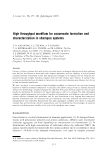
]. Cosmet. Sci., 58, 347-357 Quly/August 2007) Hair and amino acids: The interactions and the effects EIKO OSHIMURA, HIROSHI ABE, and RINA OOTA, AminoScience Laboratory, Ajinomoto Co., Inc., Suzuki-cha 1-1, Kawasaki 210-8681, Japan. Synopsis The interaction and the function of some amino acids in hair care applications are discussed. When amino acids are applied to hair in the form of simple aqueous solution, uptake of the amino acids is mainly controlled by ionic equilibrium. When amino acids were incorporated in a hair conditioner, the result was quite different, suggesting the importance of interaction between the amino acids and the cationic surfac- tants. Uptake of pyrrolidone carboxylic acid (PCA), a derivative of glutamic acid, is enhanced by combining with arginine, an amino with strong affinity towards hair. Effects of some amino acids on bleached/dyed hair are described. A hair conditioner incorporated with alanine improves hair surface hydrophobicity of bleach-damaged hair. Histidine and phenylalanine improve tensile strength. PCA was proved to be effective to improve color-retention of dyed hair. INTRODUCTION Protein is the second major component of living organism, following water. All proteins, including skin and hair, are various compositions of amino acids. Within the corneocytes, there is also a complex mixture of free amino acids and other low molecular weight, water-soluble compounds (Natural Moisturizing Factor or NMF)(l), and are known to contribute to maintenance of water balance in the stratum corneum. Amino acids, pyrrolidone carboxylic acid (PCA), lactate and urea, all compo- nents of NMF, are widely used in cosmetic fields and their usefulness is well established. Unlike in the case of the skin, the presence and the role of natural! y occurring free amino acids in hair shafts are not known yet. Although free amino acids are often detected in hair (2,3), they are more likely to be a product of protein degradation caused by UV or cosmetic treatment. But amino acids provided externally are known to interact with the hair to give various cosmetic effects, such as moisturizing, strengthening the hair (4), and retention of artificial color (5 ). In hair care applications it has been a long-experienced strategy to share the idea of skin care and utilize materials which are established in skin care applications. Vitamins, hydrolyzed proteins, vegetable extracts are good examples. This strategy is often proved to be so efficient that understanding of their basic interaction with hair tends to be left behind. In this paper, interaction between hair and various amino acids are discussed as well as the benefits of amino acids treatment. 347
Purchased for the exclusive use of nofirst nolast (unknown)
From: SCC Media Library & Resource Center (library.scconline.org)