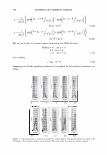
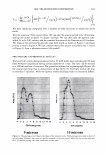
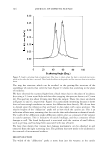
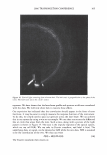
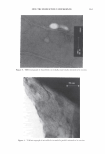
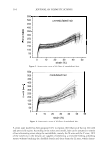
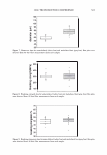
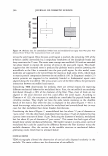
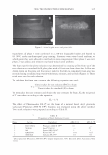
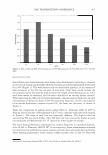
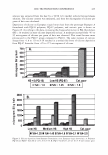
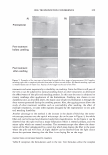
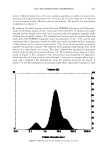
]. Cosmet. Sci.! 58, 369-374 Quly/August 2007) Can a topical scalp treatment reduce hair bulb extraction? JAMES V. GRUBER, LISA BOULDIN, and KEVIN LOU, Arch Personal Care! 70 Tyler Place, South Plainfield, NJ 07080. Synopsis Generally speaking, when people talk about "hair breakage" they are typically referring to the idea that as they comb or brush their hair, the fibers are elongating and snapping at some weak point in the fiber length. It is well established that as people chemically treat their hair, the keratin proteins are degraded further and the hair become more brittle and susceptible to breakage. For the consumer, hair breakage is registered as hair fibers noted in their comb or brush, and in the drain that they see after a cosmetic treatment. However, a fundamental question that needs to be asked is whether or not the hairs that are seen in the drain are really the result of hair breakage (i.e., a fiber snapping) or are they the result of hairs that are actually being extracted from the scalp by their root bulbs. If the bulk of the hair fibers are actually extracted by the bulb, than it seems somewhat superfluous to try and improve hair strength by improving the exterior of the fiber. The fiber is dead and topical treatments can only smooth, and possibly moisten already established fiber structure and integrity. This paper will attempt to address hair strength by looking at the scalp and follicle as the target for treatment, showing that topical application of a product containing a blend of well-known skin active ingredients can demonstrate potential reductions in hair extractions. An in vivo testing protocol in which 1 S voluntary participants with at least 12" hair length were professionally shampooed, and then treated, half-head, with a commercial conditioner, or the same conditioner that contained 5% of a mixture of yeast peptides, fruit acids and green tea polyphenols every day for five days will be discussed. At the beginning and end of the treatment period, the number of hairs that either broke along the fiber, or extracted by the bulb were gathered, separated and counted for both the treated and untreated side of the head. The results of this one-week study demonstrate that the number of hairs that actually break pales in comparison to the number of hairs that are extracted complete with intact root bulb from the follicle. INTRODUCTION Aside from treatments of the skin, the human hair remains one of the most heavily treated sites on the human body. It is generally established that once a human hair fiber has emerged from the scalp follicle, the cellular components have lost their nuclear material and the keratin proteins of the hair have become highly crosslinked offering, to the external environment, a non-living, fibrous entity (1,2). On the other hand, below the stratum corneum, in the follicle, the hair is very much alive (3 ). At the base of the follicle resides the hair bulb, the source for dermal papillae cells which are the living cells from which hair fibers emerge. The growth of the hair passes through various stages depending on a number of bio- chemically-induced signals. Principally, hair growth is highly dependent on steroidal signals such as testosterone and estrogen levels (3 ). The principal steroid responsible for changes in the hair growth cycles is testosterone. Testosterone binds to the androgen receptor (AR) within the dermal papillae cells and transfers hair from a resting state 369

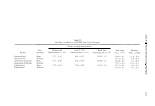
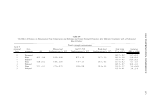
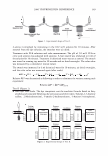
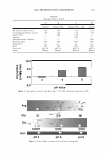
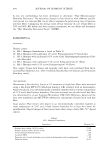
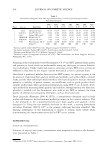
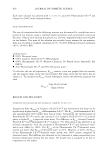
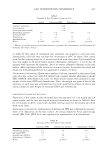
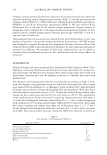
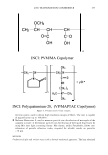
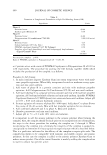
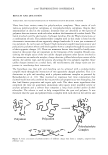
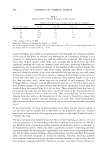
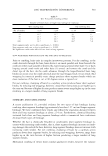
370 JOURNAL OF COSMETIC SCIENCE called catagen to an active growing state called anagen (4). When hair emerges into the anagen phase, it begins to change its physical appearance from small colorless fibers called vellus hairs to thick hair that contains color called terminal hairs (1). Testosterone breaks down in the human body principally via action of an enzyme called 5-a-reductase which converts testosterone into 5-a-dihydrotestosterone (DHT) (5-7). Dihydrotestosterone is also a powerful androgen which binds to the androgen receptor. Typically, for most people, this binding of dihydrotestosterone is reversible and does not interfere with the anagen growth of the hair. However, for some individuals (men and women), the binding of dihydrotestosterone begins to dominate the steroidal cycle and the hair follicles are driven out of anagen phase and into telogen and catagen phase. Subsequently, the terminal hair fibers shrink and lose their color. This leads to a condition known as alopecia or baldness (8). The exact biochemical and genetic reasons for this situation are not presently known, although considerable research is being conducted to better understand the reasons why some people lose their hair and others do not. However, it stands to reason that in order to influence the strength of a hair fiber, it would be necessary to try and do this at the point in which the hair is still living. In this regard, a shift in treatment perspective is required and instead of looking at how to improve the structure of the dead hair fiber, might it be possible to influence the fiber integrity at earlier stages of growth while it is still within the confines of the follicle? In addition, the definition of hair strength must also be renewed as improving hair fiber strength means something entirely different if one is talking about keeping the hair fiber from being extracted, intact, from the follicle. In a normal human being with non- alopecia hair, the head will typically lose nearly 100 hairs a day through normal exfo- liation processes (2). This level is grossly increased due to a number of situations such as alopecia, damage of the hair fibers, or attempts to comb the hair when it is wet and tangled. While some have argued that hair fibers do not simply break by elongation, but rather through interaction with other fibers that become entangled and crossed on the tangs of the brush or comb, it must be fundamentally understood what force is greater for apparent hair loss, hair breakage or hair extraction (9, 10). This paper will attempt to address these inconsistencies by looking at hair fiber health via well established skin care treatment practices. METHODS TREATMENT INGREDIENTS For this study, a hair treatment composition which comprises the following ingredients at the ratios shown was developed (Table I). CONDITIONER COMPOSITION A commercially available, silicone-free conditioner was used throughout the study. To the commercial conditioner was added 5% of the composition shown above to create the "Active" formulation. The conditioner with additional water equal to the amount of water added to the active formulation was used as the "Placebo."
Purchased for the exclusive use of nofirst nolast (unknown)
From: SCC Media Library & Resource Center (library.scconline.org)